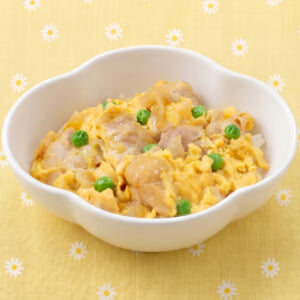
Oyakodon (Chicken and Egg Rice Bowl)
親子丼 · Oyakodon
 By Aoi, licensed nutritionist · From a Japanese preschool lunch menu
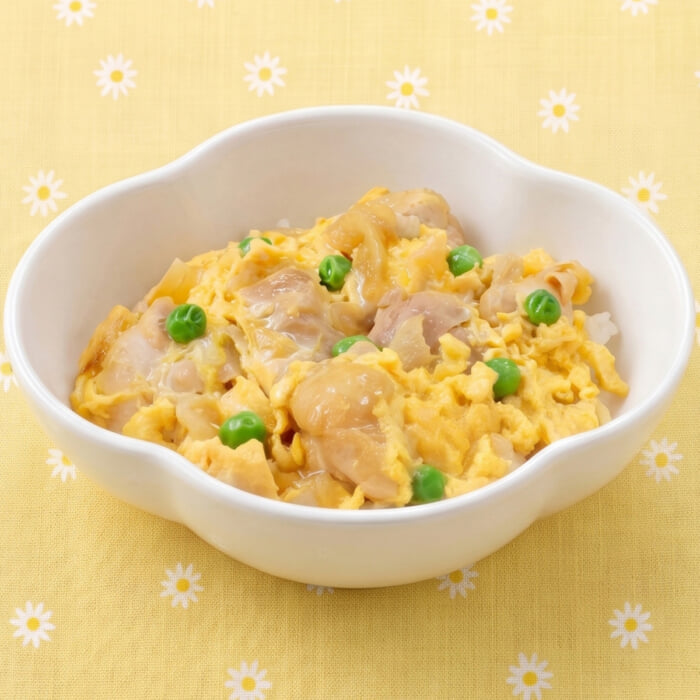
Oyakodon literally means "parent-and-child bowl": chicken (the parent) and egg (the child) are simmered together in a lightly sweet dashi broth and spooned over warm rice. It is one of Japan's best-loved donburi, and children take to it right away because the soft egg, tender chicken and sweet onion all melt together into something easy to eat. The secret to keeping the seasoning gentle is a properly made dashi, so I start the recipe there. Once the chicken and onion are simmered, the same pot feeds toddlers and grown-ups alike, with no separate cooking needed.
Toddlers to adults. The whole family can eat this exactly as written.
Wheat-free, but uses soy sauce (made with wheat). Japanese school-lunch allergy menus usually allow it, so check with your doctor. How to read the labels
Added. Open the recipe helper (bottom right) → ☰ Menu → 🛒 Shopping list to see the ingredients for your family size.
Printing uses the number of adults and children set under Ingredients, so set those first.
Ingredients
Amounts for 1 child (1 serving). An adult counts as 2 servings.
One serving here is 1.5× the portion served to a child in a Japanese preschool, sized for Western appetites. An adult counts as two servings. Tap an ingredient to check it off.
Ingredients
- 36 mldashi stockJapanese soup stock, usually made from kombu (dried kelp) and/or bonito flakes; the base of most Japanese soups and simmered dishes. Substitute: Instant dashi granules dissolved in water, or a mild unsalted chicken or vegetable stock.
- 84 gchicken thigh
- 24 gonion
- 2.4 gvegetable oil
- 36 gegg
- 3.6 gfrozen green peas
Seasonings (A)
- 3 gsugar
- 4.2 gsoy sauce
- 0.1 gsalt
To Finish
- 0.9 cup (rice bowl)warm cooked rice
About the Japanese ingredients in this recipe
- dashi stock (だし汁)
- Japanese soup stock, usually made from kombu (dried kelp) and/or bonito flakes; the base of most Japanese soups and simmered dishes. Substitute: Instant dashi granules dissolved in water, or a mild unsalted chicken or vegetable stock.
Directions
Video is in Japanese — the steps below are synced to it, so tap ▶ on a step to jump to that moment.
- 1
Make the dashi. Put a dashi packet in a pot, add the water, and let it stand for 10 minutes (skip the soaking if you're short on time). Bring to a boil, then simmer over low heat for about 4 to 5 minutes. Remove the dashi packet.
- 2
Cut the chicken into pieces of about 20 g each (about half the size of pieces cut for karaage). Thinly slice the onion, then cut the slices in half so they are half as long.
- 3
Heat the oil in a pot and sauté the onion over medium heat for about 3 minutes. Add the chicken, turn the heat to low, and sauté for about 2 minutes.
- 4
Add the dashi and the Seasonings (A) and simmer over low heat for about 8 minutes, until tender. Note: If you have time, simmering for about 15 minutes gives an even richer flavor!
- 5
Pour the beaten egg around the pot, add the frozen green peas, cover, and cook over medium heat for about 1 minute as a guide, keeping an eye on it. Note: For young children, cook a little longer until the egg is fully set.
- 6
Serve over the rice.
Tips for Best Results
• The dashi is the key! Taking the time to make a good, strong stock with a no-salt-added dashi packet makes the dish taste much better even with light seasoning.
• This recipe is the same for everyone from toddlers to adults, so there's no need to cook a separate batch for the kids.
Freezing Instructions
• Cook through step 4 (the simmering, before adding the egg), then divide into single-meal portions in freezer bags, flatten, and freeze. To eat, reheat in a pot, then add the beaten egg and green peas to finish.
• Leftover dashi keeps in the refrigerator for 3 to 4 days, or freeze it in small portions in an ice cube tray.
Keeps for: about 2 weeks (best eaten as soon as possible).
Nutrition
| Per | 1 serving | 1 adult serving | Your total |
|---|---|---|---|
| Energy | 256.5 kcal | 513 kcal | 256.5 kcal |
| Protein | 19.2 g | 38.4 g | 19.2 g |
| Fat | 18 g | 36 g | 18 g |
| Carbohydrates | 6 g | 12 g | 6 g |
| Fiber | 0.6 g | 1.2 g | 0.6 g |
| Salt equivalent | 1 g | 2.1 g | 1 g |
| Calcium | 30 mg | 60 mg | 30 mg |
| Iron | 1 mg | 2.1 mg | 1 mg |
| Potassium | 373.5 mg | 747 mg | 373.5 mg |
| Phosphorus | 226.5 mg | 453 mg | 226.5 mg |
| Energy | Protein | Fat | Carbs | Fiber | Salt equiv. | Calcium | Iron | Potassium | Phosphorus | |
|---|---|---|---|---|---|---|---|---|---|---|
| 1 serving | 256.5 kcal | 19.2 g | 18 g | 6 g | 0.6 g | 1 g | 30 mg | 1 mg | 373.5 mg | 226.5 mg |
| 1 adult serving | 513 kcal | 38.4 g | 36 g | 12 g | 1.2 g | 2.1 g | 60 mg | 2.1 mg | 747 mg | 453 mg |
Values are per serving (1.5× the Japanese preschool portion); an adult serving is double. They were calculated by a licensed Japanese nutritionist using the Standard Tables of Food Composition in Japan. "Salt equivalent" is sodium × 2.54, the standard Japanese measure. Allergen flags cover egg, milk and wheat only and come from the nutritionist's records. Soy sauce and miso are made with wheat but are usually allowed on Japanese wheat-free school menus, so check with your doctor.