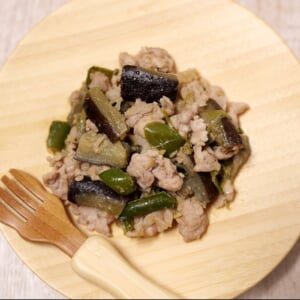
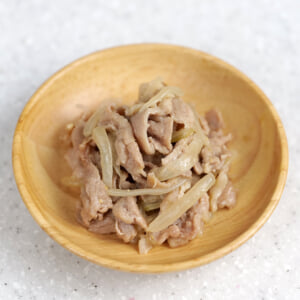
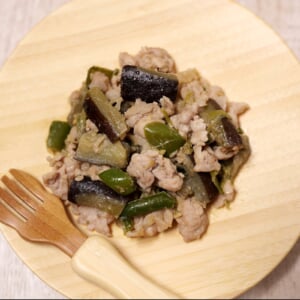
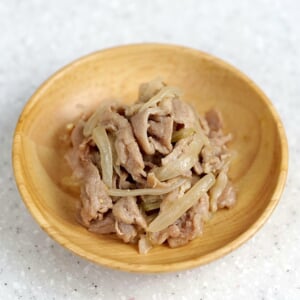
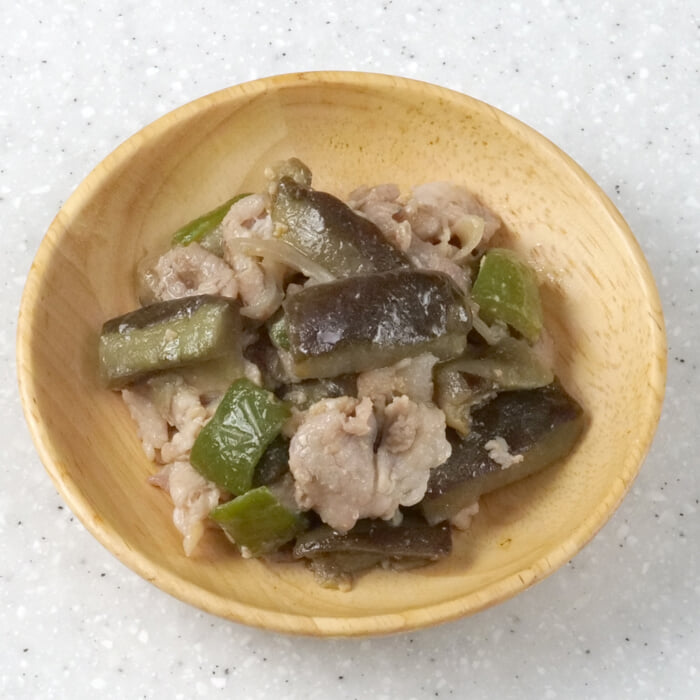
Miso-Stir-Fried Eggplant and Pork
なすと豚肉の味噌炒め · Nasu to Butaniku no Miso Itame
 By Aoi, licensed nutritionist · From a Japanese preschool lunch menu
Nasu no miso itame, eggplant stir-fried in a sweet miso sauce, is a homey Japanese dish that pairs beautifully with rice. In this preschool version, tender eggplant and pork are joined by green bell pepper and onion, all cooked until soft so the natural sweetness comes out and any bitterness fades away. A light dusting of flour on the pork thickens the sauce so it clings to every piece, which also helps the food hold together in a child's mouth. It is a gentle way to introduce eggplant and peppers to kids who are still warming up to them.
Added. Open the recipe helper (bottom right) → ☰ Menu → 🛒 Shopping list to see the ingredients for your family size.
Printing uses the number of adults and children set under Ingredients, so set those first.
Ingredients
Amounts for 1 child (1 serving). An adult counts as 2 servings.
One serving here is 1.5× the portion served to a child in a Japanese preschool, sized for Western appetites. An adult counts as two servings. Tap an ingredient to check it off.
Ingredients
- 52.5 gthinly sliced pork (komagire)Small, thin offcuts of pork sold in Japan for quick stir-fries and simmered dishes. Substitute: Thinly sliced pork shoulder or loin cut into bite-size pieces.
- 45 geggplant
- 12 ggreen bell pepper
- 21 gonion
Seasonings
- 3 gflour
- 1.5 gvegetable oil
- 1 gsugar
- 3.6 gmisoFermented soybean paste. Salty and savory, it is Japan's everyday seasoning for miso soup and many simmered dishes. Substitute: Any light (white or awase) miso. Misos differ in saltiness, so start with a little less and taste. Some misos are made with barley or wheat, so check the label if you avoid them.
- 0.6 gsoy sauce
About the Japanese ingredients in this recipe
- thinly sliced pork (komagire) (豚こま切れ肉)
- Small, thin offcuts of pork sold in Japan for quick stir-fries and simmered dishes. Substitute: Thinly sliced pork shoulder or loin cut into bite-size pieces.
- miso (みそ)
- Fermented soybean paste. Salty and savory, it is Japan's everyday seasoning for miso soup and many simmered dishes. Substitute: Any light (white or awase) miso. Misos differ in saltiness, so start with a little less and taste. Some misos are made with barley or wheat, so check the label if you avoid them.
Directions
- 1
Cut the pork into 1 to 2 cm wide pieces and rub the flour into it.
- 2
Peel the eggplant in alternating stripes and cut it into short lengthwise strips. Cut the green bell pepper into 1.5 cm squares, and cut the onion in half lengthwise, then into thin slices.
- 3
Heat the oil in a frying pan and stir-fry the eggplant, green bell pepper and onion. Once they begin to soften, add the pork and stir-fry. (Cooking the green bell pepper and onion until soft reduces their bitterness and sharpness. If they look like they might burn, add a small amount of water and keep stir-frying.)
- 4
When the pork has changed color, add the combined seasonings and stir to coat.
Rubbing flour into the pork helps the sauce cling to the ingredients, and it also makes the food hold together more easily in a child's mouth.
Nutrition
| Per | 1 serving | 1 adult serving | Your total |
|---|---|---|---|
| Energy | 142.5 kcal | 285 kcal | 142.5 kcal |
| Protein | 12.3 g | 24.6 g | 12.3 g |
| Fat | 7.1 g | 14.1 g | 7.1 g |
| Carbohydrates | 8.9 g | 17.7 g | 8.9 g |
| Fiber | 2 g | 3.9 g | 2 g |
| Salt equivalent | 0.6 g | 1.2 g | 0.6 g |
| Calcium | 16.5 mg | 33 mg | 16.5 mg |
| Iron | 0.6 mg | 1.2 mg | 0.6 mg |
| Potassium | 357 mg | 714 mg | 357 mg |
| Energy | Protein | Fat | Carbs | Fiber | Salt equiv. | Calcium | Iron | Potassium | |
|---|---|---|---|---|---|---|---|---|---|
| 1 serving | 142.5 kcal | 12.3 g | 7.1 g | 8.9 g | 2 g | 0.6 g | 16.5 mg | 0.6 mg | 357 mg |
| 1 adult serving | 285 kcal | 24.6 g | 14.1 g | 17.7 g | 3.9 g | 1.2 g | 33 mg | 1.2 mg | 714 mg |
Values are per serving (1.5× the Japanese preschool portion); an adult serving is double. They were calculated by a licensed Japanese nutritionist using the Standard Tables of Food Composition in Japan. "Salt equivalent" is sodium × 2.54, the standard Japanese measure. Allergen flags cover egg, milk and wheat only and come from the nutritionist's records. Soy sauce and miso are made with wheat but are usually allowed on Japanese wheat-free school menus, so check with your doctor.