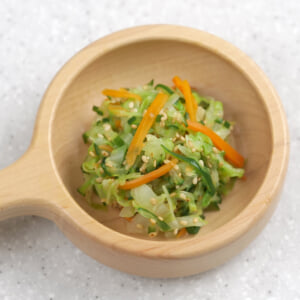
Macaroni Salad (Elementary School Portion)
【小学校】マカロニサラダ
 By Aoi, licensed nutritionist · From a Japanese elementary school lunch menu
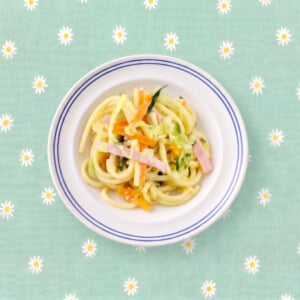
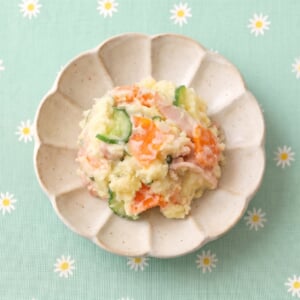
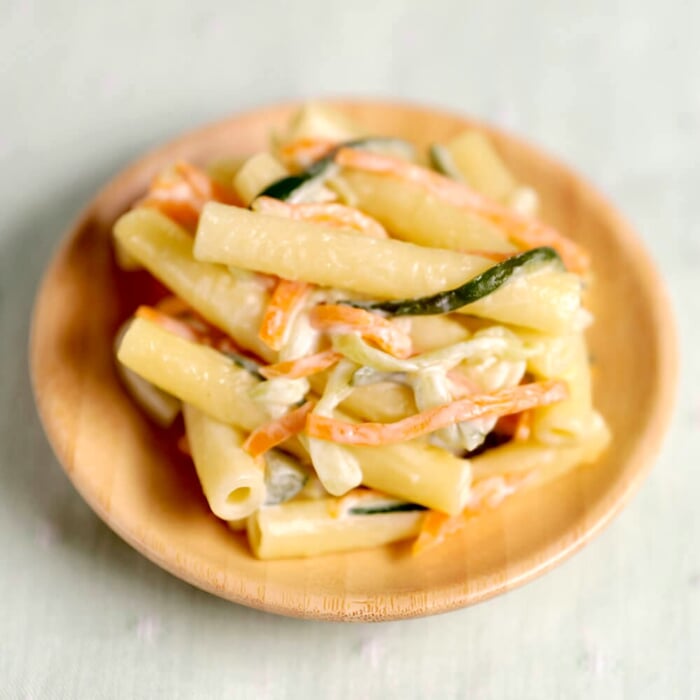
Macaroni salad is a long-standing favorite on Japanese school lunch menus, and it is easy to see why: soft pasta, sweet corn and a creamy mayonnaise dressing make vegetables an easy sell for children. In school kitchens every ingredient, even the cucumber and ham, is briefly blanched for food safety, and the vegetables are cut into short strips so they mix evenly with the macaroni. The macaroni is cooked a little longer than the package says so it stays tender and pleasant to chew even after it has cooled. A small splash of vinegar rounds out the flavor without making the salad taste sour.
Added. Open the recipe helper (bottom right) → ☰ Menu → 🛒 Shopping list to see the ingredients for your family size.
Printing uses the number of adults and children set under Ingredients, so set those first.
Ingredients
Amounts for 1 child (1 serving). An adult counts as 2 servings.
One serving here is 1.5× the portion served to a child in a Japanese elementary school, sized for Western appetites. An adult counts as two servings. Tap an ingredient to check it off.
Ingredients
- 11.1 gmacaroni
- 11.1 gcarrot
- 16.7 gcabbage
- 11.1 gcucumber
- 4.4 gwhole kernel corn (canned or frozen)
- 5.6 gham
Seasonings
- 13.2 gmayonnaise
- 0.8 gvinegar
- 0.3 gsugar
- to tastesalt
Directions
- 1
Cut the carrot, cabbage, and cucumber into short, thin strips. Drain the corn. Cut the ham into thin strips half the length of the slice.
- 2
Boil the macaroni for 3 minutes longer than the package directions, then rinse in cold water to cool. Drain well.
- 3
Start the carrot in cold water and boil for 3 minutes after the water comes to a boil. Blanch the cabbage in boiling water for 3 minutes, and the cucumber and ham in boiling water for 1 minute. Cool everything in cold water, then squeeze out the excess water.
- 4
Lightly pat the surface of the macaroni dry with paper towels and put it in a bowl. Add the vegetables and ham from step 3 along with the seasonings, and mix well.
Adding a small amount of vinegar pulls the whole flavor together and lets the taste of the mayonnaise really come through.
Nutrition
| Per | 1 serving | 1 adult serving | Your total |
|---|---|---|---|
| Energy | 154.2 kcal | 308.4 kcal | 154.2 kcal |
| Protein | 3.2 g | 6.3 g | 3.2 g |
| Fat | 11.1 g | 22.2 g | 11.1 g |
| Carbohydrates | 12 g | 24 g | 12 g |
| Fiber | 1.4 g | 2.7 g | 1.4 g |
| Salt equivalent | 0.3 g | 0.6 g | 0.3 g |
| Calcium | 16.7 mg | 33.3 mg | 16.7 mg |
| Iron | 0 mg | 0 mg | 0 mg |
| Potassium | 134.3 mg | 268.5 mg | 134.3 mg |
| Energy | Protein | Fat | Carbs | Fiber | Salt equiv. | Calcium | Iron | Potassium | |
|---|---|---|---|---|---|---|---|---|---|
| 1 serving | 154.2 kcal | 3.2 g | 11.1 g | 12 g | 1.4 g | 0.3 g | 16.7 mg | 0 mg | 134.3 mg |
| 1 adult serving | 308.4 kcal | 6.3 g | 22.2 g | 24 g | 2.7 g | 0.6 g | 33.3 mg | 0 mg | 268.5 mg |
Values are per serving (1.5× the Japanese elementary-school portion); an adult serving is double. They were calculated by a licensed Japanese nutritionist using the Standard Tables of Food Composition in Japan. "Salt equivalent" is sodium × 2.54, the standard Japanese measure. Allergen flags cover egg, milk and wheat only and come from the nutritionist's records. Soy sauce and miso are made with wheat but are usually allowed on Japanese wheat-free school menus, so check with your doctor.
This is the elementary-school portion of Macaroni Salad (larger quantities, same method).