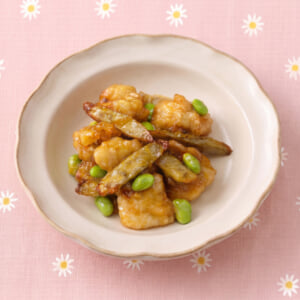
Lemon Chicken
鶏肉のレモン煮 · Toriniku no Remon-ni
 By Aoi, licensed nutritionist · From a Japanese preschool lunch menu
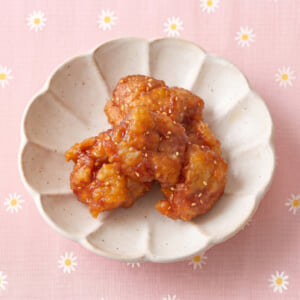
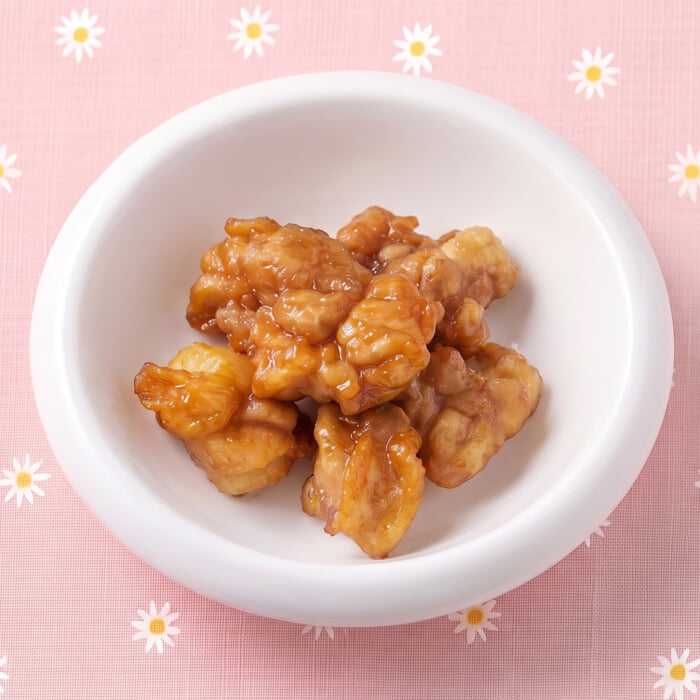
Toriniku no remon-ni is bite-size fried chicken tossed in a warm, sweet soy sauce brightened with a squeeze of lemon. It is a well-loved dish on school lunch menus in Japan, and it is easy to see why: the crisp coating soaks up the glossy sauce, and the gentle tang keeps children coming back for more. The chicken is cut smaller than usual karaage so the flavor sinks right in and each piece is easy for little mouths to manage, and the sauce is built in two stages so the youngest eaters get a milder version while older children enjoy it a touch richer.
Toddlers to adults. Portion out the children's share before the final seasoning, then season the rest for adults.
Wheat-free, but uses soy sauce (made with wheat). Japanese school-lunch allergy menus usually allow it, so check with your doctor. How to read the labels
Added. Open the recipe helper (bottom right) → ☰ Menu → 🛒 Shopping list to see the ingredients for your family size.
Printing uses the number of adults and children set under Ingredients, so set those first.
Ingredients
Amounts for 1 child (1 serving). An adult counts as 2 servings.
One serving here is 1.5× the portion served to a child in a Japanese preschool, sized for Western appetites. An adult counts as two servings. Tap an ingredient to check it off.
Ingredients
- 75 gchicken thigh
- 3 gsakeSake (Japanese rice wine) is used in small amounts to soften the smell of fish and meat and add depth. Japanese "cooking sake" often contains added salt. Some alcohol can remain after short cooking. If you prefer no alcohol for children, use the substitute. Substitute: The same amount of water (the taste will be a little simpler), or dry white wine.
- 8.4 gpotato starch (katakuriko)Japanese potato starch used for thickening sauces and coating fried foods. Substitute: Cornstarch: start with the same amount and add a little more if it is still thin. It thickens a little less than potato starch and needs a couple of minutes at a gentle bubble to reach full thickness.
- to tasteoil for deep-frying
Seasonings
- 3.8 gsoy sauce
- 2.6 gsugar
- 15 gwater
- 1.8 glemon juice
About the Japanese ingredients in this recipe
- sake (酒)
- Sake (Japanese rice wine) is used in small amounts to soften the smell of fish and meat and add depth. Japanese "cooking sake" often contains added salt. Some alcohol can remain after short cooking. If you prefer no alcohol for children, use the substitute. Substitute: The same amount of water (the taste will be a little simpler), or dry white wine.
- potato starch (katakuriko) (かたくり粉)
- Japanese potato starch used for thickening sauces and coating fried foods. Substitute: Cornstarch: start with the same amount and add a little more if it is still thin. It thickens a little less than potato starch and needs a couple of minutes at a gentle bubble to reach full thickness. Read the guide: Katakuriko (Japanese Potato Starch) and What to Use Instead → Guide: japanese-school-lunch.com/articles/katakuriko-potato-starch/
Directions
Video is in Japanese — the steps below are synced to it, so tap ▶ on a step to jump to that moment.
- 1
Cut the chicken into pieces about half the size you would use for karaage. Cutting it small lets the sauce soak in well and makes the finished dish more flavorful.
- 2
Put the chicken in a bowl, add the sake and rub it in. Let it marinate for about 5 minutes.
- 3
Coat the chicken with potato starch and pat off any excess. Too much starch makes the coating gummy, so use just enough and the chicken will fry up crisp.
- 4
Deep-fry in oil heated to 170°C (340°F) for about 4 minutes, turning the pieces over after 2 minutes. Finish by turning the heat up to high and frying for about 1 minute more. Watch out for spattering oil.
- 5
Put the soy sauce, sugar and water in a pot and bring to a simmer over low heat for about 30 seconds to 1 minute. Add the lemon juice and turn off the heat right away. If you are also making a toddler portion, make the sauce with about 70% of the combined seasonings.
- 6
Add the freshly fried chicken to the warm sauce and toss well until every piece is coated. Set aside the toddler portion at this point. For elementary-school age and up, add the remaining seasonings to taste and heat briefly.
The chicken picks up the sauce best when it comes out of the oil with a rough, craggy crust, so don't worry if the pieces are a little uneven in shape. Simmering the sauce longer gives a richer, more concentrated flavor, so when you're packing this into a lunch box I recommend reducing it well. To freeze, pack single portions into freezer bags and use them within about 2 weeks.
Nutrition
| Per | 1 serving | 1 adult serving | Your total |
|---|---|---|---|
| Energy | 267 kcal | 534 kcal | 267 kcal |
| Protein | 12.8 g | 25.5 g | 12.8 g |
| Fat | 19.7 g | 39.3 g | 19.7 g |
| Carbohydrates | 10.1 g | 20.1 g | 10.1 g |
| Fiber | 0 g | 0 g | 0 g |
| Salt equivalent | 0.8 g | 1.5 g | 0.8 g |
| Calcium | 7.5 mg | 15 mg | 7.5 mg |
| Iron | 0.5 mg | 0.9 mg | 0.5 mg |
| Potassium | 237 mg | 474 mg | 237 mg |
| Phosphorus | 136.5 mg | 273 mg | 136.5 mg |
| Energy | Protein | Fat | Carbs | Fiber | Salt equiv. | Calcium | Iron | Potassium | Phosphorus | |
|---|---|---|---|---|---|---|---|---|---|---|
| 1 serving | 267 kcal | 12.8 g | 19.7 g | 10.1 g | 0 g | 0.8 g | 7.5 mg | 0.5 mg | 237 mg | 136.5 mg |
| 1 adult serving | 534 kcal | 25.5 g | 39.3 g | 20.1 g | 0 g | 1.5 g | 15 mg | 0.9 mg | 474 mg | 273 mg |
Values are per serving (1.5× the Japanese preschool portion); an adult serving is double. They were calculated by a licensed Japanese nutritionist using the Standard Tables of Food Composition in Japan. "Salt equivalent" is sodium × 2.54, the standard Japanese measure. Allergen flags cover egg, milk and wheat only and come from the nutritionist's records. Soy sauce and miso are made with wheat but are usually allowed on Japanese wheat-free school menus, so check with your doctor.