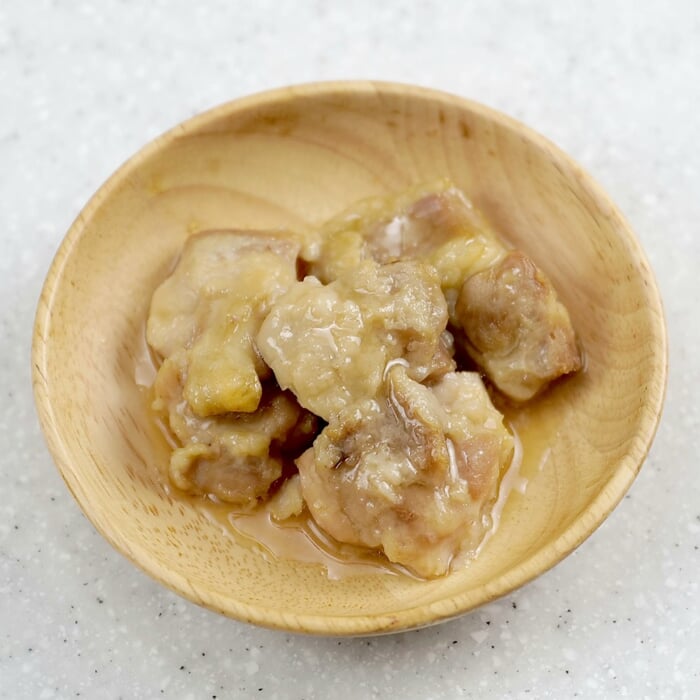
Tangy Simmered Chicken (Wheat-Free)
鶏肉のさっぱり煮(小麦なし) · Toriniku no Sappari-ni
 By Aoi, licensed nutritionist · From a Japanese preschool lunch menu
Sappari-ni is a home-style Japanese dish where chicken is simmered in a sweet, vinegary soy sauce until glossy and coated. Here the chicken thigh is dusted with rice flour and baked in the oven first, so it keeps its shape and the sauce clings to every piece without any wheat flour. The vinegar mellows as it cooks, leaving the chicken tender and light-tasting rather than sour, which is exactly why children take to it so readily. It goes beautifully over plain rice.
Wheat-free, but uses soy sauce (made with wheat). Japanese school-lunch allergy menus usually allow it, so check with your doctor. How to read the labels
Added. Open the recipe helper (bottom right) → ☰ Menu → 🛒 Shopping list to see the ingredients for your family size.
Printing uses the number of adults and children set under Ingredients, so set those first.
Ingredients
Amounts for 1 child (1 serving). An adult counts as 2 servings.
One serving here is 1.5× the portion served to a child in a Japanese preschool, sized for Western appetites. An adult counts as two servings. Tap an ingredient to check it off.
Ingredients
- 75 gchicken thigh
Seasonings
- 3.6 gjoshinko (Japanese non-glutinous rice flour)Fine flour milled from regular short-grain rice, used for chewy Japanese sweets like dango. Substitute: Plain rice flour (not glutinous/sweet rice flour).
- 0.3 gginger paste (tube)Grated ginger sold ready to use in a squeeze tube, a staple in Japanese kitchens. Japanese school lunch kitchens grate fresh ginger for its aroma, but for cooking at home Aoi says the tube works just fine. Tube pastes often contain added salt, oil and other ingredients, so check the label. Substitute: Use freshly grated ginger in the same amount. 1 teaspoon of paste is about 5 g.
- 1.5 gsugar
- 0.8 gsakeSake (Japanese rice wine) is used in small amounts to soften the smell of fish and meat and add depth. Japanese "cooking sake" often contains added salt. Some alcohol can remain after short cooking. If you prefer no alcohol for children, use the substitute. Substitute: The same amount of water (the taste will be a little simpler), or dry white wine.
- 0.9 gvinegar
- 2.3 gsoy sauce
- 34.5 gwater
About the Japanese ingredients in this recipe
- joshinko (Japanese non-glutinous rice flour) (上新粉)
- Fine flour milled from regular short-grain rice, used for chewy Japanese sweets like dango. Substitute: Plain rice flour (not glutinous/sweet rice flour).
- ginger paste (tube) (しょうがチューブ)
- Grated ginger sold ready to use in a squeeze tube, a staple in Japanese kitchens. Japanese school lunch kitchens grate fresh ginger for its aroma, but for cooking at home Aoi says the tube works just fine. Tube pastes often contain added salt, oil and other ingredients, so check the label. Substitute: Use freshly grated ginger in the same amount. 1 teaspoon of paste is about 5 g.
- sake (酒)
- Sake (Japanese rice wine) is used in small amounts to soften the smell of fish and meat and add depth. Japanese "cooking sake" often contains added salt. Some alcohol can remain after short cooking. If you prefer no alcohol for children, use the substitute. Substitute: The same amount of water (the taste will be a little simpler), or dry white wine.
Directions
- 1
Coat the chicken in joshinko, arrange the pieces on a baking sheet, and bake in an oven preheated to 200°C (400°F) for about 10 minutes.
- 2
Put the ginger, sugar, sake, vinegar, soy sauce, and water in a pot and bring to a boil, then add the chicken and simmer until the sauce coats the pieces.
The vinegar makes the chicken tender and gives it a light, refreshing taste.
Nutrition
| Per | 1 serving | 1 adult serving | Your total |
|---|---|---|---|
| Energy | 162 kcal | 324 kcal | 162 kcal |
| Protein | 12.8 g | 25.5 g | 12.8 g |
| Fat | 10.6 g | 21.3 g | 10.6 g |
| Carbohydrates | 4.5 g | 9 g | 4.5 g |
| Fiber | 0 g | 0 g | 0 g |
| Salt equivalent | 0.5 g | 0.9 g | 0.5 g |
| Calcium | 4.5 mg | 9 mg | 4.5 mg |
| Iron | 0.5 mg | 0.9 mg | 0.5 mg |
| Potassium | 229.5 mg | 459 mg | 229.5 mg |
| Energy | Protein | Fat | Carbs | Fiber | Salt equiv. | Calcium | Iron | Potassium | |
|---|---|---|---|---|---|---|---|---|---|
| 1 serving | 162 kcal | 12.8 g | 10.6 g | 4.5 g | 0 g | 0.5 g | 4.5 mg | 0.5 mg | 229.5 mg |
| 1 adult serving | 324 kcal | 25.5 g | 21.3 g | 9 g | 0 g | 0.9 g | 9 mg | 0.9 mg | 459 mg |
Values are per serving (1.5× the Japanese preschool portion); an adult serving is double. They were calculated by a licensed Japanese nutritionist using the Standard Tables of Food Composition in Japan. "Salt equivalent" is sodium × 2.54, the standard Japanese measure. Allergen flags cover egg, milk and wheat only and come from the nutritionist's records. Soy sauce and miso are made with wheat but are usually allowed on Japanese wheat-free school menus, so check with your doctor.
Ingredients in this recipe
You might also like
All recipes →
Tangy Simmered Chicken (Wheat-Free)
Chicken Nanbanzuke (Sweet-Vinegar Marinated Chicken)
Yangnyeom Chicken
Chicken Spare Ribs (Japanese-Style Baked Chicken)
Marmalade-Simmered Chicken (Wheat-Free)