Pork Liver Tatsuta-age (Marinated Fried Liver)
レバーの竜田揚げ · Reba no Tatsuta-age
 By Aoi, licensed nutritionist · From a Japanese preschool lunch menu
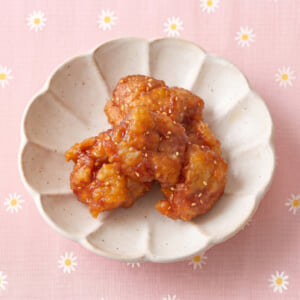
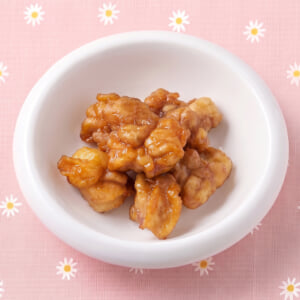
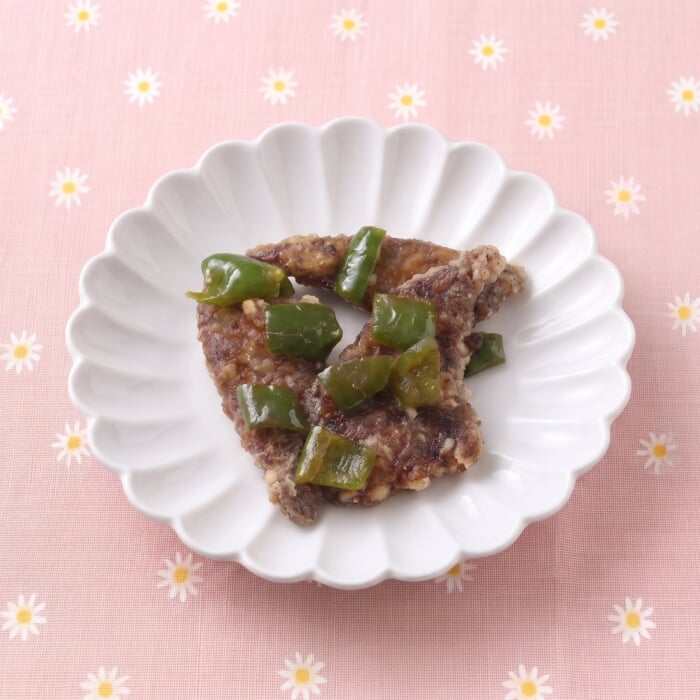
Tatsuta-age is a classic Japanese way of frying: the meat is marinated in soy sauce, sake and ginger, dusted with potato starch and fried until the coating turns crisp and lightly golden. The name is said to come from the Tatsuta River, famous for its red autumn maples, which the soy-tinted crust calls to mind. Here it turns pork liver, which many children refuse on sight, into something they will happily pick up, because a thorough soak in water tames the strong flavor and the ginger-soy marinade and crisp crust do the rest. A sweet-savory sauce with little dice of green bell pepper spooned over the top finishes it off, and since the coating is potato starch rather than wheat flour, the dish is made without egg or dairy.
Toddlers to adults. The whole family can eat this exactly as written.
Wheat-free, but uses soy sauce (made with wheat). Japanese school-lunch allergy menus usually allow it, so check with your doctor. How to read the labels
Added. Open the recipe helper (bottom right) → ☰ Menu → 🛒 Shopping list to see the ingredients for your family size.
Printing uses the number of adults and children set under Ingredients, so set those first.
Ingredients
Amounts for 1 child (1 serving). An adult counts as 2 servings.
One serving here is 1.5× the portion served to a child in a Japanese preschool, sized for Western appetites. An adult counts as two servings. Tap an ingredient to check it off.
Ingredients
- 66 gpork liver
- 12 gpotato starchJapanese katakuriko, a fine potato starch used for thickening sauces and coating food before frying. Substitute: Cornstarch: start with the same amount and add a little more if it is still thin. It thickens a little less than potato starch and needs a couple of minutes at a gentle bubble to reach full thickness.
- to tasteoil for deep-frying
- 12 ggreen bell pepper
- 0.8 gsesame oil
Sauce Mixture (A)
- 1.4 gsakeSake (Japanese rice wine) is used in small amounts to soften the smell of fish and meat and add depth. Japanese "cooking sake" often contains added salt. Some alcohol can remain after short cooking. If you prefer no alcohol for children, use the substitute. Substitute: The same amount of water (the taste will be a little simpler), or dry white wine.
- 1.4 gsoy sauce
- 0.6 gsesame oil
- 0.3 gginger paste (tube)Grated ginger sold ready to use in a squeeze tube, a staple in Japanese kitchens. Japanese school lunch kitchens grate fresh ginger for its aroma, but for cooking at home Aoi says the tube works just fine. Tube pastes often contain added salt, oil and other ingredients, so check the label. Substitute: Use freshly grated ginger in the same amount. 1 teaspoon of paste is about 5 g.
Mixed Seasonings (B)
- 2.7 gsakeSake (Japanese rice wine) is used in small amounts to soften the smell of fish and meat and add depth. Japanese "cooking sake" often contains added salt. Some alcohol can remain after short cooking. If you prefer no alcohol for children, use the substitute. Substitute: The same amount of water (the taste will be a little simpler), or dry white wine.
- 1.4 gsugar
- 2.7 gsoy sauce
- 12 mlwater
About the Japanese ingredients in this recipe
- sake (酒)
- Sake (Japanese rice wine) is used in small amounts to soften the smell of fish and meat and add depth. Japanese "cooking sake" often contains added salt. Some alcohol can remain after short cooking. If you prefer no alcohol for children, use the substitute. Substitute: The same amount of water (the taste will be a little simpler), or dry white wine.
- ginger paste (tube) (しょうがチューブ)
- Grated ginger sold ready to use in a squeeze tube, a staple in Japanese kitchens. Japanese school lunch kitchens grate fresh ginger for its aroma, but for cooking at home Aoi says the tube works just fine. Tube pastes often contain added salt, oil and other ingredients, so check the label. Substitute: Use freshly grated ginger in the same amount. 1 teaspoon of paste is about 5 g.
- potato starch (片栗粉)
- Japanese katakuriko, a fine potato starch used for thickening sauces and coating food before frying. Substitute: Cornstarch: start with the same amount and add a little more if it is still thin. It thickens a little less than potato starch and needs a couple of minutes at a gentle bubble to reach full thickness. Read the guide: Katakuriko (Japanese Potato Starch) and What to Use Instead → Guide: japanese-school-lunch.com/articles/katakuriko-potato-starch/
Directions
Video is in Japanese — the steps below are synced to it, so tap ▶ on a step to jump to that moment.
- 1
If the liver comes as a block, slice it thinly. Wash it in plenty of water, then soak it under running water for about 10 to 30 minutes, stirring now and then, to draw out the blood. Drain in a colander. (Drawing out the blood thoroughly also helps prevent oil spatter when frying. Once the water is only faintly cloudy you are done; there is no need to use milk.)
- 2
Put the liver from step 1 and the Sauce Mixture (A) in a bowl, rub the marinade in well, and let it marinate for about 15 minutes.
- 3
Cut the green bell pepper into 1 cm dice. Heat the sesame oil in a small saucepan and sauté the pepper over medium heat for about 2 minutes. Add the Mixed Seasonings (B) and simmer over low heat for about 3 minutes until slightly reduced. This is the sauce for serving.
- 4
Drain the marinated liver from step 2 in a colander, shaking off the liquid well. Coat it in potato starch and tap off any excess. Deep-fry in oil heated to 170°C (340°F) for about 5 minutes, turning the pieces over as they cook. (Liver spatters easily, so fry over low heat to keep the oil from getting too hot. Be careful not to overfry, or the liver will turn tough.)
- 5
Arrange on a plate and spoon the green pepper sauce from step 3 over the top.
Tips for Best Results
- Frying at a temperature that is not too high keeps the liver from turning tough and gives it a soft, fluffy texture.
- Chicken liver spatters violently in hot oil, so make this with pork liver. The green pepper sauce is also delicious spooned over rice.
How to Freeze
Fry the liver, let it cool, then pack it into freezer bags one meal's worth at a time and freeze. To eat, reheat in the microwave and spoon the sauce over the top.
Keeps for about 2 weeks (but eat it as soon as you can).
Nutrition
| Per | 1 serving | 1 adult serving | Your total |
|---|---|---|---|
| Energy | 184.5 kcal | 369 kcal | 184.5 kcal |
| Protein | 14.3 g | 28.5 g | 14.3 g |
| Fat | 8.3 g | 16.5 g | 8.3 g |
| Carbohydrates | 14 g | 27.9 g | 14 g |
| Fiber | 0.3 g | 0.6 g | 0.3 g |
| Salt equivalent | 0.8 g | 1.5 g | 0.8 g |
| Calcium | 7.5 mg | 15 mg | 7.5 mg |
| Iron | 9 mg | 18 mg | 9 mg |
| Potassium | 238.5 mg | 477 mg | 238.5 mg |
| Phosphorus | 243 mg | 486 mg | 243 mg |
| Energy | Protein | Fat | Carbs | Fiber | Salt equiv. | Calcium | Iron | Potassium | Phosphorus | |
|---|---|---|---|---|---|---|---|---|---|---|
| 1 serving | 184.5 kcal | 14.3 g | 8.3 g | 14 g | 0.3 g | 0.8 g | 7.5 mg | 9 mg | 238.5 mg | 243 mg |
| 1 adult serving | 369 kcal | 28.5 g | 16.5 g | 27.9 g | 0.6 g | 1.5 g | 15 mg | 18 mg | 477 mg | 486 mg |
Values are per serving (1.5× the Japanese preschool portion); an adult serving is double. They were calculated by a licensed Japanese nutritionist using the Standard Tables of Food Composition in Japan. "Salt equivalent" is sodium × 2.54, the standard Japanese measure. Allergen flags cover egg, milk and wheat only and come from the nutritionist's records. Soy sauce and miso are made with wheat but are usually allowed on Japanese wheat-free school menus, so check with your doctor.
Cooking for bigger kids? See the elementary-school portion of this recipe.