Katsudon (Pork Cutlet Rice Bowl)
かつ丼 · Katsudon
 By Aoi, licensed nutritionist · From a Japanese preschool lunch menu
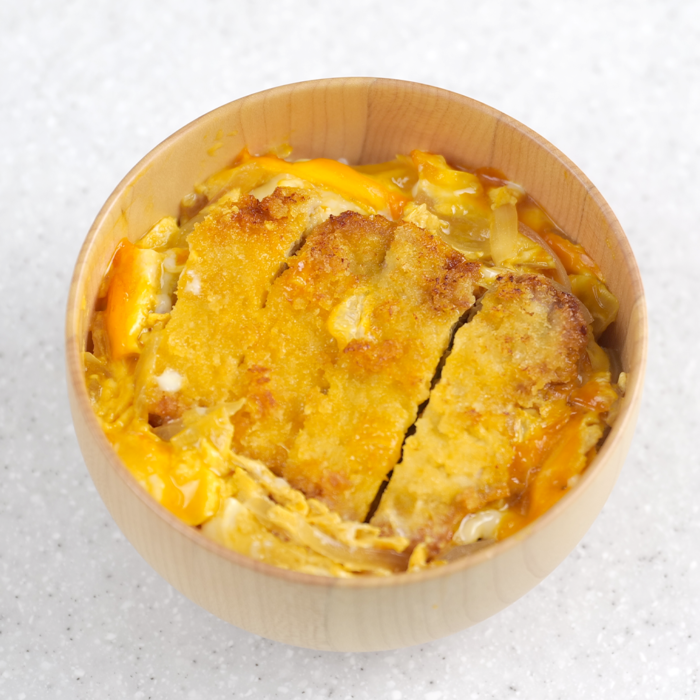
Katsudon is one of Japan's best-loved rice bowls: a breaded pork cutlet (tonkatsu) simmered briefly in a lightly sweet dashi-and-soy broth with onions, then bound together with softly set egg and spooned over hot rice. In Japan it is a classic good-luck meal before exams and matches, because "katsu" sounds like the word for "to win." For young children, the sinew in the pork is cut and pounded so the cutlet stays tender, and the onions are simmered slowly until soft and sweet, so everything is easy to chew and the flavor stays gentle. The broth soaks into the crumbs and the rice, which is exactly why kids clean their bowls.
Added. Open the recipe helper (bottom right) → ☰ Menu → 🛒 Shopping list to see the ingredients for your family size.
Printing uses the number of adults and children set under Ingredients, so set those first.
Ingredients
Amounts for 1 child (1 serving). An adult counts as 2 servings.
One serving here is 1.5× the portion served to a child in a Japanese preschool, sized for Western appetites. An adult counts as two servings. Tap an ingredient to check it off.
Ingredients
- 67.5 gpork loin (tonkatsu cut)Boneless pork loin sliced about 1 cm thick, sold in Japan specifically for making breaded pork cutlets. Substitute: Boneless pork loin chops, about 1 cm (1/2 inch) thick.
- 7.1 gegg (for the batter)
- 4.9 gflour
- 4.2 gwater
- 9 gpanko
- 22.5 gonion
- 34.5 gegg (for finishing)
Seasonings
- 0.2 gsalt
- to tastepepper
- 9 gvegetable oil
- 75 gdashi stockJapanese soup stock, usually made from kombu (dried kelp) and/or bonito flakes; the base of most Japanese soups and simmered dishes. Substitute: Instant dashi granules dissolved in water, or a mild unsalted chicken or vegetable stock.
- 2.1 gsugar
- 3 gsoy sauce
- 0.1 gsalt (for the simmering liquid)
About the Japanese ingredients in this recipe
- pork loin (tonkatsu cut) (豚ロース(とんかつ用))
- Boneless pork loin sliced about 1 cm thick, sold in Japan specifically for making breaded pork cutlets. Substitute: Boneless pork loin chops, about 1 cm (1/2 inch) thick.
- dashi stock (だし汁)
- Japanese soup stock, usually made from kombu (dried kelp) and/or bonito flakes; the base of most Japanese soups and simmered dishes. Substitute: Instant dashi granules dissolved in water, or a mild unsalted chicken or vegetable stock.
Directions
Video is in Japanese and may show a different version of this dish (other ingredients or steps). Follow the ingredients and steps on this page, especially when cooking for allergies.
- 1
Make small cuts with the knife every 1 cm along the line where the lean meat meets the fat to sever the sinew. Turn the pork over and do the same on the other side. Pound it with the back of the knife to break up the sinew further. Cut into individual portions.
- 2
Sprinkle with salt and pepper and let sit for about 15 minutes. If any moisture has come out, blot it away with a paper towel.
- 3
Mix the egg, flour and water well to make a batter and dip the pork in it (eggs vary in size, so add the water a little at a time while checking the consistency; aim for something about as thick as pancake batter). Coat with panko, pressing it on lightly from above so it sticks.
- 4
Fry in oil at 150°C (300°F) for about 6 minutes, turning the cutlets over after 3 minutes. Cut into slices.
- 5
Halve the onion and cut it into thin slices (so the slices are half length). Bring the dashi stock to a boil in a pot, add the onion and sugar, cover, and simmer over low heat for about 15 minutes until soft.
- 6
Add the soy sauce and salt, and once it comes back to a boil, add the tonkatsu. Pour the beaten egg over the top in a circle, cover, and cook for about 1 minute. Turn off the heat and let the residual heat finish setting the egg.
- 7
Serve over hot rice.
Steps 1 through 4 are simply how to make tonkatsu. If you already have tonkatsu on hand, start from step 5!
Nutrition
| Per | 1 serving | 1 adult serving | Your total |
|---|---|---|---|
| Energy | 498 kcal | 996 kcal | 498 kcal |
| Protein | 22.7 g | 45.3 g | 22.7 g |
| Fat | 37.8 g | 75.6 g | 37.8 g |
| Carbohydrates | 21.2 g | 42.3 g | 21.2 g |
| Fiber | 1.5 g | 3 g | 1.5 g |
| Salt equivalent | 1.4 g | 2.7 g | 1.4 g |
| Calcium | 42 mg | 84 mg | 42 mg |
| Iron | 1.2 mg | 2.4 mg | 1.2 mg |
| Potassium | 399 mg | 798 mg | 399 mg |
| Energy | Protein | Fat | Carbs | Fiber | Salt equiv. | Calcium | Iron | Potassium | |
|---|---|---|---|---|---|---|---|---|---|
| 1 serving | 498 kcal | 22.7 g | 37.8 g | 21.2 g | 1.5 g | 1.4 g | 42 mg | 1.2 mg | 399 mg |
| 1 adult serving | 996 kcal | 45.3 g | 75.6 g | 42.3 g | 3 g | 2.7 g | 84 mg | 2.4 mg | 798 mg |
Values are per serving (1.5× the Japanese preschool portion); an adult serving is double. They were calculated by a licensed Japanese nutritionist using the Standard Tables of Food Composition in Japan. "Salt equivalent" is sodium × 2.54, the standard Japanese measure. Allergen flags cover egg, milk and wheat only and come from the nutritionist's records. Soy sauce and miso are made with wheat but are usually allowed on Japanese wheat-free school menus, so check with your doctor.