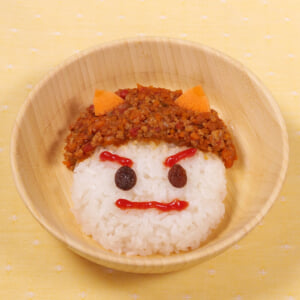
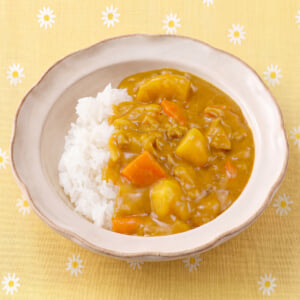
Hayashi Rice (Japanese Hashed Pork on Rice)
ハヤシライス(乳なし) · Hayashi Raisu
 By Aoi, licensed nutritionist · From a Japanese preschool lunch menu
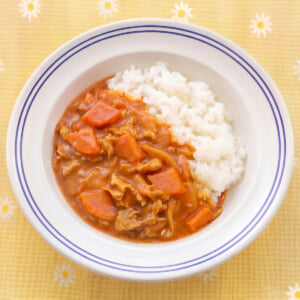
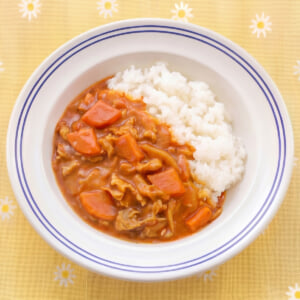
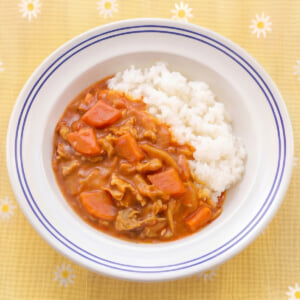
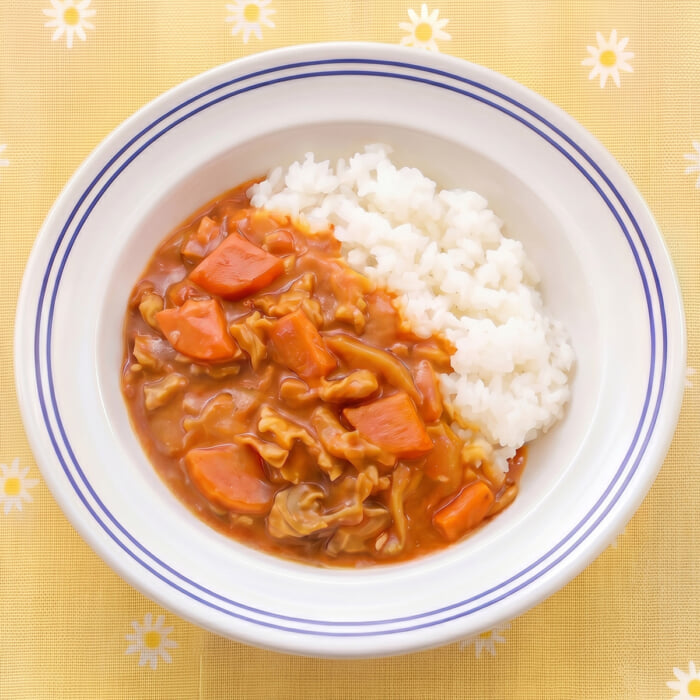
Hayashi rice is a classic yoshoku (Western-style Japanese) dish: thinly sliced meat and onion simmered in a rich, tomato-based sauce and spooned over rice. It is usually made with beef, but this preschool version uses thin pork, which stays tender and is easy for small children to chew. Instead of a store-bought roux, the sauce is built right in the pot from flour, tomato puree, ketchup and Worcestershire sauce, so it comes out gently sweet and mild - and it is made without egg. Softening the vegetables in the microwave first keeps the stovetop time short, and the sauce tastes even better after it has had a moment to cool and settle.
Added. Open the recipe helper (bottom right) → ☰ Menu → 🛒 Shopping list to see the ingredients for your family size.
Printing uses the number of adults and children set under Ingredients, so set those first.
Ingredients
Amounts for 1 child (1 serving). An adult counts as 2 servings.
One serving here is 1.5× the portion served to a child in a Japanese preschool, sized for Western appetites. An adult counts as two servings. Tap an ingredient to check it off.
Ingredients
- 45 gthinly sliced pork (komagire)Small, thin offcuts of pork sold in Japan for quick stir-fries and simmered dishes. Substitute: Thinly sliced pork shoulder or loin cut into bite-size pieces.
- 45 gonion
- 22.5 gcarrot
- 120 gwater
- 165 gwarm cooked rice
Seasonings
- 7.5 gvegetable oil
- 9.8 gflour
- 2.3 gsugar
- 21 gtomato puree
- 7.5 gketchup
- 3.8 gWorcestershire sauce
- 0.5 gsalt
- 0.4 gconsommé bouillon (allergen-free)Japanese-style consommé stock granules or cubes, used as a Western-style soup base. This kind is made without egg and milk, but most recipes on this site that use it list wheat in their allergens, so check the label if you avoid wheat. Substitute: A chicken or vegetable bouillon powder or cube made without egg, milk or wheat (check the label).
About the Japanese ingredients in this recipe
- thinly sliced pork (komagire) (豚こま切れ肉)
- Small, thin offcuts of pork sold in Japan for quick stir-fries and simmered dishes. Substitute: Thinly sliced pork shoulder or loin cut into bite-size pieces.
- Worcestershire sauce (ウスターソース)
- Read the guide: Bull-Dog Worcestershire Sauce: Japan's Everyday Brown Sauce → Guide: japanese-school-lunch.com/articles/bull-dog-worcestershire-sauce/
- consommé bouillon (allergen-free) (コンソメ(アレルゲン不使用))
- Japanese-style consommé stock granules or cubes, used as a Western-style soup base. This kind is made without egg and milk, but most recipes on this site that use it list wheat in their allergens, so check the label if you avoid wheat. Substitute: A chicken or vegetable bouillon powder or cube made without egg, milk or wheat (check the label).
Directions
- 1
Cut the pork into strips 1 to 2 cm wide. Thinly slice the onion, then cut the slices in half so they are half the length. Cut the carrot into quarter-rounds (ichō-giri).
- 2
Put the onion, carrot and 1 tbsp of water (not included in the ingredient amounts) in a heatproof container and toss to combine. Cover with plastic wrap and microwave at 1200W for about 5 minutes (10 minutes at 600W).
- 3
Heat the oil in a pot, add the onion and carrot, and sauté over medium heat for 3 minutes. Add the pork and cook, stirring, until it is no longer pink.
- 4
Turn off the heat, sprinkle in the flour and stir to coat everything evenly. Return the pot to low heat and add the water in two additions, stirring so the flour blends smoothly into the liquid.
- 5
Once the flour and water have come together, add the sugar, tomato puree, ketchup, Worcestershire sauce, salt and consommé, and mix well.
- 6
Simmer over low heat for 10 minutes, stirring occasionally. Let it cool to allow the flavors to meld.
- 7
Spoon over the warm cooked rice.
Microwave times vary depending on how much you are making. Keep an eye on the vegetables and adjust the time as needed.
Nutrition
| Per | 1 serving | 1 adult serving | Your total |
|---|---|---|---|
| Energy | 489 kcal | 978 kcal | 489 kcal |
| Protein | 15.5 g | 30.9 g | 15.5 g |
| Fat | 12.8 g | 25.5 g | 12.8 g |
| Carbohydrates | 82.2 g | 164.4 g | 82.2 g |
| Fiber | 4.8 g | 9.6 g | 4.8 g |
| Salt equivalent | 1.2 g | 2.4 g | 1.2 g |
| Calcium | 28.5 mg | 57 mg | 28.5 mg |
| Iron | 0.8 mg | 1.5 mg | 0.8 mg |
| Potassium | 492 mg | 984 mg | 492 mg |
| Energy | Protein | Fat | Carbs | Fiber | Salt equiv. | Calcium | Iron | Potassium | |
|---|---|---|---|---|---|---|---|---|---|
| 1 serving | 489 kcal | 15.5 g | 12.8 g | 82.2 g | 4.8 g | 1.2 g | 28.5 mg | 0.8 mg | 492 mg |
| 1 adult serving | 978 kcal | 30.9 g | 25.5 g | 164.4 g | 9.6 g | 2.4 g | 57 mg | 1.5 mg | 984 mg |
Values are per serving (1.5× the Japanese preschool portion); an adult serving is double. They were calculated by a licensed Japanese nutritionist using the Standard Tables of Food Composition in Japan. "Salt equivalent" is sodium × 2.54, the standard Japanese measure. Allergen flags cover egg, milk and wheat only and come from the nutritionist's records. Soy sauce and miso are made with wheat but are usually allowed on Japanese wheat-free school menus, so check with your doctor.