Bull-Dog Worcestershire Sauce: Japan's Everyday Brown Sauce
ブルドック ウスターソース
 By Aoi, licensed nutritionist · September 26, 2026 · 4 min read
What Japanese Bull-Dog Worcestershire sauce is, how it differs from Lea & Perrins, how I use it in school lunch curry, and what to use instead.
Bull-Dog Worcestershire sauce is a thin Japanese brown sauce made from fruit, vegetables, vinegar and spices. In my school lunch curry I add just 2 teaspoons to a pot of five servings, together with ketchup. Here is what it is, how it differs from the British original, and what to use if you can't find it.
What it is
Bull-Dog Sauce began in 1902 as Misawaya Shoten, a food wholesaler, and started selling Worcester sauce in 1905. The company explains that the British sauce was used a few drops at a time for flavor, while people in Japan pour sauce over food much as they use soy sauce. Used that way, the original was too sour and too strongly spiced, so the founder reworked it to suit Japanese tastes.
The Japanese label on the 500 ml bottle lists vegetables and fruit (apple, tomato, onion, prune, lemon, carrot), brewed vinegar, sugar, salt, yeast extract (contains soy), spices and niboshi (dried sardine) extract. Bull-Dog describes it as thin and slightly spicy, and says its standard sauces are about 30% vinegar, use seven or more spices, and contain no additives such as coloring, thickeners or sweeteners (the sweetness comes from sugar, fruit and vegetables).
For comparison, the US Lea & Perrins label lists distilled white vinegar, molasses, sugar, water, salt, onions, anchovies, garlic, cloves, tamarind extract, natural flavorings and chili pepper extract.
Japan's standard (JAS) sorts these brown sauces by thickness:
- Worcester (ウスター): the thinnest, under 0.2 Pa·s. This is the one I use.
- Chuno (中濃): medium-thick, 0.2 to under 2.0 Pa·s.
- Noko (濃厚): the thickest, 2.0 Pa·s or more, also known as tonkatsu sauce.
How I use it in the video
- 1:01 At the supermarket in Okinawa, I pick up ketchup and Worcester sauce, which you need to recreate the school lunch taste.
- 1:13 I say the ordinary Bull-Dog bottle is fine, and at 1:17 that it can be used in toddler meals, too.
- 6:46 After the curry has simmered for 5 minutes, I add the ketchup and the sauce. From 6:49 I explain why: the sweetness and acidity of the ketchup and the depth and aroma of the sauce take the edge off the spices and make the curry mellow.
- 11:54 When I taste it, the fresh aroma of the ketchup and sauce comes through on the first bite.
The amount is small: 2 teaspoons (11 g in my recipe) for five servings. Based on the Japanese label (1.4 g salt equivalent per tablespoon, about 18 g), that adds roughly 0.9 g of salt to the whole pot, or under 0.2 g per serving.
Tips
- Measure it. The sauce is there for depth and aroma, not for saltiness. The curry roux already brings plenty of salt.
- Add it before the roux. In the curry from my video, it goes in with the ketchup and sliced cheese, and everything simmers on low for 10 minutes before the roux goes in.
- Check the label. The Japanese label lists soy and apple as allergens, and the sardine extract means it is not vegetarian. Bottles sold outside Japan may be labeled differently, so read the one in your hand.
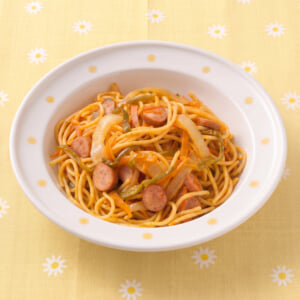
- Beyond curry. Bull-Dog suggests it on fried foods, which it says makes them taste lighter. On this site, Worcestershire sauce also goes into yakisoba, hayashi rice and Napolitan spaghetti.
If you can't find it
- US and Canada: Look for Bull-Dog at Japanese or other Asian grocery stores, or online. Otherwise, Lea & Perrins works. It is sharper and more sour, so start with a little less and taste before adding more. The Canadian bottle, unlike the US one, is made with malt vinegar from barley, so check the label if your child avoids barley or gluten.
- UK, Ireland, Australia and New Zealand: Lea & Perrins is widely sold, so use it the same way. Unlike the US bottle, the version sold here is made with malt vinegar from barley, so check the label if your child avoids barley or gluten.
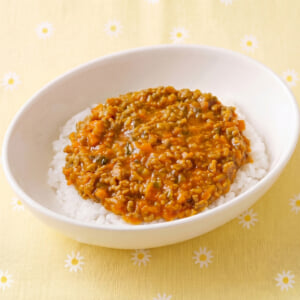
- If you have chuno or tonkatsu sauce: you can use it instead. It is thicker, but the curry thickens with the roux anyway. My curry rice recipes on this site use chuno sauce, while my keema curry uses Worcestershire sauce.
- Fish-free: Lea & Perrins contains anchovies and Bull-Dog contains sardine extract. Look for a Worcestershire-style sauce labeled vegetarian and check the ingredients.
Related recipes
- Japanese Curry Rice with Store-Bought Roux (the recipe from my video)
- Japanese Curry Rice
- Keema Curry
- Yakisoba (Japanese Stir-Fried Noodles)
- Hayashi Rice
- Napolitan (Japanese Ketchup Spaghetti)
- All recipes with Worcestershire sauce
- Chuno sauce
- Ketchup
- Japanese ingredient glossary