Green Pea Rice
グリンピースごはん · Green Peas Gohan
 By Aoi, licensed nutritionist · From a Japanese preschool lunch menu
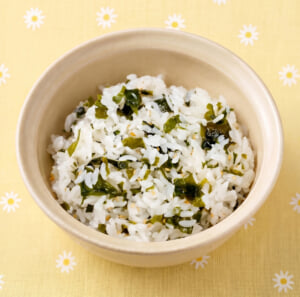
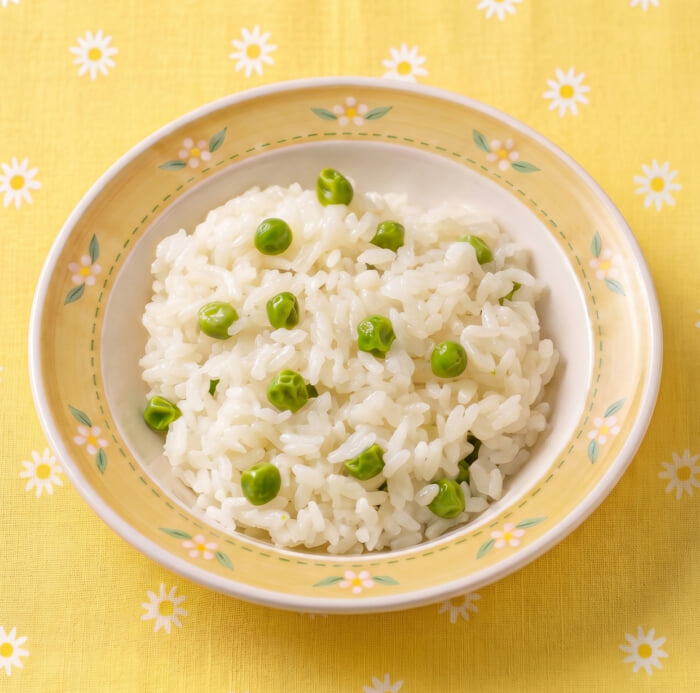
Green pea rice is a classic spring dish in Japan, made by cooking rice with a little salt and sake and scattering bright green peas over the top. The rice comes out fluffy and gently savory, and the sweet pop of the peas makes it easy for even little ones to eat spoonful after spoonful. In preschool kitchens we make it with frozen peas, so it can go on the menu any time of year. The rice is cooked lightly salted first for the youngest children, and the rest of the salt is stirred in afterward for older kids, so one pot suits everyone at the table.
Toddlers to adults. Portion out the children's share before the final seasoning, then season the rest for adults.
Added. Open the recipe helper (bottom right) → ☰ Menu → 🛒 Shopping list to see the ingredients for your family size.
Printing uses the number of adults and children set under Ingredients, so set those first.
Ingredients
Amounts for 1 child (1 serving). An adult counts as 2 servings.
One serving here is 1.5× the portion served to a child in a Japanese preschool, sized for Western appetites. An adult counts as two servings. Tap an ingredient to check it off.
Ingredients
- 90 griceJapanese short-grain white rice (japonica), which cooks up soft and slightly sticky. The amount listed is for uncooked rice. Substitute: Sushi rice, or another short-grain or medium-grain rice such as Calrose.
- 30 gfrozen green peas
Seasonings (A)
- 3 gsakeSake (Japanese rice wine) is used in small amounts to soften the smell of fish and meat and add depth. Japanese "cooking sake" often contains added salt. Some alcohol can remain after short cooking. If you prefer no alcohol for children, use the substitute. Substitute: The same amount of water (the taste will be a little simpler), or dry white wine.
- 1.1 gsalt
About the Japanese ingredients in this recipe
- rice (米)
- Japanese short-grain white rice (japonica), which cooks up soft and slightly sticky. The amount listed is for uncooked rice. Substitute: Sushi rice, or another short-grain or medium-grain rice such as Calrose.
- sake (酒)
- Sake (Japanese rice wine) is used in small amounts to soften the smell of fish and meat and add depth. Japanese "cooking sake" often contains added salt. Some alcohol can remain after short cooking. If you prefer no alcohol for children, use the substitute. Substitute: The same amount of water (the taste will be a little simpler), or dry white wine.
Directions
Video is in Japanese — the steps below are synced to it, so tap ▶ on a step to jump to that moment.
- 1
Rinse the rice, transfer it to a sieve and drain. Put it in the rice cooker, add water to the marked line, and let it soak for at least 30 minutes. Note: Be sure to soak for at least 30 minutes so the grains cook through without a hard center.
- 2
Pour boiling water over the frozen green peas to thaw them, then transfer to a sieve and drain well.
- 3
Add the Seasonings (A) to the rice and stir. Scatter the green peas on top and start the rice cooker. Note: For young children, cook the rice with about 70% of the salt, and set aside the toddlers' portion once it is done. For elementary-school age and up, stir the remaining salt into the rest (salt stirred in after cooking tastes stronger than salt cooked in, so taste as you adjust).
- 4
When the rice is done, open the lid and quickly stir everything together.
Tips for Making It Delicious
- Adding sake makes the rice cook up fluffy and gives it a lovely aroma.
- Adding green peas to the rice boosts the protein and dietary fiber.
How to Freeze
Wrap individual portions in plastic wrap and freeze. To eat, reheat in the microwave still in the wrap.
Keeps for about 2 weeks (best eaten as soon as possible).
Nutrition
Nutrition values include the rice.
| Per | 1 serving | 1 adult serving | Your total |
|---|---|---|---|
| Energy | 261 kcal | 522 kcal | 261 kcal |
| Protein | 5.8 g | 11.6 g | 5.8 g |
| Fat | 0.7 g | 1.4 g | 0.7 g |
| Carbohydrates | 58.7 g | 117.5 g | 58.7 g |
| Fiber | 2.6 g | 5.1 g | 2.6 g |
| Salt equivalent | 0.8 g | 1.7 g | 0.8 g |
| Calcium | 9.8 mg | 19.5 mg | 9.8 mg |
| Iron | 1 mg | 2 mg | 1 mg |
| Potassium | 119.3 mg | 238.5 mg | 119.3 mg |
| Phosphorus | 92.3 mg | 184.5 mg | 92.3 mg |
| Energy | Protein | Fat | Carbs | Fiber | Salt equiv. | Calcium | Iron | Potassium | Phosphorus | |
|---|---|---|---|---|---|---|---|---|---|---|
| 1 serving | 261 kcal | 5.8 g | 0.7 g | 58.7 g | 2.6 g | 0.8 g | 9.8 mg | 1 mg | 119.3 mg | 92.3 mg |
| 1 adult serving | 522 kcal | 11.6 g | 1.4 g | 117.5 g | 5.1 g | 1.7 g | 19.5 mg | 2 mg | 238.5 mg | 184.5 mg |
Values are per serving (1.5× the Japanese preschool portion); an adult serving is double. They were calculated by a licensed Japanese nutritionist using the Standard Tables of Food Composition in Japan. "Salt equivalent" is sodium × 2.54, the standard Japanese measure. Allergen flags cover egg, milk and wheat only and come from the nutritionist's records. Soy sauce and miso are made with wheat but are usually allowed on Japanese wheat-free school menus, so check with your doctor.