Wakame Gohan (Seaweed Rice)
わかめごはん · Wakame Gohan
 By Aoi, licensed nutritionist · From a Japanese preschool lunch menu
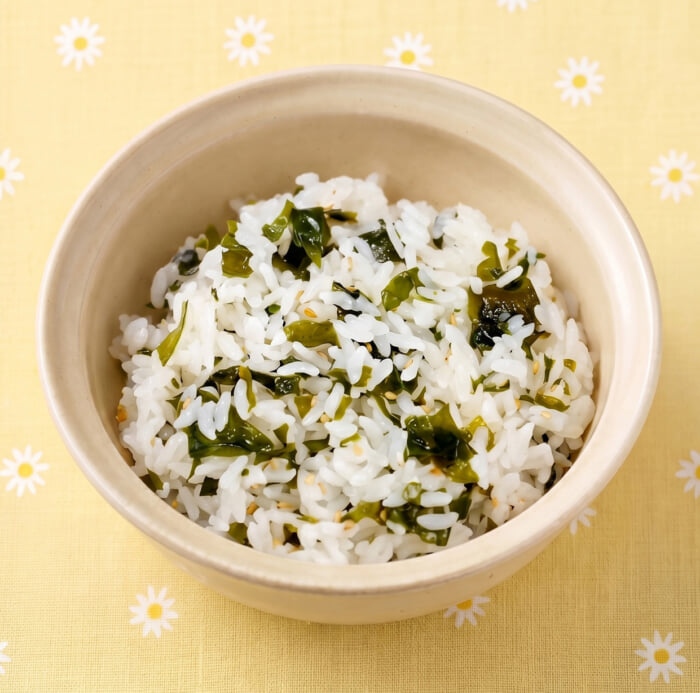
Wakame gohan is one of the best-loved dishes on Japanese school lunch menus: plain rice cooked with a little salt, sake and mirin, then mixed with tender wakame seaweed and toasted white sesame seeds. The seasoning is gentle, so it goes with almost any main dish, and the mild, faintly briny wakame is something even small children happily eat. If you are cooking for a toddler as well, you can cook the wakame right on top of the rice so it turns extra soft and the whole family can share the same pot.
Toddlers to adults. Portion out the children's share before the final seasoning, then season the rest for adults.
Added. Open the recipe helper (bottom right) → ☰ Menu → 🛒 Shopping list to see the ingredients for your family size.
Printing uses the number of adults and children set under Ingredients, so set those first.
Ingredients
Amounts for 1 child (1 serving). An adult counts as 2 servings.
One serving here is 1.5× the portion served to a child in a Japanese preschool, sized for Western appetites. An adult counts as two servings. Tap an ingredient to check it off.
Ingredients
- 90 griceJapanese short-grain white rice (japonica), which cooks up soft and slightly sticky. The amount listed is for uncooked rice. Substitute: Sushi rice, or another short-grain or medium-grain rice such as Calrose.
- 1.5 gdried cut wakameDried seaweed pieces that rehydrate in a few minutes in water or soup. Substitute: Other dried seaweed such as dulse, or omit.
Seasonings (A)
- 1.1 gsalt
- 3 gsakeSake (Japanese rice wine) is used in small amounts to soften the smell of fish and meat and add depth. Japanese "cooking sake" often contains added salt. Some alcohol can remain after short cooking. If you prefer no alcohol for children, use the substitute. Substitute: The same amount of water (the taste will be a little simpler), or dry white wine.
- 3.6 gmirinMirin is a sweet Japanese rice seasoning that adds gentle sweetness and a glossy finish. Hon-mirin (true mirin) contains about 14% alcohol; "mirin-style seasoning" has little or no alcohol. Some alcohol can remain after short cooking. If you prefer no alcohol for children, use the substitute. Substitute: For each tablespoon of mirin, use 1 tablespoon water plus 1 to 2 teaspoons sugar.
Ingredients
- 2.4 gwhite sesame seeds
About the Japanese ingredients in this recipe
- rice (米)
- Japanese short-grain white rice (japonica), which cooks up soft and slightly sticky. The amount listed is for uncooked rice. Substitute: Sushi rice, or another short-grain or medium-grain rice such as Calrose.
- dried cut wakame (乾燥カットわかめ)
- Dried seaweed pieces that rehydrate in a few minutes in water or soup. Substitute: Other dried seaweed such as dulse, or omit.
- sake (酒)
- Sake (Japanese rice wine) is used in small amounts to soften the smell of fish and meat and add depth. Japanese "cooking sake" often contains added salt. Some alcohol can remain after short cooking. If you prefer no alcohol for children, use the substitute. Substitute: The same amount of water (the taste will be a little simpler), or dry white wine.
- mirin (みりん)
- Mirin is a sweet Japanese rice seasoning that adds gentle sweetness and a glossy finish. Hon-mirin (true mirin) contains about 14% alcohol; "mirin-style seasoning" has little or no alcohol. Some alcohol can remain after short cooking. If you prefer no alcohol for children, use the substitute. Substitute: For each tablespoon of mirin, use 1 tablespoon water plus 1 to 2 teaspoons sugar.
Directions
Video is in Japanese — the steps below are synced to it, so tap ▶ on a step to jump to that moment.
- 1
Rinse the rice and drain it in a sieve. Put it in the rice cooker, add water up to the marked line, and let it soak for at least 30 minutes.
- 2
Add the Seasonings (A), stir, and start the rice cooker.
- 3
Soak the wakame in plenty of water for about 5 minutes to rehydrate it. Transfer to a sieve, squeeze out the water, and chop it coarsely. Note: If you are also making a toddler version, place the wakame on top of the rice and cook them together - it becomes softer and easier to eat, and the whole family can eat the same dish. In that case, skip the wakame in step 5 and mix in only the white sesame seeds.
- 4
Put the white sesame seeds in a small pan and toast them briefly over low heat. Note: They are ready as soon as they smell fragrant! You can skip this step when you are short on time.
- 5
When the rice is cooked, add the wakame from step 3 and the sesame seeds from step 4, mix well, then put the lid back on and let it steam.
Tips for Success
- Adding salt or other seasonings makes it harder for the rice to absorb water (because of osmotic pressure), so the grains can stay hard in the center. Be sure to soak the rice for at least 30 minutes before cooking.
How to Freeze
Wrap individual portions in plastic wrap and freeze. To eat, microwave them still wrapped.
Keeps for about 2 weeks (best eaten as soon as possible).
Nutrition
Nutrition values include the rice.
| Per | 1 serving | 1 adult serving | Your total |
|---|---|---|---|
| Energy | 264 kcal | 528 kcal | 264 kcal |
| Protein | 4.9 g | 9.9 g | 4.9 g |
| Fat | 1.7 g | 3.3 g | 1.7 g |
| Carbohydrates | 56.7 g | 113.4 g | 56.7 g |
| Fiber | 1 g | 2.1 g | 1 g |
| Salt equivalent | 1 g | 2.1 g | 1 g |
| Calcium | 36 mg | 72 mg | 36 mg |
| Iron | 1 mg | 2 mg | 1 mg |
| Potassium | 76.5 mg | 153 mg | 76.5 mg |
| Phosphorus | 81 mg | 162 mg | 81 mg |
| Energy | Protein | Fat | Carbs | Fiber | Salt equiv. | Calcium | Iron | Potassium | Phosphorus | |
|---|---|---|---|---|---|---|---|---|---|---|
| 1 serving | 264 kcal | 4.9 g | 1.7 g | 56.7 g | 1 g | 1 g | 36 mg | 1 mg | 76.5 mg | 81 mg |
| 1 adult serving | 528 kcal | 9.9 g | 3.3 g | 113.4 g | 2.1 g | 2.1 g | 72 mg | 2 mg | 153 mg | 162 mg |
Values are per serving (1.5× the Japanese preschool portion); an adult serving is double. They were calculated by a licensed Japanese nutritionist using the Standard Tables of Food Composition in Japan. "Salt equivalent" is sodium × 2.54, the standard Japanese measure. Allergen flags cover egg, milk and wheat only and come from the nutritionist's records. Soy sauce and miso are made with wheat but are usually allowed on Japanese wheat-free school menus, so check with your doctor.