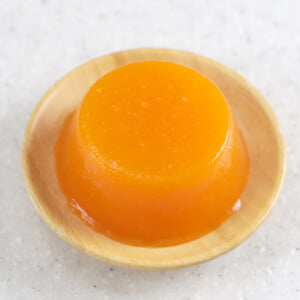
Grape Kanten Jelly with Yogurt Sauce
グレープゼリーヨーグルトかけ
 By Aoi, licensed nutritionist · From a Japanese preschool lunch menu
This is a light, fruity snack from the preschool kitchen: 100% grape juice set with kanten (agar), then finished with a spoonful of lightly sweetened plain yogurt. Kanten is a plant-based setting agent made from seaweed that gives a clean, firm jelly, and it is a staple in Japanese school kitchens. The tart, creamy yogurt on top balances the sweetness of the grape, and children love the wobbly texture. Bring the juice to room temperature before adding it, because kanten begins to set as soon as it cools, and cold juice can make it firm up unevenly.
Added. Open the recipe helper (bottom right) → ☰ Menu → 🛒 Shopping list to see the ingredients for your family size.
Printing uses the number of adults and children set under Ingredients, so set those first.
Ingredients
Amounts for 1 child (1 serving). An adult counts as 2 servings.
One serving here is 1.5× the portion served to a child in a Japanese preschool, sized for Western appetites. An adult counts as two servings. Tap an ingredient to check it off.
Ingredients
- 0.9 gkanten (agar) powderA plant-based gelling agent made from seaweed that sets firmly, even at room temperature. Substitute: Agar-agar powder from an Asian grocery or health food store; gelatin can be used but gives a softer set and must be chilled.
- 85.7 g100% grape juice
- 30 gplain unsweetened yogurt
Seasonings
- 42.9 gwater
- 8.6 gsugar
- 3 gsugar
About the Japanese ingredients in this recipe
- kanten (agar) powder (かんてん(粉))
- A plant-based gelling agent made from seaweed that sets firmly, even at room temperature. Substitute: Agar-agar powder from an Asian grocery or health food store; gelatin can be used but gives a softer set and must be chilled.
Directions
- 1
Add the kanten powder to the water and bring to a boil, stirring until it dissolves. Stir in the sugar, then gradually add the grape juice (brought to room temperature), stirring as you go.
- 2
Pour the mixture from step 1 into jelly cups (or a shallow tray) and chill in the refrigerator until set.
- 3
Mix the sugar into the yogurt. Plate the jelly from step 2 and spoon the yogurt over the top.
Nutrition
| Per | 1 serving | 1 adult serving | Your total |
|---|---|---|---|
| Energy | 118.5 kcal | 237 kcal | 118.5 kcal |
| Protein | 1.4 g | 2.7 g | 1.4 g |
| Fat | 1 g | 2.1 g | 1 g |
| Carbohydrates | 28.4 g | 56.7 g | 28.4 g |
| Salt equivalent | 0 g | 0 g | 0 g |
| Calcium | 37.5 mg | 75 mg | 37.5 mg |
| Iron | 0.3 mg | 0.6 mg | 0.3 mg |
| Energy | Protein | Fat | Carbs | Salt equiv. | Calcium | Iron | |
|---|---|---|---|---|---|---|---|
| 1 serving | 118.5 kcal | 1.4 g | 1 g | 28.4 g | 0 g | 37.5 mg | 0.3 mg |
| 1 adult serving | 237 kcal | 2.7 g | 2.1 g | 56.7 g | 0 g | 75 mg | 0.6 mg |
Values are per serving (1.5× the Japanese preschool portion); an adult serving is double. They were calculated by a licensed Japanese nutritionist using the Standard Tables of Food Composition in Japan. "Salt equivalent" is sodium × 2.54, the standard Japanese measure. Allergen flags cover egg, milk and wheat only and come from the nutritionist's records. Soy sauce and miso are made with wheat but are usually allowed on Japanese wheat-free school menus, so check with your doctor.