Macaroni with Kinako (Roasted Soybean Flour)
マカロニきな粉 · Makaroni Kinako
 By Aoi, licensed nutritionist · From a Japanese preschool lunch menu
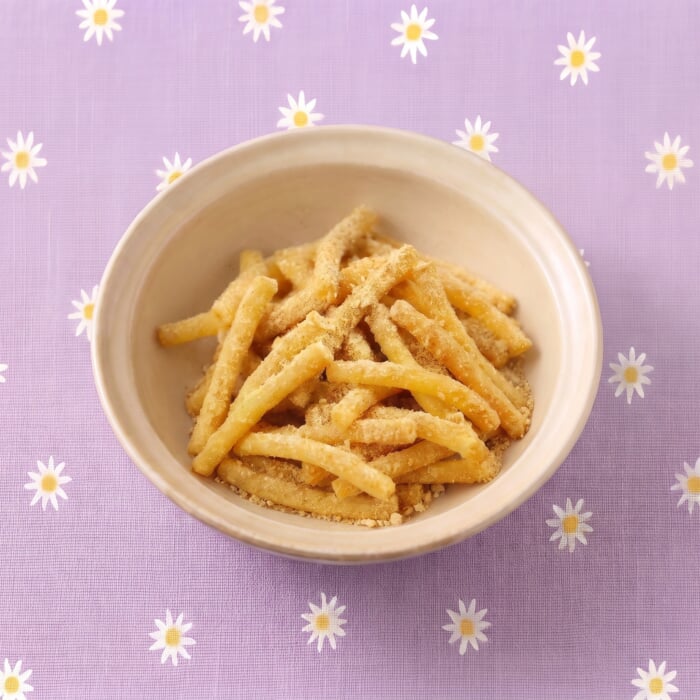
Kinako is the roasted soybean flour you find dusted over mochi and warabi mochi in Japan, and here it turns plain macaroni into a chewy, nutty, lightly sweet afternoon snack. Boiling the pasta a little longer than usual makes it soft and springy, so the kinako clings to every piece and it eats almost like kinako mochi. It comes together with just four ingredients and is made without egg or milk, which is why it is such a handy snack in preschool kitchens.
Toddlers to adults. The whole family can eat this exactly as written.
Added. Open the recipe helper (bottom right) → ☰ Menu → 🛒 Shopping list to see the ingredients for your family size.
Printing uses the number of adults and children set under Ingredients, so set those first.
Ingredients
Amounts for 1 child (1 serving). An adult counts as 2 servings.
One serving here is 1.5× the portion served to a child in a Japanese preschool, sized for Western appetites. An adult counts as two servings. Tap an ingredient to check it off.
Ingredients
- 33 gmacaroni
Sauce Mixture (A)
- 15 gkinako (roasted soybean flour)A nutty, lightly sweet powder made from roasted ground soybeans, often dusted over mochi or rice. Substitute: No close substitute - look for kinako (sometimes sold as roasted soybean flour) at a Japanese or Asian grocery, or online.
- 12.9 gsugar
- 0.2 gsalt
About the Japanese ingredients in this recipe
- kinako (roasted soybean flour) (きな粉)
- A nutty, lightly sweet powder made from roasted ground soybeans, often dusted over mochi or rice. Substitute: No close substitute - look for kinako (sometimes sold as roasted soybean flour) at a Japanese or Asian grocery, or online.
Directions
Video is in Japanese — the steps below are synced to it, so tap ▶ on a step to jump to that moment.
- 1
Boil the macaroni for about 5 to 7 minutes longer than the time on the package, then drain in a colander. Do not rinse it in water. (Boiling it longer makes it soft and chewy, so the kinako clings to it well. Small salad macaroni works best.)
- 2
Put the A ingredients in a bowl and mix well, crushing any lumps of sugar. Add the macaroni while it is still warm and toss well. (The macaroni is hot, so stir with long cooking chopsticks and take care not to burn yourself.)
- 3
Serve in bowls and sprinkle the kinako left at the bottom of the mixing bowl over the top.
Tips for Making It Well
- Kinako is packed with nutrients children need, such as protein, iron and dietary fiber. A small pinch of salt brings out the sweetness and gives it a flavor much like kinako mochi.
- The macaroni firms up as it sits, so this is best eaten soon after it is made.
Freezing
The macaroni turns hard over time and does not freeze well, so eat it the same day you make it.
Nutrition
| Per | 1 serving | 1 adult serving | Your total |
|---|---|---|---|
| Energy | 229.5 kcal | 459 kcal | 229.5 kcal |
| Protein | 9.6 g | 19.2 g | 9.6 g |
| Fat | 4.5 g | 9 g | 4.5 g |
| Carbohydrates | 40.5 g | 81 g | 40.5 g |
| Fiber | 4.5 g | 9 g | 4.5 g |
| Salt equivalent | 0.2 g | 0.3 g | 0.2 g |
| Calcium | 34.5 mg | 69 mg | 34.5 mg |
| Iron | 1.7 mg | 3.3 mg | 1.7 mg |
| Potassium | 364.5 mg | 729 mg | 364.5 mg |
| Phosphorus | 141 mg | 282 mg | 141 mg |
| Energy | Protein | Fat | Carbs | Fiber | Salt equiv. | Calcium | Iron | Potassium | Phosphorus | |
|---|---|---|---|---|---|---|---|---|---|---|
| 1 serving | 229.5 kcal | 9.6 g | 4.5 g | 40.5 g | 4.5 g | 0.2 g | 34.5 mg | 1.7 mg | 364.5 mg | 141 mg |
| 1 adult serving | 459 kcal | 19.2 g | 9 g | 81 g | 9 g | 0.3 g | 69 mg | 3.3 mg | 729 mg | 282 mg |
Values are per serving (1.5× the Japanese preschool portion); an adult serving is double. They were calculated by a licensed Japanese nutritionist using the Standard Tables of Food Composition in Japan. "Salt equivalent" is sodium × 2.54, the standard Japanese measure. Allergen flags cover egg, milk and wheat only and come from the nutritionist's records. Soy sauce and miso are made with wheat but are usually allowed on Japanese wheat-free school menus, so check with your doctor.
Cooking for bigger kids? See the elementary-school portion of this recipe.