Daigaku Imo (Candied Sweet Potato)
大学芋 · Daigaku Imo
 By Aoi, licensed nutritionist · From a Japanese preschool lunch menu
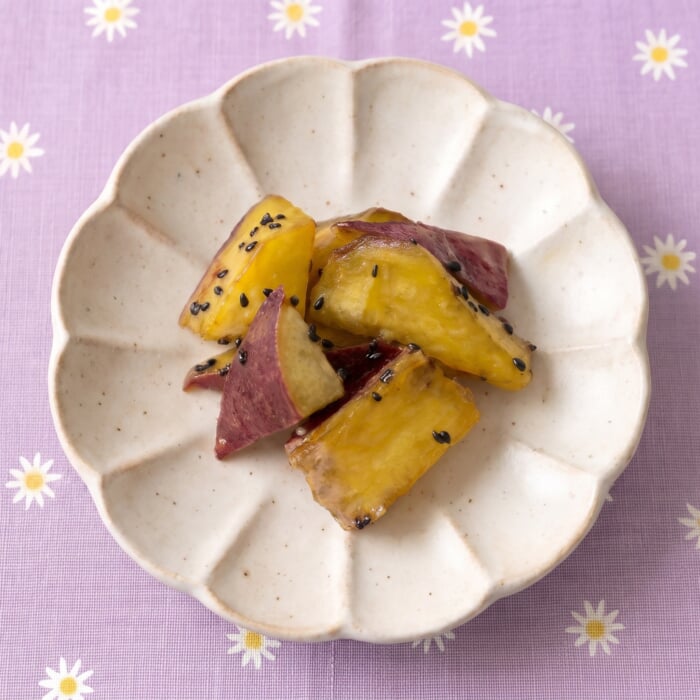
Daigaku imo is one of Japan's best-loved sweet potato snacks: chunks of satsumaimo fried until crisp, tossed in a glossy sweet-soy syrup and finished with black sesame seeds. The name literally means "university potato" – the story goes that it became popular with university students in Tokyo in the early 20th century. In the preschool kitchen we microwave the sweet potato first so it fries quickly in very little oil, and we cut it small so little hands and mouths can manage it. This version is made without egg or milk, and the touch of vinegar in the syrup keeps the pieces from sticking together.
Toddlers to adults. The whole family can eat this exactly as written.
Wheat-free, but uses soy sauce (made with wheat). Japanese school-lunch allergy menus usually allow it, so check with your doctor. How to read the labels
Added. Open the recipe helper (bottom right) → ☰ Menu → 🛒 Shopping list to see the ingredients for your family size.
Printing uses the number of adults and children set under Ingredients, so set those first.
Ingredients
Amounts for 1 child (1 serving). An adult counts as 2 servings.
One serving here is 1.5× the portion served to a child in a Japanese preschool, sized for Western appetites. An adult counts as two servings. Tap an ingredient to check it off.
Ingredients
- 84 gJapanese sweet potato (satsumaimo)A purple-skinned, pale-yellow-fleshed sweet potato that is sweeter, drier, and fluffier than orange varieties. Substitute: Any sweet potato.
- to tasteoil for deep-frying
- 0.6 gtoasted black sesame seeds
Sauce Mixture (A)
- 7.5 gsugar
- 0.5 gsoy sauce
- 0.5 gvinegar
- 7.5 mlwater
About the Japanese ingredients in this recipe
- Japanese sweet potato (satsumaimo) (さつまいも)
- A purple-skinned, pale-yellow-fleshed sweet potato that is sweeter, drier, and fluffier than orange varieties. Substitute: Any sweet potato.
Directions
Video is in Japanese — the steps below are synced to it, so tap ▶ on a step to jump to that moment.
- 1
Cut the sweet potato lengthwise into 4, then cut it into smallish irregular chunks, slicing diagonally and rotating the potato between cuts. Soak in water for about 10 minutes to draw out the harshness. (Cutting the pieces small makes them easier for children to eat.)
- 2
Drain in a colander and put the sweet potato in a heatproof container with the water still clinging to its surface. Cover loosely with plastic wrap, leaving a gap, and microwave at 1200W for about 2 to 2 1/2 minutes (4 to 5 minutes at 600W), until a bamboo skewer slides through easily. Pat dry.
- 3
Heat the oil to 180°C (350°F) and fry the sweet potato from step 2 for about 5 minutes, until the surface is crisp. (When you dip in a pair of cooking chopsticks and large bubbles rise right away, the oil is at about 180°C. Because the sweet potato is already cooked through, you can do this in a shallow amount of oil.)
- 4
Put the ingredients for A in a frying pan and bring to a boil, then keep it boiling and reduce until lightly syrupy. Add the fried sweet potato from step 3 and toss over low heat until every piece is coated. (The sharpness of the vinegar cooks off as the syrup reduces, so you won't taste it.)
- 5
Sprinkle with the black sesame seeds.
Tips for Best Results
- Cooking the sweet potato in the microwave first means it fries quickly in only a little oil, and comes out crisp on the outside and fluffy inside.
- Adding a little vinegar to the syrup keeps the pieces of daigaku imo from sticking together, so they are easier to eat. It's a great snack for children and good in lunch boxes too.
Freezing Instructions
Let cool, then divide into single portions in freezer bags and freeze. Reheat in the microwave before eating.
Keeps for about 2 weeks (but best eaten as soon as possible).
Nutrition
| Per | 1 serving | 1 adult serving | Your total |
|---|---|---|---|
| Energy | 217.5 kcal | 435 kcal | 217.5 kcal |
| Protein | 0.9 g | 1.8 g | 0.9 g |
| Fat | 9.8 g | 19.5 g | 9.8 g |
| Carbohydrates | 35 g | 69.9 g | 35 g |
| Fiber | 2.4 g | 4.8 g | 2.4 g |
| Salt equivalent | 0.2 g | 0.3 g | 0.2 g |
| Calcium | 40.5 mg | 81 mg | 40.5 mg |
| Iron | 0.5 mg | 0.9 mg | 0.5 mg |
| Potassium | 318 mg | 636 mg | 318 mg |
| Phosphorus | 42 mg | 84 mg | 42 mg |
| Energy | Protein | Fat | Carbs | Fiber | Salt equiv. | Calcium | Iron | Potassium | Phosphorus | |
|---|---|---|---|---|---|---|---|---|---|---|
| 1 serving | 217.5 kcal | 0.9 g | 9.8 g | 35 g | 2.4 g | 0.2 g | 40.5 mg | 0.5 mg | 318 mg | 42 mg |
| 1 adult serving | 435 kcal | 1.8 g | 19.5 g | 69.9 g | 4.8 g | 0.3 g | 81 mg | 0.9 mg | 636 mg | 84 mg |
Values are per serving (1.5× the Japanese preschool portion); an adult serving is double. They were calculated by a licensed Japanese nutritionist using the Standard Tables of Food Composition in Japan. "Salt equivalent" is sodium × 2.54, the standard Japanese measure. Allergen flags cover egg, milk and wheat only and come from the nutritionist's records. Soy sauce and miso are made with wheat but are usually allowed on Japanese wheat-free school menus, so check with your doctor.
Cooking for bigger kids? See the elementary-school portion of this recipe.