Gomoku Miso Soup (Mixed Vegetable Miso Soup)
五目みそ汁 · Gomoku Misoshiru
 By Aoi, licensed nutritionist · From a Japanese preschool lunch menu
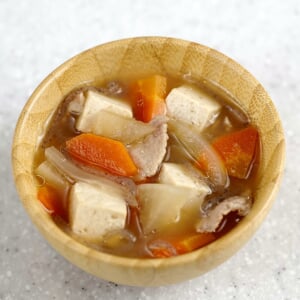
"Gomoku" literally means "five items," and in Japanese cooking it signals a dish packed with a colorful mix of ingredients. This miso soup lives up to the name with sweet potato, daikon, carrot, napa cabbage and green onion all simmered in bonito and kombu dashi. The sweet potato gives the broth a gentle natural sweetness that children take to right away, and cutting everything into small, thin pieces means it cooks through quickly and is easy for little ones to scoop up with a spoon. It is a comforting, filling soup that rounds out a school lunch of rice and a simple main.
Added. Open the recipe helper (bottom right) → ☰ Menu → 🛒 Shopping list to see the ingredients for your family size.
Printing uses the number of adults and children set under Ingredients, so set those first.
Ingredients
Amounts for 1 child (1 serving). An adult counts as 2 servings.
One serving here is 1.5× the portion served to a child in a Japanese preschool, sized for Western appetites. An adult counts as two servings. Tap an ingredient to check it off.
Ingredients
- 22.5 gJapanese sweet potato (satsumaimo)A purple-skinned, pale-yellow-fleshed sweet potato that is sweeter, drier, and fluffier than orange varieties. Substitute: Any sweet potato.
- 22.5 gdaikon radishA large, mild white Japanese radish that turns tender and sweet when simmered. Substitute: Turnip or kohlrabi, or regular radish.
- 7.5 gcarrot
- 30 gnapa cabbage
- 4.5 ggreen onion (naga negi)Japanese long onion, thicker and milder than Western scallions. Substitute: Scallions or the white part of a leek.
Seasonings
- 180 gbonito and kombu dashiJapanese soup stock made from dried bonito flakes and kombu kelp, the everyday base for soups and simmered dishes. Substitute: Instant dashi granules dissolved in water, or a light vegetable or chicken stock.
- 7.2 glight rice misoA pale, salty rice miso, the standard everyday miso in Japan. Substitute: Any light, white, or awase (blended) miso.
About the Japanese ingredients in this recipe
- Japanese sweet potato (satsumaimo) (さつまいも)
- A purple-skinned, pale-yellow-fleshed sweet potato that is sweeter, drier, and fluffier than orange varieties. Substitute: Any sweet potato.
- daikon radish (だいこん)
- A large, mild white Japanese radish that turns tender and sweet when simmered. Substitute: Turnip or kohlrabi, or regular radish.
- green onion (naga negi) (ねぎ)
- Japanese long onion, thicker and milder than Western scallions. Substitute: Scallions or the white part of a leek.
- bonito and kombu dashi (かつお・昆布だし汁)
- Japanese soup stock made from dried bonito flakes and kombu kelp, the everyday base for soups and simmered dishes. Substitute: Instant dashi granules dissolved in water, or a light vegetable or chicken stock.
- light rice miso (米みそ(淡色辛みそ))
- A pale, salty rice miso, the standard everyday miso in Japan. Substitute: Any light, white, or awase (blended) miso.
Directions
- 1
Cut the sweet potato, daikon and carrot into thin quarter-rounds (icho-giri), cut the napa cabbage into short batons (hyoshigi-giri), and thinly slice the green onion crosswise.
- 2
Put the dashi, daikon and carrot in a pot and bring to a boil. Once boiling, add the sweet potato, napa cabbage and green onion and simmer.
- 3
When the vegetables are tender, dissolve the miso into the soup.
Nutrition
| Per | 1 serving | 1 adult serving | Your total |
|---|---|---|---|
| Energy | 57 kcal | 114 kcal | 57 kcal |
| Protein | 2.3 g | 4.5 g | 2.3 g |
| Fat | 0.6 g | 1.2 g | 0.6 g |
| Carbohydrates | 11.7 g | 23.4 g | 11.7 g |
| Salt equivalent | 1.2 g | 2.4 g | 1.2 g |
| Calcium | 45 mg | 90 mg | 45 mg |
| Iron | 0.6 mg | 1.2 mg | 0.6 mg |
| Energy | Protein | Fat | Carbs | Salt equiv. | Calcium | Iron | |
|---|---|---|---|---|---|---|---|
| 1 serving | 57 kcal | 2.3 g | 0.6 g | 11.7 g | 1.2 g | 45 mg | 0.6 mg |
| 1 adult serving | 114 kcal | 4.5 g | 1.2 g | 23.4 g | 2.4 g | 90 mg | 1.2 mg |
Values are per serving (1.5× the Japanese preschool portion); an adult serving is double. They were calculated by a licensed Japanese nutritionist using the Standard Tables of Food Composition in Japan. "Salt equivalent" is sodium × 2.54, the standard Japanese measure. Allergen flags cover egg, milk and wheat only and come from the nutritionist's records. Soy sauce and miso are made with wheat but are usually allowed on Japanese wheat-free school menus, so check with your doctor.
Ingredients in this recipe
You might also like
All recipes →
Tonjiru (Pork and Vegetable Miso Soup)
Satsuma-jiru (Miso Soup with Sweet Potato)
Piri-Kara Soup (Mildly Spicy Pork and Vegetable Soup)
Gudakusan-jiru (Chunky Vegetable Miso Soup)
Miso Soup with Napa Cabbage and Sweet Potato