Piri-Kara Soup (Mildly Spicy Pork and Vegetable Soup)
ピリ辛スープ · Pirikara Soup
 By Aoi, licensed nutritionist · From a Japanese preschool lunch menu
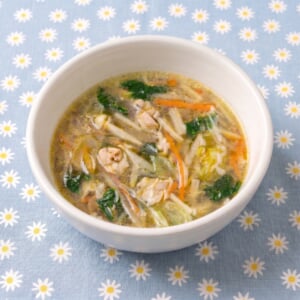
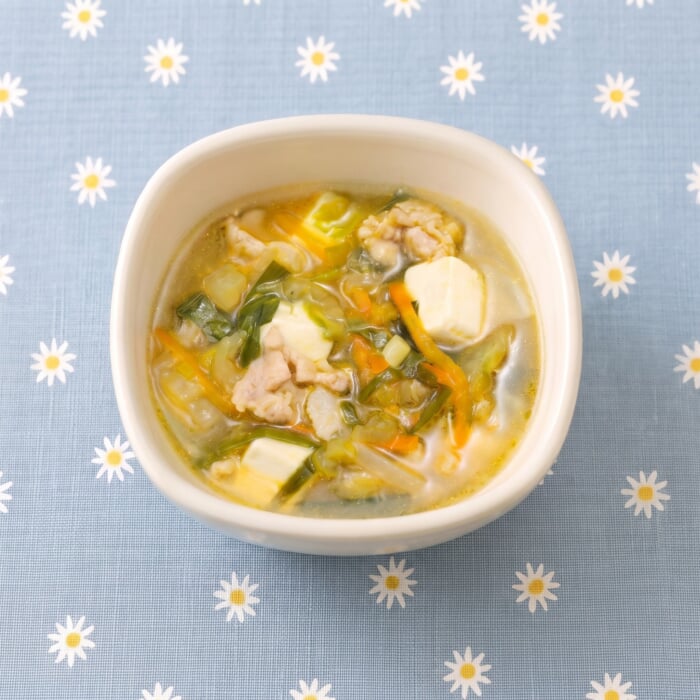
Piri-kara means "just a little spicy" in Japanese, and that is exactly what this soup is: a consommé-based broth rounded out with soy sauce and miso, full of pork, napa cabbage, garlic chives and tofu, with a touch of doubanjiang for gentle heat. The chili bean paste can be held back until the end, so you can ladle out a mild portion for toddlers before adding it for older children and grown-ups. It's egg-free and delivers plenty of both meat and vegetables, which makes it a soup I reach for whenever I'm not sure what else to put on the menu.
Toddlers to adults. Portion out the children's share before the final seasoning, then season the rest for adults.
Added. Open the recipe helper (bottom right) → ☰ Menu → 🛒 Shopping list to see the ingredients for your family size.
Printing uses the number of adults and children set under Ingredients, so set those first.
Ingredients
Amounts for 1 child (1 serving). An adult counts as 2 servings.
One serving here is 1.5× the portion served to a child in a Japanese preschool, sized for Western appetites. An adult counts as two servings. Tap an ingredient to check it off.
Ingredients
- 30 gthinly sliced pork (komagire)Small, thin offcuts of pork sold in Japan for quick stir-fries and simmered dishes. Substitute: Thinly sliced pork shoulder or loin cut into bite-size pieces.
- 30 gnapa cabbage
- 15 gonion
- 7.5 ggarlic chives (nira)Flat-leaved chives with a mild garlic flavor, sold in bunches at Asian markets. Substitute: Scallion greens with a little minced garlic.
- 7.5 gcarrot
- 7.5 gJapanese long onion (naga-negi)A long, thick scallion with a mild, sweet flavor when cooked, used in Japanese soups and stir-fries. Substitute: Leek (white and light green parts) or thick scallions.
- 30 gfirm tofu
- 2.3 gvegetable oil
- 0.3 ggarlic paste (tube)Grated garlic sold ready to use in a squeeze tube, a staple in Japanese kitchens. Japanese school lunch kitchens grate fresh garlic for its aroma, but for cooking at home Aoi says the tube works just fine. Tube pastes often contain added salt, oil and other ingredients, so check the label. Substitute: Use freshly grated garlic in the same amount. 1 teaspoon of paste is about 5 g.
- 0.9 gsakeSake (Japanese rice wine) is used in small amounts to soften the smell of fish and meat and add depth. Japanese "cooking sake" often contains added salt. Some alcohol can remain after short cooking. If you prefer no alcohol for children, use the substitute. Substitute: The same amount of water (the taste will be a little simpler), or dry white wine.
- 225 mlwater
- 0.5 gdoubanjiang (Chinese chili bean paste)A salty, spicy Sichuan paste of fermented broad beans and chilies; use a very small amount for children. Substitute: Gochujang, or a little miso mixed with a few drops of chili sauce. Many gochujang brands contain wheat, and some doubanjiang and miso do too, so check the labels if you avoid wheat.
Sauce Mixture (A)
- 1.2 gconsommé bouillon (granules or cube)Japanese-style Western soup stock powder or cubes, similar to chicken or vegetable bouillon. Substitute: Chicken or vegetable bouillon granules or a bouillon cube.
- 3.6 gsoy sauce
- 3.6 gmisoFermented soybean paste. Salty and savory, it is Japan's everyday seasoning for miso soup and many simmered dishes. Substitute: Any light (white or awase) miso. Misos differ in saltiness, so start with a little less and taste. Some misos are made with barley or wheat, so check the label if you avoid them.
About the Japanese ingredients in this recipe
- thinly sliced pork (komagire) (豚こま切れ肉)
- Small, thin offcuts of pork sold in Japan for quick stir-fries and simmered dishes. Substitute: Thinly sliced pork shoulder or loin cut into bite-size pieces.
- garlic chives (nira) (にら)
- Flat-leaved chives with a mild garlic flavor, sold in bunches at Asian markets. Substitute: Scallion greens with a little minced garlic.
- Japanese long onion (naga-negi) (長ねぎ)
- A long, thick scallion with a mild, sweet flavor when cooked, used in Japanese soups and stir-fries. Substitute: Leek (white and light green parts) or thick scallions.
- garlic paste (tube) (にんにくチューブ)
- Grated garlic sold ready to use in a squeeze tube, a staple in Japanese kitchens. Japanese school lunch kitchens grate fresh garlic for its aroma, but for cooking at home Aoi says the tube works just fine. Tube pastes often contain added salt, oil and other ingredients, so check the label. Substitute: Use freshly grated garlic in the same amount. 1 teaspoon of paste is about 5 g.
- sake (酒)
- Sake (Japanese rice wine) is used in small amounts to soften the smell of fish and meat and add depth. Japanese "cooking sake" often contains added salt. Some alcohol can remain after short cooking. If you prefer no alcohol for children, use the substitute. Substitute: The same amount of water (the taste will be a little simpler), or dry white wine.
- consommé bouillon (granules or cube) (コンソメ)
- Japanese-style Western soup stock powder or cubes, similar to chicken or vegetable bouillon. Substitute: Chicken or vegetable bouillon granules or a bouillon cube.
- miso (みそ)
- Fermented soybean paste. Salty and savory, it is Japan's everyday seasoning for miso soup and many simmered dishes. Substitute: Any light (white or awase) miso. Misos differ in saltiness, so start with a little less and taste. Some misos are made with barley or wheat, so check the label if you avoid them.
- doubanjiang (Chinese chili bean paste) (豆板醤)
- A salty, spicy Sichuan paste of fermented broad beans and chilies; use a very small amount for children. Substitute: Gochujang, or a little miso mixed with a few drops of chili sauce. Many gochujang brands contain wheat, and some doubanjiang and miso do too, so check the labels if you avoid wheat.
Directions
Video is in Japanese — the steps below are synced to it, so tap ▶ on a step to jump to that moment.
- 1
Cut the napa cabbage and carrot into thin strips, thinly slice the onion, cut the garlic chives into 2 cm lengths, and slice the long onion into thin rounds. Cut the tofu into 1.5 cm cubes and the pork into 2 cm-wide pieces.
- 2
Heat the oil in a pot, add the carrot, onion, and long onion, and sauté over medium heat for about 3 to 5 minutes. Add the pork, garlic paste, and sake, and sauté until the pork is cooked through. (Sautéing well until the vegetables are soft and wilted gives the soup more depth of flavor.)
- 3
Add the water and bring to a boil over high heat, then skim off any scum. Add the napa cabbage, garlic chives, Sauce Mixture (A), and doubanjiang, and simmer over low heat for about 10 minutes. (If you are also making a toddler version, leave out the doubanjiang, use about 70% of the combined (A), and set aside the toddler portions. For elementary-school age and up, add the remaining (A) and the doubanjiang to taste and simmer for about 3 more minutes.)
- 4
To finish, add the tofu, simmer briefly, and turn off the heat.
Tips for Making It Well
・Even a tiny amount of doubanjiang brings noticeable heat, so I recommend adding it little by little while tasting.
・This is a smooth, easy-to-drink soup on a consommé base, with soy sauce and miso added for richness. It gives children plenty of both meat and vegetables, which makes it a handy choice when you are stuck on what to make.
Freezing Instructions
The tofu changes texture when frozen, so remove it first. Let the soup cool, then divide into single portions in freezer bags and freeze. Reheat in the microwave when ready to eat.
Keeps for: about 2 weeks (best eaten as soon as possible).
Nutrition
| Per | 1 serving | 1 adult serving | Your total |
|---|---|---|---|
| Energy | 121.5 kcal | 243 kcal | 121.5 kcal |
| Protein | 9.8 g | 19.5 g | 9.8 g |
| Fat | 7.1 g | 14.1 g | 7.1 g |
| Carbohydrates | 6.1 g | 12.3 g | 6.1 g |
| Fiber | 1.8 g | 3.6 g | 1.8 g |
| Salt equivalent | 1.5 g | 3 g | 1.5 g |
| Calcium | 58.5 mg | 117 mg | 58.5 mg |
| Iron | 1 mg | 2.1 mg | 1 mg |
| Potassium | 336 mg | 672 mg | 336 mg |
| Phosphorus | 121.5 mg | 243 mg | 121.5 mg |
| Energy | Protein | Fat | Carbs | Fiber | Salt equiv. | Calcium | Iron | Potassium | Phosphorus | |
|---|---|---|---|---|---|---|---|---|---|---|
| 1 serving | 121.5 kcal | 9.8 g | 7.1 g | 6.1 g | 1.8 g | 1.5 g | 58.5 mg | 1 mg | 336 mg | 121.5 mg |
| 1 adult serving | 243 kcal | 19.5 g | 14.1 g | 12.3 g | 3.6 g | 3 g | 117 mg | 2.1 mg | 672 mg | 243 mg |
Values are per serving (1.5× the Japanese preschool portion); an adult serving is double. They were calculated by a licensed Japanese nutritionist using the Standard Tables of Food Composition in Japan. "Salt equivalent" is sodium × 2.54, the standard Japanese measure. Allergen flags cover egg, milk and wheat only and come from the nutritionist's records. Soy sauce and miso are made with wheat but are usually allowed on Japanese wheat-free school menus, so check with your doctor.
Cooking for bigger kids? See the elementary-school portion of this recipe.