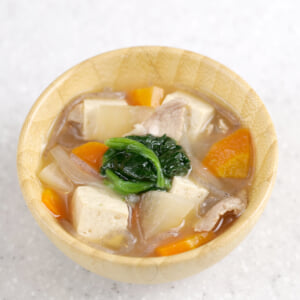
Tonjiru with Onion (Pork and Vegetable Miso Soup)
豚汁(たまねぎ) · Tonjiru
 By Aoi, licensed nutritionist · From a Japanese preschool lunch menu
Tonjiru is the heartier cousin of everyday miso soup: thin slices of pork simmered in dashi with root vegetables, tofu and shirataki noodles, then finished with miso. In this version, onion adds a gentle sweetness that children love, and every ingredient is cut small enough to fit on a little spoon. Because the vegetables cook until soft and soak up the flavor of the broth, it is a comforting bowl that goes with just about any rice-based lunch.
Wheat-free, but uses miso (made with wheat). Japanese school-lunch allergy menus usually allow it, so check with your doctor. How to read the labels
Added. Open the recipe helper (bottom right) → ☰ Menu → 🛒 Shopping list to see the ingredients for your family size.
Printing uses the number of adults and children set under Ingredients, so set those first.
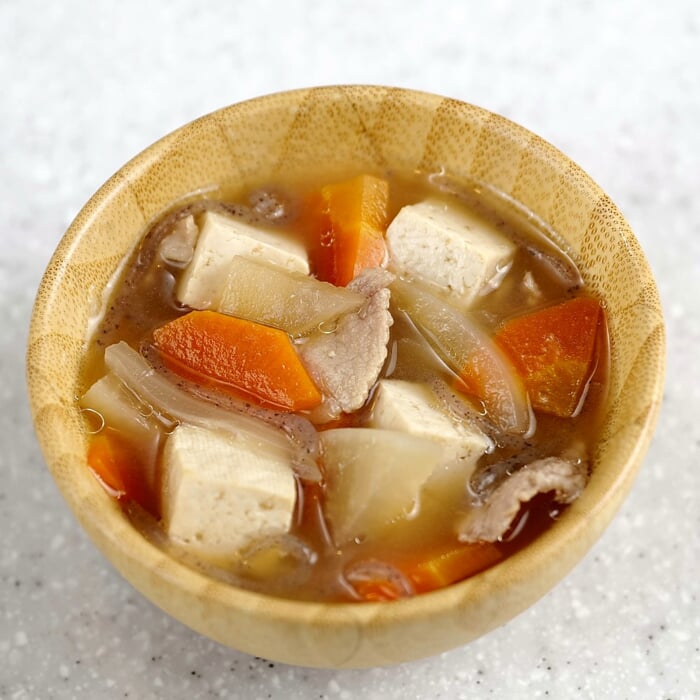
Ingredients
Amounts for 1 child (1 serving). An adult counts as 2 servings.
One serving here is 1.5× the portion served to a child in a Japanese preschool, sized for Western appetites. An adult counts as two servings. Tap an ingredient to check it off.
Ingredients
- 12 gthinly sliced pork (komagire)Small, thin offcuts of pork sold in Japan for quick stir-fries and simmered dishes. Substitute: Thinly sliced pork shoulder or loin cut into bite-size pieces.
- 12 gcarrot
- 18 gdaikon radish
- 18 gfirm tofu
- 15 gonion
- 9 gshirataki (konjac noodles)Translucent, chewy, very low-calorie noodles made from konjac yam, sold in water-filled packs. Substitute: Glass noodles, or omit.
Seasonings
- 180 gdashi stockJapanese soup stock, usually made from kombu (dried kelp) and/or bonito flakes; the base of most Japanese soups and simmered dishes. Substitute: Instant dashi granules dissolved in water, or a mild unsalted chicken or vegetable stock.
- 4.5 gmisoFermented soybean paste. Salty and savory, it is Japan's everyday seasoning for miso soup and many simmered dishes. Substitute: Any light (white or awase) miso. Misos differ in saltiness, so start with a little less and taste. Some misos are made with barley or wheat, so check the label if you avoid them.
About the Japanese ingredients in this recipe
- thinly sliced pork (komagire) (豚こま切れ肉)
- Small, thin offcuts of pork sold in Japan for quick stir-fries and simmered dishes. Substitute: Thinly sliced pork shoulder or loin cut into bite-size pieces.
- shirataki (konjac noodles) (糸こんにゃく)
- Translucent, chewy, very low-calorie noodles made from konjac yam, sold in water-filled packs. Substitute: Glass noodles, or omit.
- dashi stock (だし汁)
- Japanese soup stock, usually made from kombu (dried kelp) and/or bonito flakes; the base of most Japanese soups and simmered dishes. Substitute: Instant dashi granules dissolved in water, or a mild unsalted chicken or vegetable stock.
- miso (みそ)
- Fermented soybean paste. Salty and savory, it is Japan's everyday seasoning for miso soup and many simmered dishes. Substitute: Any light (white or awase) miso. Misos differ in saltiness, so start with a little less and taste. Some misos are made with barley or wheat, so check the label if you avoid them.
Directions
- 1
Cut the pork into 1 to 2 cm wide pieces, the carrot and daikon into small quarter-rounds (icho-giri), the tofu into 1.5 cm cubes, and the onion into thin slices cut in half lengthwise. Cut the shirataki into 1 cm lengths and boil in hot water for 1 minute to remove any odor.
- 2
Put the dashi stock, carrot, daikon and onion in a pot and bring to a boil. Add the pork and simmer until the vegetables are soft.
- 3
Add the shirataki and tofu, stir in the miso until dissolved, and simmer a little longer.
For tonjiru, we want the miso flavor to soak into the vegetables, so the miso goes in earlier than in regular miso soup and the soup is simmered a while longer after adding it.
Nutrition
| Per | 1 serving | 1 adult serving | Your total |
|---|---|---|---|
| Energy | 57 kcal | 114 kcal | 57 kcal |
| Protein | 5.3 g | 10.5 g | 5.3 g |
| Fat | 2.4 g | 4.8 g | 2.4 g |
| Carbohydrates | 5.1 g | 10.2 g | 5.1 g |
| Fiber | 1.4 g | 2.7 g | 1.4 g |
| Salt equivalent | 0.8 g | 1.5 g | 0.8 g |
| Calcium | 42 mg | 84 mg | 42 mg |
| Iron | 0.6 mg | 1.2 mg | 0.6 mg |
| Potassium | 295.5 mg | 591 mg | 295.5 mg |
| Energy | Protein | Fat | Carbs | Fiber | Salt equiv. | Calcium | Iron | Potassium | |
|---|---|---|---|---|---|---|---|---|---|
| 1 serving | 57 kcal | 5.3 g | 2.4 g | 5.1 g | 1.4 g | 0.8 g | 42 mg | 0.6 mg | 295.5 mg |
| 1 adult serving | 114 kcal | 10.5 g | 4.8 g | 10.2 g | 2.7 g | 1.5 g | 84 mg | 1.2 mg | 591 mg |
Values are per serving (1.5× the Japanese preschool portion); an adult serving is double. They were calculated by a licensed Japanese nutritionist using the Standard Tables of Food Composition in Japan. "Salt equivalent" is sodium × 2.54, the standard Japanese measure. Allergen flags cover egg, milk and wheat only and come from the nutritionist's records. Soy sauce and miso are made with wheat but are usually allowed on Japanese wheat-free school menus, so check with your doctor.