Clear Soup with Somen and Cucumber
すまし汁(そうめん・きゅうり) · Sumashijiru
 By Aoi, licensed nutritionist · From a Japanese preschool lunch menu
Sumashijiru is the simplest kind of Japanese soup: clear dashi seasoned with just a little soy sauce and salt, so the flavor of the stock comes through. This summery version adds somen (thin wheat noodles) and cucumber, which turns soft and mild once it is simmered in the broth. The noodles are broken in half before boiling so they are short enough for little children to manage, and they are rinsed well under running water to wash off the salt that somen carries, keeping the soup gentle. Slurpy noodles in a light soup are an easy sell with kids, and it goes nicely alongside rice and a main dish.
Added. Open the recipe helper (bottom right) → ☰ Menu → 🛒 Shopping list to see the ingredients for your family size.
Printing uses the number of adults and children set under Ingredients, so set those first.
Ingredients
Amounts for 1 child (1 serving). An adult counts as 2 servings.
One serving here is 1.5× the portion served to a child in a Japanese preschool, sized for Western appetites. An adult counts as two servings. Tap an ingredient to check it off.
Ingredients
- 7.2 gsomen noodlesVery thin dried Japanese wheat noodles that cook in about 2 minutes. Substitute: Angel hair pasta or thin rice vermicelli.
- 10.5 gcucumber
Seasonings
- 150 gdashi stockJapanese soup stock, usually made from kombu (dried kelp) and/or bonito flakes; the base of most Japanese soups and simmered dishes. Substitute: Instant dashi granules dissolved in water, or a mild unsalted chicken or vegetable stock.
- 0.8 gsoy sauce
- 0.2 gsalt
About the Japanese ingredients in this recipe
- somen noodles (そうめん)
- Very thin dried Japanese wheat noodles that cook in about 2 minutes. Substitute: Angel hair pasta or thin rice vermicelli.
- dashi stock (だし汁)
- Japanese soup stock, usually made from kombu (dried kelp) and/or bonito flakes; the base of most Japanese soups and simmered dishes. Substitute: Instant dashi granules dissolved in water, or a mild unsalted chicken or vegetable stock.
Directions
- 1
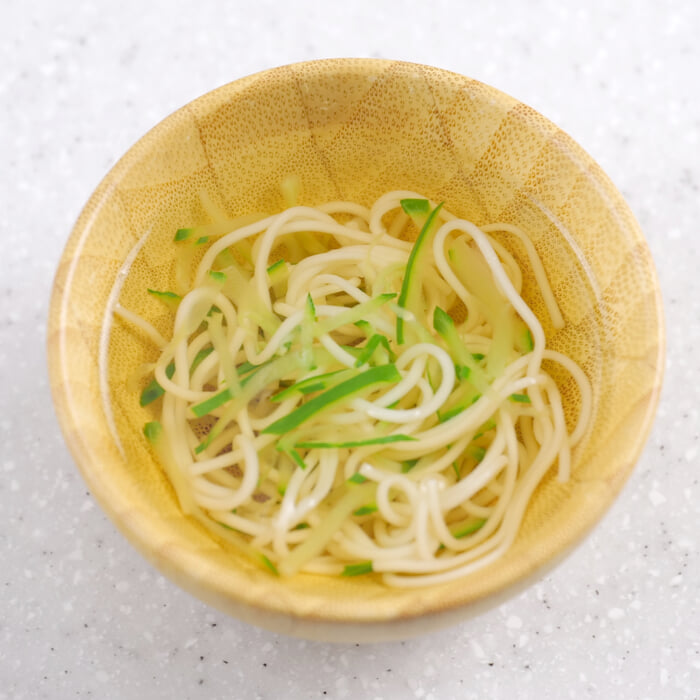
Break the somen noodles in half, boil them, then rinse under running water to wash away the saltiness.
- 2
Cut the cucumber into short, thin strips.
- 3
Bring the dashi stock to a boil in a pot, add the cucumber and the seasonings, and simmer.
- 4
Place the noodles from step 1 in a bowl and pour the soup from step 3 over them.
Nutrition
| Per | 1 serving | 1 adult serving | Your total |
|---|---|---|---|
| Energy | 28.5 kcal | 57 kcal | 28.5 kcal |
| Protein | 1.4 g | 2.7 g | 1.4 g |
| Fat | 0.2 g | 0.3 g | 0.2 g |
| Carbohydrates | 6 g | 12 g | 6 g |
| Fiber | 0.3 g | 0.6 g | 0.3 g |
| Salt equivalent | 0.8 g | 1.5 g | 0.8 g |
| Calcium | 9 mg | 18 mg | 9 mg |
| Iron | 0 mg | 0 mg | 0 mg |
| Potassium | 127.5 mg | 255 mg | 127.5 mg |
| Energy | Protein | Fat | Carbs | Fiber | Salt equiv. | Calcium | Iron | Potassium | |
|---|---|---|---|---|---|---|---|---|---|
| 1 serving | 28.5 kcal | 1.4 g | 0.2 g | 6 g | 0.3 g | 0.8 g | 9 mg | 0 mg | 127.5 mg |
| 1 adult serving | 57 kcal | 2.7 g | 0.3 g | 12 g | 0.6 g | 1.5 g | 18 mg | 0 mg | 255 mg |
Values are per serving (1.5× the Japanese preschool portion); an adult serving is double. They were calculated by a licensed Japanese nutritionist using the Standard Tables of Food Composition in Japan. "Salt equivalent" is sodium × 2.54, the standard Japanese measure. Allergen flags cover egg, milk and wheat only and come from the nutritionist's records. Soy sauce and miso are made with wheat but are usually allowed on Japanese wheat-free school menus, so check with your doctor.
Ingredients in this recipe
You might also like
All recipes →
Sumashijiru (Clear Soup) with Carrot and Cucumber
Sawaniwan (Pork and Julienned Vegetable Soup)
Sumashijiru (Clear Soup with Spinach and Tofu)
Sumashijiru (Clear Soup) with Komatsuna and Enoki
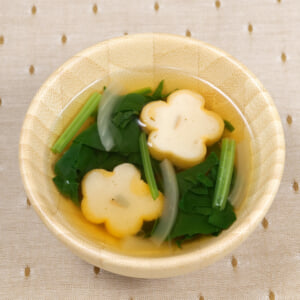
Sumashijiru (Clear Soup) with Hana-fu and Nanohana