Age Gyoza (Deep-Fried Dumplings)
揚げ餃子 · Age Gyoza
 By Aoi, licensed nutritionist · From a Japanese preschool lunch menu
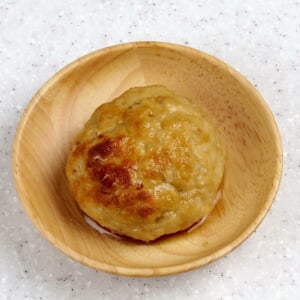
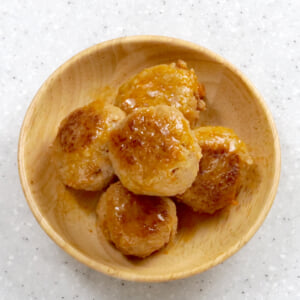
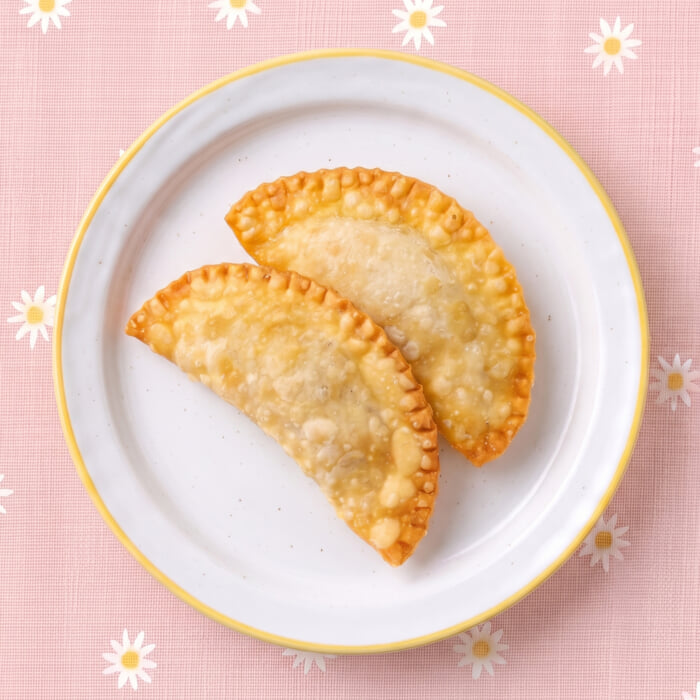
Age gyoza are gyoza wrappers filled with a soft pork and vegetable filling, then deep-fried until golden and shatteringly crisp instead of pan-fried. Children love the crunchy shell and the juicy, mildly seasoned filling inside, and the small half-moon shape is easy for little hands to hold. Salting the cabbage, long onion, and garlic chives first softens their sharp edges so even vegetable-shy kids happily eat them. Frying at a gentle temperature is the key: it lets the filling cook through while the wrapper turns evenly crisp.
Toddlers to adults. The whole family can eat this exactly as written.
Added. Open the recipe helper (bottom right) → ☰ Menu → 🛒 Shopping list to see the ingredients for your family size.
Printing uses the number of adults and children set under Ingredients, so set those first.
Ingredients
Amounts for 1 child (1 serving). An adult counts as 2 servings.
One serving here is 1.5× the portion served to a child in a Japanese preschool, sized for Western appetites. An adult counts as two servings. Tap an ingredient to check it off.
Ingredients
- 18 gcabbage
- 12 gJapanese long onion (naga-negi)A long, thick scallion with a mild, sweet flavor when cooked, used in Japanese soups and stir-fries. Substitute: Leek (white and light green parts) or thick scallions.
- 6 ggarlic chives (nira)Flat-leaved chives with a mild garlic flavor, sold in bunches at Asian markets. Substitute: Scallion greens with a little minced garlic.
- 0.5 gsalt
- 48 gground pork
Seasonings
- 2.4 gsoy sauce
- 1.5 gsugar
- 0.9 gsesame oil
- 1.5 gpotato starch (katakuriko)Japanese potato starch used for thickening sauces and coating fried foods. Substitute: Cornstarch: start with the same amount and add a little more if it is still thin. It thickens a little less than potato starch and needs a couple of minutes at a gentle bubble to reach full thickness.
Ingredients
- 4.8 slice(s)gyoza wrappersThin, round wheat dumpling wrappers sold refrigerated or frozen in Asian grocery stores. Substitute: Wonton wrappers trimmed into rounds.
- to tasteoil for deep-frying
About the Japanese ingredients in this recipe
- Japanese long onion (naga-negi) (長ねぎ)
- A long, thick scallion with a mild, sweet flavor when cooked, used in Japanese soups and stir-fries. Substitute: Leek (white and light green parts) or thick scallions.
- garlic chives (nira) (にら)
- Flat-leaved chives with a mild garlic flavor, sold in bunches at Asian markets. Substitute: Scallion greens with a little minced garlic.
- potato starch (katakuriko) (かたくり粉)
- Japanese potato starch used for thickening sauces and coating fried foods. Substitute: Cornstarch: start with the same amount and add a little more if it is still thin. It thickens a little less than potato starch and needs a couple of minutes at a gentle bubble to reach full thickness. Read the guide: Katakuriko (Japanese Potato Starch) and What to Use Instead → Guide: japanese-school-lunch.com/articles/katakuriko-potato-starch/
- gyoza wrappers (ぎょうざの皮)
- Thin, round wheat dumpling wrappers sold refrigerated or frozen in Asian grocery stores. Substitute: Wonton wrappers trimmed into rounds.
Directions
Video is in Japanese — the steps below are synced to it, so tap ▶ on a step to jump to that moment.
- 1
Finely mince the cabbage, long onion, and garlic chives.
- 2
Put the vegetables in a bowl, sprinkle with the salt, and rub it in well with your hands. Let stand for about 10 minutes, then squeeze firmly to wring out the moisture. This softens the vegetables' harsh, bitter notes and makes them easier for children to eat.
- 3
Add the soy sauce, sugar, sesame oil, and potato starch to the ground pork and knead well until the mixture becomes sticky. Add the vegetables from step 2 and mix in. Roughly divide the filling into equal portions. Kneading the pork on its own first lets the seasonings soak in and gives a better texture.
- 4
Gyoza wrappers dry out and become hard to fold, so take out only as many as you are about to use. Place a portion of filling in the center of each wrapper and shape it into a long oval across the wrapper.
- 5
Moisten the edge of the wrapper with a little water (not included in the ingredient amounts), fold it in half, and press firmly with your fingers to seal. Then press along the edge with a fork to close the wrapper tightly. The wrappers tend to open while frying, so make sure to seal them firmly with the fork.
- 6
Lower the gyoza into oil heated to 160°C (320°F) and fry for about 5 minutes, turning them over partway through. If the oil is too hot, the outside browns before the filling is cooked, so fry slowly at a low temperature.
The wrappers tend to open while frying, so be sure to seal them tightly with a fork. To freeze, place the uncooked gyoza in a freezer bag and freeze before frying; when ready to eat, fry them straight from frozen in 160°C (320°F) oil for about 6 to 7 minutes. They keep for about 2 weeks in the freezer, but enjoy them as soon as you can.
Nutrition
| Per | 1 serving | 1 adult serving | Your total |
|---|---|---|---|
| Energy | 445.5 kcal | 891 kcal | 445.5 kcal |
| Protein | 11.3 g | 22.5 g | 11.3 g |
| Fat | 36 g | 72 g | 36 g |
| Carbohydrates | 22 g | 44.1 g | 22 g |
| Fiber | 1.8 g | 3.6 g | 1.8 g |
| Salt equivalent | 0.9 g | 1.8 g | 0.9 g |
| Calcium | 18 mg | 36 mg | 18 mg |
| Iron | 0.9 mg | 1.8 mg | 0.9 mg |
| Potassium | 229.5 mg | 459 mg | 229.5 mg |
| Phosphorus | 85.5 mg | 171 mg | 85.5 mg |
| Energy | Protein | Fat | Carbs | Fiber | Salt equiv. | Calcium | Iron | Potassium | Phosphorus | |
|---|---|---|---|---|---|---|---|---|---|---|
| 1 serving | 445.5 kcal | 11.3 g | 36 g | 22 g | 1.8 g | 0.9 g | 18 mg | 0.9 mg | 229.5 mg | 85.5 mg |
| 1 adult serving | 891 kcal | 22.5 g | 72 g | 44.1 g | 3.6 g | 1.8 g | 36 mg | 1.8 mg | 459 mg | 171 mg |
Values are per serving (1.5× the Japanese preschool portion); an adult serving is double. They were calculated by a licensed Japanese nutritionist using the Standard Tables of Food Composition in Japan. "Salt equivalent" is sodium × 2.54, the standard Japanese measure. Allergen flags cover egg, milk and wheat only and come from the nutritionist's records. Soy sauce and miso are made with wheat but are usually allowed on Japanese wheat-free school menus, so check with your doctor.