Yukari Rice (Red Shiso Rice)
ゆかりごはん · Yukari Gohan
 By Aoi, licensed nutritionist · From a Japanese preschool lunch menu
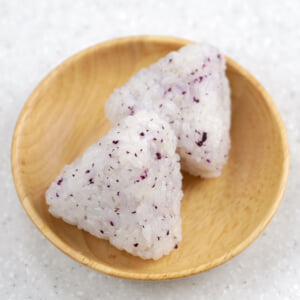
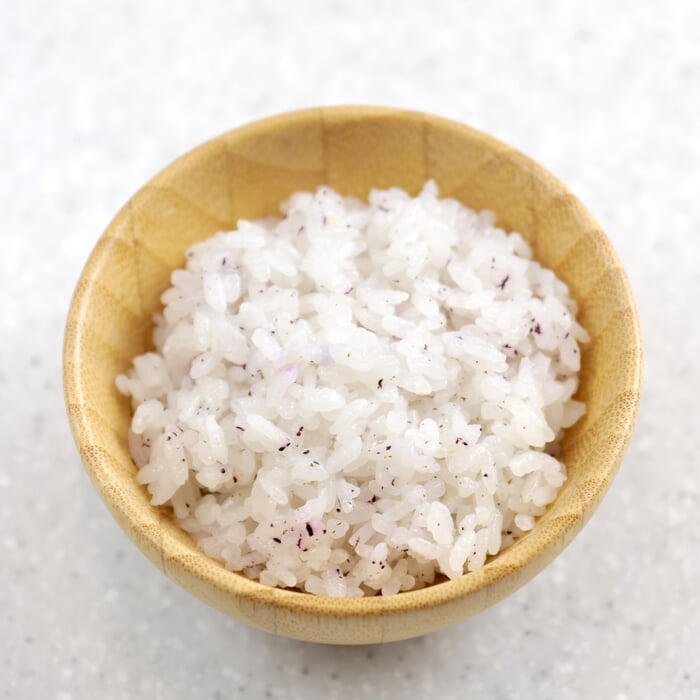
Yukari gohan is one of the simplest dishes on the preschool menu: freshly cooked rice mixed with yukari, a salty-sour seasoning made from dried red shiso leaves (the same leaves used to color umeboshi pickled plums). It turns plain rice a pretty pink and adds a gentle tang that children love, so it is a reliable way to get even fussy eaters to finish their rice. You can find yukari at Japanese grocery stores or online; a little goes a long way.
Added. Open the recipe helper (bottom right) → ☰ Menu → 🛒 Shopping list to see the ingredients for your family size.
Printing uses the number of adults and children set under Ingredients, so set those first.
Ingredients
Amounts for 1 child (1 serving). An adult counts as 2 servings.
One serving here is 1.5× the portion served to a child in a Japanese preschool, sized for Western appetites. An adult counts as two servings. Tap an ingredient to check it off.
Ingredients
- 75 griceJapanese short-grain white rice (japonica), which cooks up soft and slightly sticky. The amount listed is for uncooked rice. Substitute: Sushi rice, or another short-grain or medium-grain rice such as Calrose.
Seasonings
- 0.5 gyukari (dried red shiso seasoning)A tangy, salty purple sprinkle made from dried red shiso (perilla) leaves, usually shaken over rice. Substitute: Shiso furikake, or a pinch of salt plus a few drops of umeboshi (pickled plum) vinegar.
About the Japanese ingredients in this recipe
- rice (米)
- Japanese short-grain white rice (japonica), which cooks up soft and slightly sticky. The amount listed is for uncooked rice. Substitute: Sushi rice, or another short-grain or medium-grain rice such as Calrose.
- yukari (dried red shiso seasoning) (ゆかり)
- A tangy, salty purple sprinkle made from dried red shiso (perilla) leaves, usually shaken over rice. Substitute: Shiso furikake, or a pinch of salt plus a few drops of umeboshi (pickled plum) vinegar.
Directions
- 1
Mix the yukari into the cooked rice.
Sprinkling yukari on top makes the rice hard for children to eat, so at preschool we mix it in thoroughly before serving.
Nutrition
| Per | 1 serving | 1 adult serving | Your total |
|---|---|---|---|
| Energy | 258 kcal | 516 kcal | 258 kcal |
| Protein | 4.7 g | 9.3 g | 4.7 g |
| Fat | 0.8 g | 1.5 g | 0.8 g |
| Carbohydrates | 58.4 g | 116.7 g | 58.4 g |
| Fiber | 0.5 g | 0.9 g | 0.5 g |
| Salt equivalent | 0.2 g | 0.3 g | 0.2 g |
| Calcium | 6 mg | 12 mg | 6 mg |
| Iron | 0.6 mg | 1.2 mg | 0.6 mg |
| Potassium | 69 mg | 138 mg | 69 mg |
| Energy | Protein | Fat | Carbs | Fiber | Salt equiv. | Calcium | Iron | Potassium | |
|---|---|---|---|---|---|---|---|---|---|
| 1 serving | 258 kcal | 4.7 g | 0.8 g | 58.4 g | 0.5 g | 0.2 g | 6 mg | 0.6 mg | 69 mg |
| 1 adult serving | 516 kcal | 9.3 g | 1.5 g | 116.7 g | 0.9 g | 0.3 g | 12 mg | 1.2 mg | 138 mg |
Values are per serving (1.5× the Japanese preschool portion); an adult serving is double. They were calculated by a licensed Japanese nutritionist using the Standard Tables of Food Composition in Japan. "Salt equivalent" is sodium × 2.54, the standard Japanese measure. Allergen flags cover egg, milk and wheat only and come from the nutritionist's records. Soy sauce and miso are made with wheat but are usually allowed on Japanese wheat-free school menus, so check with your doctor.