Wakame Onigiri (Seaweed Rice Balls)
わかめおにぎり · Wakame Onigiri
 By Aoi, licensed nutritionist · From a Japanese preschool lunch menu
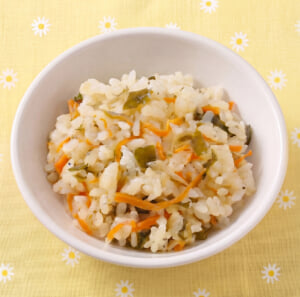
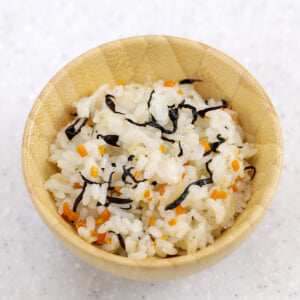
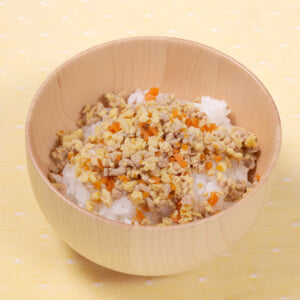
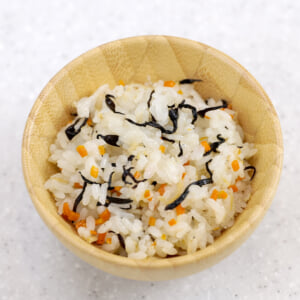
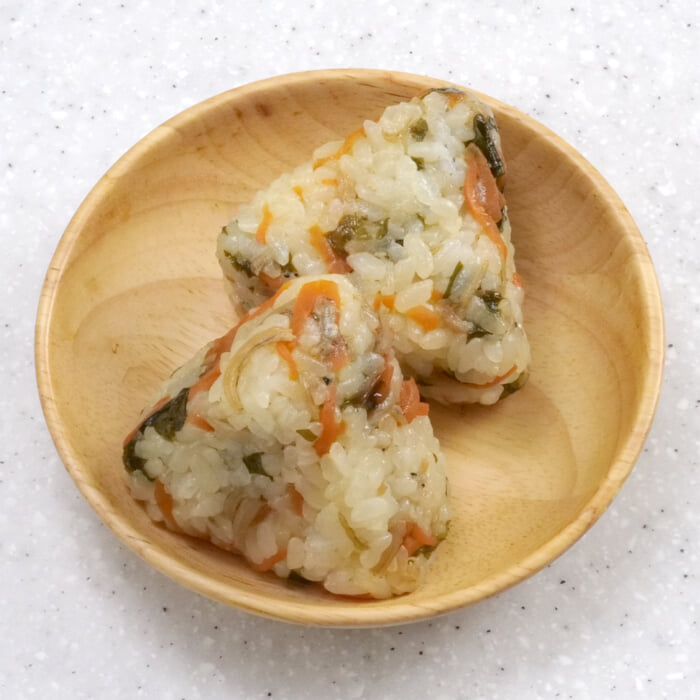
Onigiri are Japanese rice balls, and this version folds in tender wakame seaweed, finely shredded carrot and shirasu (tiny dried baby sardines) for a gentle, savory flavor. The filling is simmered in dashi with a little sugar and soy sauce until the liquid is absorbed, so every grain of rice picks up the taste without any pieces falling out. Small hands can hold these easily, and the soft, mild seasoning makes them a favorite even with children who are wary of seaweed or fish.
Wheat-free, but uses soy sauce (made with wheat). Japanese school-lunch allergy menus usually allow it, so check with your doctor. How to read the labels
Added. Open the recipe helper (bottom right) → ☰ Menu → 🛒 Shopping list to see the ingredients for your family size.
Printing uses the number of adults and children set under Ingredients, so set those first.
Ingredients
Amounts for 1 child (1 serving). An adult counts as 2 servings.
One serving here is 1.5× the portion served to a child in a Japanese preschool, sized for Western appetites. An adult counts as two servings. Tap an ingredient to check it off.
Ingredients
- 60 griceJapanese short-grain white rice (japonica), which cooks up soft and slightly sticky. The amount listed is for uncooked rice. Substitute: Sushi rice, or another short-grain or medium-grain rice such as Calrose.
- 7.5 gcarrot
- 0.2 gdried cut wakameSmall pieces of dried wakame seaweed that rehydrate in a few minutes and are used in soups and salads. Substitute: Any dried seaweed for soup, or omit.
- 4.5 gshirasu (dried baby sardines)Tiny, lightly salted and dried whole baby sardines that add gentle saltiness and calcium. Substitute: A small amount of flaked canned sardines, or omit.
Seasonings
- 1.5 gvegetable oil
- 15 gdashi stockJapanese soup stock, usually made from kombu (dried kelp) and/or bonito flakes; the base of most Japanese soups and simmered dishes. Substitute: Instant dashi granules dissolved in water, or a mild unsalted chicken or vegetable stock.
- 1.8 gsugar
- 3.6 gsoy sauce
About the Japanese ingredients in this recipe
- rice (米)
- Japanese short-grain white rice (japonica), which cooks up soft and slightly sticky. The amount listed is for uncooked rice. Substitute: Sushi rice, or another short-grain or medium-grain rice such as Calrose.
- dried cut wakame (カットわかめ)
- Small pieces of dried wakame seaweed that rehydrate in a few minutes and are used in soups and salads. Substitute: Any dried seaweed for soup, or omit.
- shirasu (dried baby sardines) (しらす干し)
- Tiny, lightly salted and dried whole baby sardines that add gentle saltiness and calcium. Substitute: A small amount of flaked canned sardines, or omit.
- dashi stock (だし汁)
- Japanese soup stock, usually made from kombu (dried kelp) and/or bonito flakes; the base of most Japanese soups and simmered dishes. Substitute: Instant dashi granules dissolved in water, or a mild unsalted chicken or vegetable stock.
Directions
- 1
Soak the rice in water for at least 30 minutes. Add one-third of the seasonings and cook the rice.
- 2
Cut the carrot into short, fine matchsticks. Rehydrate the wakame in water and chop it finely. Briefly blanch the shirasu in boiling water to remove excess salt.
- 3
Heat the oil in a pot and stir-fry the carrot. Once it is cooked through, add the dashi stock, the remaining seasonings, the wakame and the shirasu, and simmer over low heat until the liquid has cooked away.
- 4
Mix the cooked rice from step 1 with the mixture from step 3, then shape into onigiri.
The salt in the seasonings gets in the way of the rice absorbing water, so always soak the rice first and stir in the seasonings just before you start cooking it.
Nutrition
| Per | 1 serving | 1 adult serving | Your total |
|---|---|---|---|
| Energy | 237 kcal | 474 kcal | 237 kcal |
| Protein | 4.9 g | 9.9 g | 4.9 g |
| Fat | 2.3 g | 4.5 g | 2.3 g |
| Carbohydrates | 49.5 g | 99 g | 49.5 g |
| Fiber | 0.6 g | 1.2 g | 0.6 g |
| Salt equivalent | 0.6 g | 1.2 g | 0.6 g |
| Calcium | 19.5 mg | 39 mg | 19.5 mg |
| Iron | 0.5 mg | 0.9 mg | 0.5 mg |
| Potassium | 108 mg | 216 mg | 108 mg |
| Energy | Protein | Fat | Carbs | Fiber | Salt equiv. | Calcium | Iron | Potassium | |
|---|---|---|---|---|---|---|---|---|---|
| 1 serving | 237 kcal | 4.9 g | 2.3 g | 49.5 g | 0.6 g | 0.6 g | 19.5 mg | 0.5 mg | 108 mg |
| 1 adult serving | 474 kcal | 9.9 g | 4.5 g | 99 g | 1.2 g | 1.2 g | 39 mg | 0.9 mg | 216 mg |
Values are per serving (1.5× the Japanese preschool portion); an adult serving is double. They were calculated by a licensed Japanese nutritionist using the Standard Tables of Food Composition in Japan. "Salt equivalent" is sodium × 2.54, the standard Japanese measure. Allergen flags cover egg, milk and wheat only and come from the nutritionist's records. Soy sauce and miso are made with wheat but are usually allowed on Japanese wheat-free school menus, so check with your doctor.