Tuna Nameshi (Rice with Greens)
ツナ菜めし · Tsuna Nameshi
 By Aoi, licensed nutritionist · From a Japanese preschool lunch menu
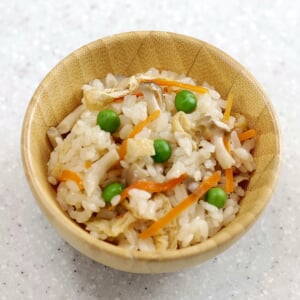
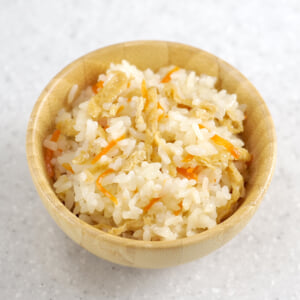
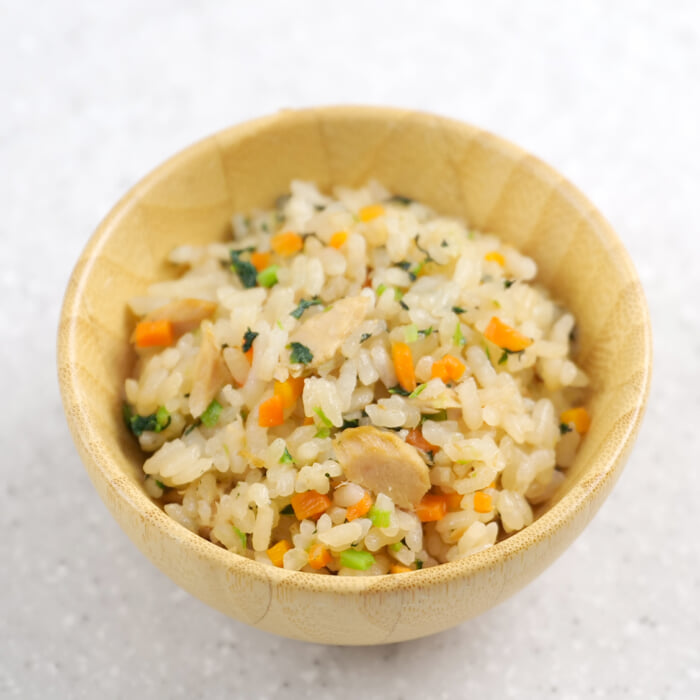
Nameshi, literally "greens rice," is a homely Japanese dish of freshly cooked rice mixed with finely chopped leafy greens. In this version from the preschool kitchen, carrot and canned tuna go into the rice cooker with a little soy sauce and mirin, so the rice soaks up their savory flavor while it cooks, and blanched komatsuna is folded in at the end for color and freshness. Because the greens are chopped small and softened by boiling, even children who push away vegetables tend to eat them happily when they are tucked into rice like this.
Wheat-free, but uses soy sauce (made with wheat). Japanese school-lunch allergy menus usually allow it, so check with your doctor. How to read the labels
Added. Open the recipe helper (bottom right) → ☰ Menu → 🛒 Shopping list to see the ingredients for your family size.
Printing uses the number of adults and children set under Ingredients, so set those first.
Ingredients
Amounts for 1 child (1 serving). An adult counts as 2 servings.
One serving here is 1.5× the portion served to a child in a Japanese preschool, sized for Western appetites. An adult counts as two servings. Tap an ingredient to check it off.
Ingredients
- 60 griceJapanese short-grain white rice (japonica), which cooks up soft and slightly sticky. The amount listed is for uncooked rice. Substitute: Sushi rice, or another short-grain or medium-grain rice such as Calrose.
- 12 gcarrot
- 15 gcanned tuna (in oil)
- 22.5 gkomatsunaA mild Japanese leafy green (Japanese mustard spinach) with tender stems. Substitute: Spinach or bok choy.
Seasonings
- 3.8 gsoy sauce
- 2.4 gmirinMirin is a sweet Japanese rice seasoning that adds gentle sweetness and a glossy finish. Hon-mirin (true mirin) contains about 14% alcohol; "mirin-style seasoning" has little or no alcohol. Some alcohol can remain after short cooking. If you prefer no alcohol for children, use the substitute. Substitute: For each tablespoon of mirin, use 1 tablespoon water plus 1 to 2 teaspoons sugar.
About the Japanese ingredients in this recipe
- rice (米)
- Japanese short-grain white rice (japonica), which cooks up soft and slightly sticky. The amount listed is for uncooked rice. Substitute: Sushi rice, or another short-grain or medium-grain rice such as Calrose.
- komatsuna (こまつな)
- A mild Japanese leafy green (Japanese mustard spinach) with tender stems. Substitute: Spinach or bok choy.
- mirin (みりん)
- Mirin is a sweet Japanese rice seasoning that adds gentle sweetness and a glossy finish. Hon-mirin (true mirin) contains about 14% alcohol; "mirin-style seasoning" has little or no alcohol. Some alcohol can remain after short cooking. If you prefer no alcohol for children, use the substitute. Substitute: For each tablespoon of mirin, use 1 tablespoon water plus 1 to 2 teaspoons sugar.
Directions
- 1
Rinse the rice, add the usual amount of water for cooking, and let it soak for at least 30 minutes.
- 2
Cut the carrot into a coarse mince. Drain the oil from the canned tuna.
- 3
Add the soy sauce and mirin to the soaked rice from step 1 and stir, then place the carrot and tuna from step 2 on top and cook the rice.
- 4
Coarsely chop the komatsuna and boil it. Rinse under running water, then squeeze firmly to remove as much water as possible.
- 5
Add the komatsuna from step 4 to the freshly cooked rice and mix everything together evenly.
The salt in the seasonings keeps the rice from absorbing water, so always soak the rice first and stir in the seasonings only just before you start cooking.
Nutrition
| Per | 1 serving | 1 adult serving | Your total |
|---|---|---|---|
| Energy | 262.5 kcal | 525 kcal | 262.5 kcal |
| Protein | 7.1 g | 14.1 g | 7.1 g |
| Fat | 3.9 g | 7.8 g | 3.9 g |
| Carbohydrates | 49.5 g | 99 g | 49.5 g |
| Fiber | 1 g | 2.1 g | 1 g |
| Salt equivalent | 0.8 g | 1.5 g | 0.8 g |
| Calcium | 46.5 mg | 93 mg | 46.5 mg |
| Iron | 1.2 mg | 2.4 mg | 1.2 mg |
| Potassium | 252 mg | 504 mg | 252 mg |
| Energy | Protein | Fat | Carbs | Fiber | Salt equiv. | Calcium | Iron | Potassium | |
|---|---|---|---|---|---|---|---|---|---|
| 1 serving | 262.5 kcal | 7.1 g | 3.9 g | 49.5 g | 1 g | 0.8 g | 46.5 mg | 1.2 mg | 252 mg |
| 1 adult serving | 525 kcal | 14.1 g | 7.8 g | 99 g | 2.1 g | 1.5 g | 93 mg | 2.4 mg | 504 mg |
Values are per serving (1.5× the Japanese preschool portion); an adult serving is double. They were calculated by a licensed Japanese nutritionist using the Standard Tables of Food Composition in Japan. "Salt equivalent" is sodium × 2.54, the standard Japanese measure. Allergen flags cover egg, milk and wheat only and come from the nutritionist's records. Soy sauce and miso are made with wheat but are usually allowed on Japanese wheat-free school menus, so check with your doctor.