Tomato and Tuna Mixed Rice
トマトとツナの混ぜごはん · Tomato to Tsuna no Mazegohan
 By Aoi, licensed nutritionist · From a Japanese preschool lunch menu
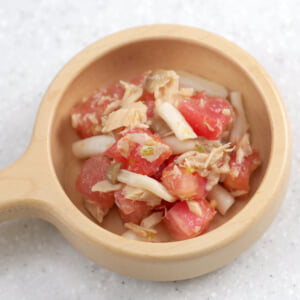
Mazegohan is simply cooked rice with other ingredients mixed in, and this version pairs juicy diced tomato with canned tuna, a pinch of salt and soy sauce, and a sprinkle of dried parsley. The tuna and soy sauce give it a gentle savory depth, while the tomato adds a fresh, slightly sweet tang that children take to easily. Peeling the tomato first keeps the texture soft and easy for little ones to chew, and everything comes together in just a few minutes once the rice is cooked.
Wheat-free, but uses soy sauce (made with wheat). Japanese school-lunch allergy menus usually allow it, so check with your doctor. How to read the labels
Added. Open the recipe helper (bottom right) → ☰ Menu → 🛒 Shopping list to see the ingredients for your family size.
Printing uses the number of adults and children set under Ingredients, so set those first.
Ingredients
Amounts for 1 child (1 serving). An adult counts as 2 servings.
One serving here is 1.5× the portion served to a child in a Japanese preschool, sized for Western appetites. An adult counts as two servings. Tap an ingredient to check it off.
Ingredients
- 60 griceJapanese short-grain white rice (japonica), which cooks up soft and slightly sticky. The amount listed is for uncooked rice. Substitute: Sushi rice, or another short-grain or medium-grain rice such as Calrose.
- 24.8 gtomato
- 18.8 gcanned tuna (in oil)
Seasonings
- 0.4 gsalt
- 1.5 gsoy sauce
- 0 gdried parsley
About the Japanese ingredients in this recipe
- rice (米)
- Japanese short-grain white rice (japonica), which cooks up soft and slightly sticky. The amount listed is for uncooked rice. Substitute: Sushi rice, or another short-grain or medium-grain rice such as Calrose.
Directions
- 1
Cook the rice as you normally would.
- 2
Blanch the tomato in boiling water to peel it, then cut it into small dice. Drain the oil from the canned tuna.
- 3
Combine the rice from step 1 with the tomato and tuna from step 2, the seasonings, and the dried parsley, and mix well.
Nutrition
| Per | 1 serving | 1 adult serving | Your total |
|---|---|---|---|
| Energy | 261 kcal | 522 kcal | 261 kcal |
| Protein | 7.2 g | 14.4 g | 7.2 g |
| Fat | 4.7 g | 9.3 g | 4.7 g |
| Carbohydrates | 47.8 g | 95.7 g | 47.8 g |
| Fiber | 0.6 g | 1.2 g | 0.6 g |
| Salt equivalent | 0.6 g | 1.2 g | 0.6 g |
| Calcium | 6 mg | 12 mg | 6 mg |
| Iron | 0.6 mg | 1.2 mg | 0.6 mg |
| Potassium | 157.5 mg | 315 mg | 157.5 mg |
| Energy | Protein | Fat | Carbs | Fiber | Salt equiv. | Calcium | Iron | Potassium | |
|---|---|---|---|---|---|---|---|---|---|
| 1 serving | 261 kcal | 7.2 g | 4.7 g | 47.8 g | 0.6 g | 0.6 g | 6 mg | 0.6 mg | 157.5 mg |
| 1 adult serving | 522 kcal | 14.4 g | 9.3 g | 95.7 g | 1.2 g | 1.2 g | 12 mg | 1.2 mg | 315 mg |
Values are per serving (1.5× the Japanese preschool portion); an adult serving is double. They were calculated by a licensed Japanese nutritionist using the Standard Tables of Food Composition in Japan. "Salt equivalent" is sodium × 2.54, the standard Japanese measure. Allergen flags cover egg, milk and wheat only and come from the nutritionist's records. Soy sauce and miso are made with wheat but are usually allowed on Japanese wheat-free school menus, so check with your doctor.