Mushroom Rice (Snack)
おやつきのこごはん · Oyatsu Kinoko Gohan
 By Aoi, licensed nutritionist · From a Japanese preschool lunch menu
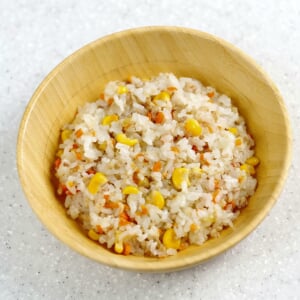
In Japanese preschools, the afternoon snack (oyatsu) is often a small savory bite rather than something sweet, and a bowl of seasoned rice like this one fills the gap until dinner. Onion is sautéed until sweet, then shimeji and enoki mushrooms and canned tuna are folded in with a little soy sauce and salt and mixed through lightly seasoned rice. The mushrooms are chopped small so their texture doesn't put children off, and the tuna adds a savory depth that makes even mushroom-wary kids come back for more.
Wheat-free, but uses soy sauce (made with wheat). Japanese school-lunch allergy menus usually allow it, so check with your doctor. How to read the labels
Added. Open the recipe helper (bottom right) → ☰ Menu → 🛒 Shopping list to see the ingredients for your family size.
Printing uses the number of adults and children set under Ingredients, so set those first.
Ingredients
Amounts for 1 child (1 serving). An adult counts as 2 servings.
One serving here is 1.5× the portion served to a child in a Japanese preschool, sized for Western appetites. An adult counts as two servings. Tap an ingredient to check it off.
Ingredients
- 60 griceJapanese short-grain white rice (japonica), which cooks up soft and slightly sticky. The amount listed is for uncooked rice. Substitute: Sushi rice, or another short-grain or medium-grain rice such as Calrose.
- 18 gonion
- 9 gshimeji mushroomsSmall brown-capped mushrooms sold in clusters, with a mild, slightly nutty flavor and a pleasant chew. Substitute: Oyster mushrooms or sliced button mushrooms.
- 12 genoki mushroomsLong, thin, white mushrooms with tiny caps sold in a bunch, with a mild flavor and slight crunch. Substitute: Thinly sliced button mushrooms.
- 7.5 gcanned tuna (in oil)
Seasonings
- 1.5 gvegetable oil
- 0.9 gsoy sauce
- 0.4 gsalt
About the Japanese ingredients in this recipe
- rice (米)
- Japanese short-grain white rice (japonica), which cooks up soft and slightly sticky. The amount listed is for uncooked rice. Substitute: Sushi rice, or another short-grain or medium-grain rice such as Calrose.
- shimeji mushrooms (ぶなしめじ)
- Small brown-capped mushrooms sold in clusters, with a mild, slightly nutty flavor and a pleasant chew. Substitute: Oyster mushrooms or sliced button mushrooms.
- enoki mushrooms (えのきたけ)
- Long, thin, white mushrooms with tiny caps sold in a bunch, with a mild flavor and slight crunch. Substitute: Thinly sliced button mushrooms.
Directions
- 1
Soak the rice in water for at least 30 minutes. Combine the soy sauce and salt, stir 1/3 of the mixture into the rice, and cook the rice.
- 2
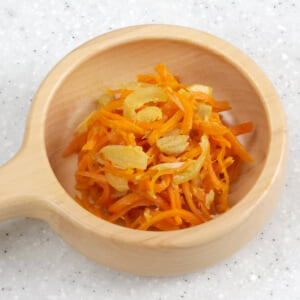
Thinly slice the onion and cut the slices in half. Cut the shimeji into 1 cm pieces, chopping the caps finely. Cut the enoki into 1 cm lengths. Drain the oil from the tuna.
- 3
Heat the oil in a frying pan, add the onion and sauté well.
- 4
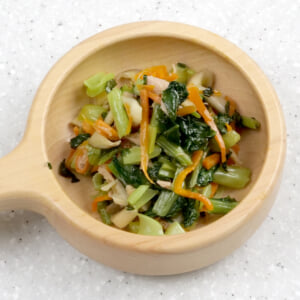
Add the shimeji, enoki and tuna and stir-fry, then add the remaining seasoning and stir-fry briefly. Add the cooked rice from step 1 and mix together.
Nutrition
| Per | 1 serving | 1 adult serving | Your total |
|---|---|---|---|
| Energy | 252 kcal | 504 kcal | 252 kcal |
| Protein | 5.7 g | 11.4 g | 5.7 g |
| Fat | 3.8 g | 7.5 g | 3.8 g |
| Carbohydrates | 49.3 g | 98.7 g | 49.3 g |
| Fiber | 1.4 g | 2.7 g | 1.4 g |
| Salt equivalent | 0.5 g | 0.9 g | 0.5 g |
| Calcium | 6 mg | 12 mg | 6 mg |
| Iron | 0.6 mg | 1.2 mg | 0.6 mg |
| Potassium | 175.5 mg | 351 mg | 175.5 mg |
| Energy | Protein | Fat | Carbs | Fiber | Salt equiv. | Calcium | Iron | Potassium | |
|---|---|---|---|---|---|---|---|---|---|
| 1 serving | 252 kcal | 5.7 g | 3.8 g | 49.3 g | 1.4 g | 0.5 g | 6 mg | 0.6 mg | 175.5 mg |
| 1 adult serving | 504 kcal | 11.4 g | 7.5 g | 98.7 g | 2.7 g | 0.9 g | 12 mg | 1.2 mg | 351 mg |
Values are per serving (1.5× the Japanese preschool portion); an adult serving is double. They were calculated by a licensed Japanese nutritionist using the Standard Tables of Food Composition in Japan. "Salt equivalent" is sodium × 2.54, the standard Japanese measure. Allergen flags cover egg, milk and wheat only and come from the nutritionist's records. Soy sauce and miso are made with wheat but are usually allowed on Japanese wheat-free school menus, so check with your doctor.