Tofu Matsukaze-yaki (Baked Miso Meatloaf) (Wheat-Free)
豆腐の松風焼き(小麦なし) · Tofu no Matsukaze-yaki
 By Aoi, licensed nutritionist · From a Japanese preschool lunch menu
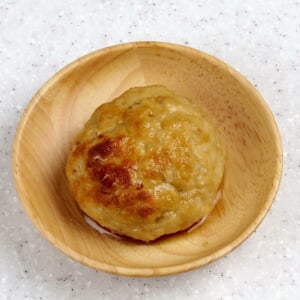
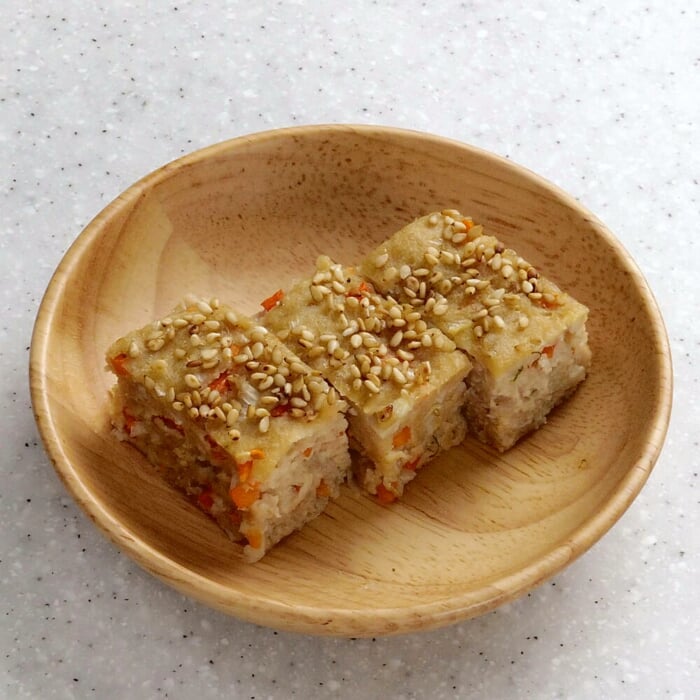
Matsukaze-yaki is a Japanese dish of seasoned ground meat pressed into a flat slab, baked, and finished with a scattering of seeds on top. It is best known as part of osechi, the traditional New Year's spread, where it is usually made with ground chicken and topped with poppy seeds. In this preschool version, mashed firm tofu is kneaded into ground pork with miso, minced green onion, and carrot, which keeps the texture soft and gentle for little mouths and lets the vegetables slip in unnoticed. Potato starch holds everything together in place of flour or panko, so the dish contains no wheat flour, and the mild miso-and-sesame flavor is one that children readily take to.
Wheat-free, but uses miso (made with wheat). Japanese school-lunch allergy menus usually allow it, so check with your doctor. How to read the labels
Added. Open the recipe helper (bottom right) → ☰ Menu → 🛒 Shopping list to see the ingredients for your family size.
Printing uses the number of adults and children set under Ingredients, so set those first.
Ingredients
Amounts for 1 child (1 serving). An adult counts as 2 servings.
One serving here is 1.5× the portion served to a child in a Japanese preschool, sized for Western appetites. An adult counts as two servings. Tap an ingredient to check it off.
Ingredients
- 52.5 gfirm tofu
- 37.5 gground pork
- 9 ggreen onion (naga negi)Japanese long onion, thicker and milder than Western scallions. Substitute: Scallions or the white part of a leek.
- 7.5 gcarrot
Seasonings
- 4.5 gpotato starch (katakuriko)Japanese potato starch used for thickening sauces and coating fried foods. Substitute: Cornstarch: start with the same amount and add a little more if it is still thin. It thickens a little less than potato starch and needs a couple of minutes at a gentle bubble to reach full thickness.
- 2.3 gmisoFermented soybean paste. Salty and savory, it is Japan's everyday seasoning for miso soup and many simmered dishes. Substitute: Any light (white or awase) miso. Misos differ in saltiness, so start with a little less and taste. Some misos are made with barley or wheat, so check the label if you avoid them.
- 0.8 gsugar
- 0.2 gsalt
- 0.9 gwhite sesame seeds
About the Japanese ingredients in this recipe
- green onion (naga negi) (ねぎ)
- Japanese long onion, thicker and milder than Western scallions. Substitute: Scallions or the white part of a leek.
- potato starch (katakuriko) (かたくり粉)
- Japanese potato starch used for thickening sauces and coating fried foods. Substitute: Cornstarch: start with the same amount and add a little more if it is still thin. It thickens a little less than potato starch and needs a couple of minutes at a gentle bubble to reach full thickness. Read the guide: Katakuriko (Japanese Potato Starch) and What to Use Instead → Guide: japanese-school-lunch.com/articles/katakuriko-potato-starch/
- miso (みそ)
- Fermented soybean paste. Salty and savory, it is Japan's everyday seasoning for miso soup and many simmered dishes. Substitute: Any light (white or awase) miso. Misos differ in saltiness, so start with a little less and taste. Some misos are made with barley or wheat, so check the label if you avoid them.
Directions
- 1
Drain the tofu in a colander, then transfer it to a bowl and mash it well.
- 2
Finely mince the green onion and carrot.
- 3
Add the minced vegetables, ground pork, potato starch, miso, sugar, and salt to the mashed tofu and knead well until the mixture becomes sticky.
- 4
Press the air out of the mixture, place it on a baking sheet lined with parchment paper, spread it into a flat slab about 2 cm thick, and sprinkle the white sesame seeds over the top.
- 5
Bake in an oven preheated to 200°C (400°F) for about 20 minutes.
Nutrition
| Per | 1 serving | 1 adult serving | Your total |
|---|---|---|---|
| Energy | 151.5 kcal | 303 kcal | 151.5 kcal |
| Protein | 11 g | 21.9 g | 11 g |
| Fat | 9.6 g | 19.2 g | 9.6 g |
| Carbohydrates | 7.2 g | 14.4 g | 7.2 g |
| Fiber | 1.4 g | 2.7 g | 1.4 g |
| Salt equivalent | 0.5 g | 0.9 g | 0.5 g |
| Calcium | 70.5 mg | 141 mg | 70.5 mg |
| Iron | 1.5 mg | 3 mg | 1.5 mg |
| Potassium | 222 mg | 444 mg | 222 mg |
| Energy | Protein | Fat | Carbs | Fiber | Salt equiv. | Calcium | Iron | Potassium | |
|---|---|---|---|---|---|---|---|---|---|
| 1 serving | 151.5 kcal | 11 g | 9.6 g | 7.2 g | 1.4 g | 0.5 g | 70.5 mg | 1.5 mg | 222 mg |
| 1 adult serving | 303 kcal | 21.9 g | 19.2 g | 14.4 g | 2.7 g | 0.9 g | 141 mg | 3 mg | 444 mg |
Values are per serving (1.5× the Japanese preschool portion); an adult serving is double. They were calculated by a licensed Japanese nutritionist using the Standard Tables of Food Composition in Japan. "Salt equivalent" is sodium × 2.54, the standard Japanese measure. Allergen flags cover egg, milk and wheat only and come from the nutritionist's records. Soy sauce and miso are made with wheat but are usually allowed on Japanese wheat-free school menus, so check with your doctor.