Swordfish Piccata
メカジキのピカタ
 By Aoi, licensed nutritionist · From a Japanese preschool lunch menu
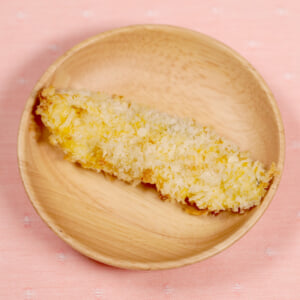
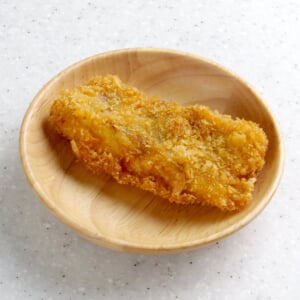
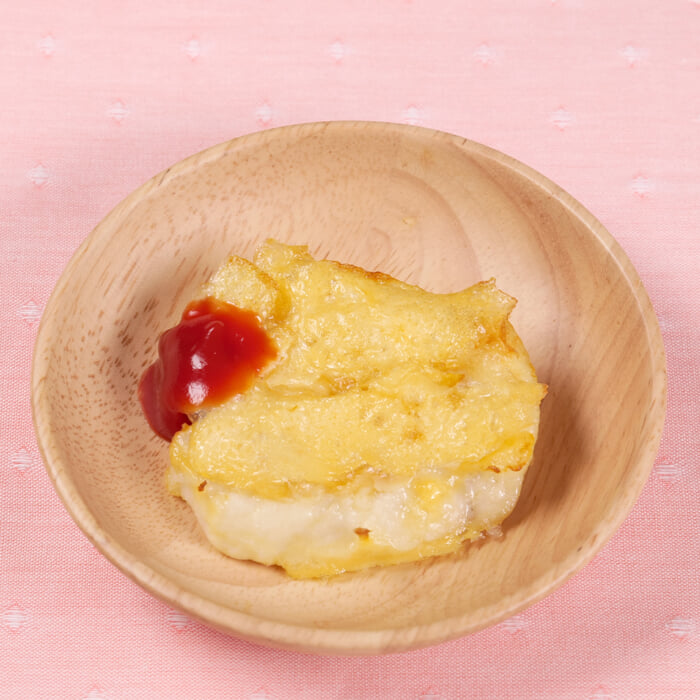
In Japan, "piccata" means something a little different from the Italian dish: meat or fish is dusted with flour, dipped in beaten egg and cooked until the coating puffs up golden and soft. Swordfish is a natural fit for young children because it is boneless and mild, with a firm, meaty texture that holds together nicely under the egg. Here it is simply baked on a sheet rather than pan-fried, which keeps the kitchen work easy, and a little ketchup on the side is all the seasoning it needs to have kids cleaning their plates.
Added. Open the recipe helper (bottom right) → ☰ Menu → 🛒 Shopping list to see the ingredients for your family size.
Printing uses the number of adults and children set under Ingredients, so set those first.
Ingredients
Amounts for 1 child (1 serving). An adult counts as 2 servings.
One serving here is 1.5× the portion served to a child in a Japanese preschool, sized for Western appetites. An adult counts as two servings. Tap an ingredient to check it off.
Ingredients
- 67.5 gswordfish
- 2.7 gflour
- 11.6 gegg
Seasonings
- 1.5 gvegetable oil
- 4.1 gketchup
Directions
- 1
Dust the swordfish lightly with flour, then coat it all over in the beaten egg.
- 2
Grease a baking sheet with the oil and arrange the fish from step 1 on it.
- 3
Bake in a toaster oven (or in an oven preheated to 180°C (350°F)) for about 15 minutes.
- 4
Plate the fish and serve with ketchup on the side.
Cooking Notes
Because the egg seals the fish, the swordfish's savory flavor is locked in and it comes out soft and fluffy, so it tastes plenty good even without any seasoning underneath.
Nutrition
| Per | 1 serving | 1 adult serving | Your total |
|---|---|---|---|
| Energy | 138 kcal | 276 kcal | 138 kcal |
| Protein | 14.6 g | 29.1 g | 14.6 g |
| Fat | 7.8 g | 15.6 g | 7.8 g |
| Carbohydrates | 2.6 g | 5.1 g | 2.6 g |
| Salt equivalent | 0.3 g | 0.6 g | 0.3 g |
| Calcium | 7.5 mg | 15 mg | 7.5 mg |
| Iron | 0.5 mg | 0.9 mg | 0.5 mg |
| Energy | Protein | Fat | Carbs | Salt equiv. | Calcium | Iron | |
|---|---|---|---|---|---|---|---|
| 1 serving | 138 kcal | 14.6 g | 7.8 g | 2.6 g | 0.3 g | 7.5 mg | 0.5 mg |
| 1 adult serving | 276 kcal | 29.1 g | 15.6 g | 5.1 g | 0.6 g | 15 mg | 0.9 mg |
Values are per serving (1.5× the Japanese preschool portion); an adult serving is double. They were calculated by a licensed Japanese nutritionist using the Standard Tables of Food Composition in Japan. "Salt equivalent" is sodium × 2.54, the standard Japanese measure. Allergen flags cover egg, milk and wheat only and come from the nutritionist's records. Soy sauce and miso are made with wheat but are usually allowed on Japanese wheat-free school menus, so check with your doctor.