Pork Piccata
ポークピカタ
 By Aoi, licensed nutritionist · From a Japanese preschool lunch menu
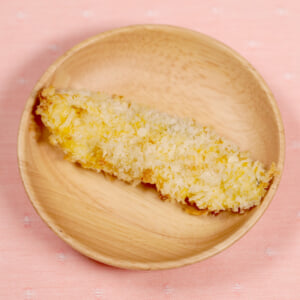
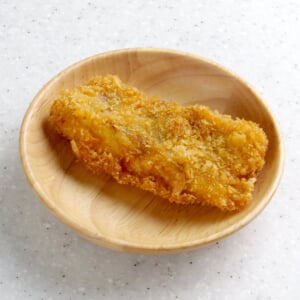
Pork piccata is a Japanese school-lunch classic: thin slices of lean pork get a light coating of flour and beaten egg, then bake until the egg turns golden and tender. The mild, savory egg crust is exactly what young children love, and a little ketchup on the side makes it disappear even faster. Baking the slices on a sheet pan instead of pan-frying keeps things simple and hands-off, which is how we handle big batches in the preschool kitchen.
Added. Open the recipe helper (bottom right) → ☰ Menu → 🛒 Shopping list to see the ingredients for your family size.
Printing uses the number of adults and children set under Ingredients, so set those first.
Ingredients
Amounts for 1 child (1 serving). An adult counts as 2 servings.
One serving here is 1.5× the portion served to a child in a Japanese preschool, sized for Western appetites. An adult counts as two servings. Tap an ingredient to check it off.
Ingredients
- 60 gpork leg (lean pork)
- 7.5 gflour
- 15 gegg
Seasonings
- 0.3 gsalt
- to tastepepper
- 1.5 gvegetable oil
- 6 gketchup
Directions
- 1
Season the pork leg slices with salt and pepper.
- 2
Dust the pork with flour, then coat it in the beaten egg.
- 3
Line a baking sheet with parchment paper and brush it with oil. Lay the coated pork from step 2 on the sheet in a single layer and bake in a 200°C (400°F) oven for about 15 minutes.
- 4
Arrange on plates and serve with ketchup on the side.
Nutrition
| Per | 1 serving | 1 adult serving | Your total |
|---|---|---|---|
| Energy | 199.5 kcal | 399 kcal | 199.5 kcal |
| Protein | 13.7 g | 27.3 g | 13.7 g |
| Fat | 12.1 g | 24.3 g | 12.1 g |
| Carbohydrates | 9.5 g | 18.9 g | 9.5 g |
| Salt equivalent | 0.6 g | 1.2 g | 0.6 g |
| Calcium | 12 mg | 24 mg | 12 mg |
| Iron | 0.6 mg | 1.2 mg | 0.6 mg |
| Energy | Protein | Fat | Carbs | Salt equiv. | Calcium | Iron | |
|---|---|---|---|---|---|---|---|
| 1 serving | 199.5 kcal | 13.7 g | 12.1 g | 9.5 g | 0.6 g | 12 mg | 0.6 mg |
| 1 adult serving | 399 kcal | 27.3 g | 24.3 g | 18.9 g | 1.2 g | 24 mg | 1.2 mg |
Values are per serving (1.5× the Japanese preschool portion); an adult serving is double. They were calculated by a licensed Japanese nutritionist using the Standard Tables of Food Composition in Japan. "Salt equivalent" is sodium × 2.54, the standard Japanese measure. Allergen flags cover egg, milk and wheat only and come from the nutritionist's records. Soy sauce and miso are made with wheat but are usually allowed on Japanese wheat-free school menus, so check with your doctor.