Soybean Kakiage (Mixed Tempura Fritters) (Wheat-Free)
大豆のかき揚げ(小麦なし) · Daizu no Kakiage
 By Aoi, licensed nutritionist · From a Japanese preschool lunch menu
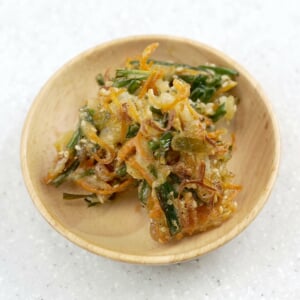
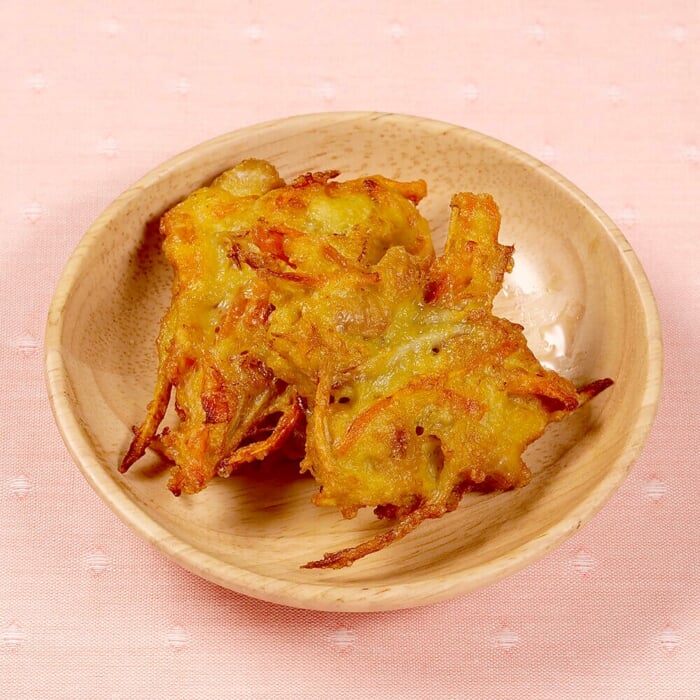
Kakiage is a Japanese tempura-style fritter in which chopped vegetables and other bits are bound together with a light batter and fried in spoonful-sized clusters. This version packs in boiled soybeans, gobo, carrot and a little ground chicken, so each little fritter brings protein and fiber along with its crunch, and the soybeans are coarsely chopped or mashed so they are easy for little ones to chew. The batter is just joshinko (rice flour), baking powder and water instead of wheat flour and egg, yet it still fries up light and crisp. The fritters are made without egg or milk and with no wheat flour, though the soy sauce in the seasoning is made with wheat. The savory, slightly salty flavor and crunchy edges are a hit with children who might otherwise push soybeans aside.
Wheat-free, but uses soy sauce (made with wheat). Japanese school-lunch allergy menus usually allow it, so check with your doctor. How to read the labels
Added. Open the recipe helper (bottom right) → ☰ Menu → 🛒 Shopping list to see the ingredients for your family size.
Printing uses the number of adults and children set under Ingredients, so set those first.
Ingredients
Amounts for 1 child (1 serving). An adult counts as 2 servings.
One serving here is 1.5× the portion served to a child in a Japanese preschool, sized for Western appetites. An adult counts as two servings. Tap an ingredient to check it off.
Ingredients
- 9 ggobo (burdock root)A long, slender, earthy-tasting root vegetable with a pleasant crunch, usually scraped rather than peeled. Substitute: Parsnip or carrot.
- 13.5 gcarrot
- 21 gboiled soybeans (canned or vacuum-packed)Plain cooked whole soybeans sold in cans or pouches, ready to use. Substitute: Canned chickpeas or white beans.
- 33 gground chicken
Seasonings
- 0.2 gsalt
- 1.4 gsoy sauce
- 1.4 gsakeSake (Japanese rice wine) is used in small amounts to soften the smell of fish and meat and add depth. Japanese "cooking sake" often contains added salt. Some alcohol can remain after short cooking. If you prefer no alcohol for children, use the substitute. Substitute: The same amount of water (the taste will be a little simpler), or dry white wine.
- 6 gwater
- 3.3 gjoshinko (Japanese non-glutinous rice flour)Fine flour milled from regular short-grain rice, used for chewy Japanese sweets like dango. Substitute: Plain rice flour (not glutinous/sweet rice flour).
- 0.3 gbaking powder
- 9 gvegetable oil
About the Japanese ingredients in this recipe
- gobo (burdock root) (ごぼう)
- A long, slender, earthy-tasting root vegetable with a pleasant crunch, usually scraped rather than peeled. Substitute: Parsnip or carrot.
- boiled soybeans (canned or vacuum-packed) (大豆水煮)
- Plain cooked whole soybeans sold in cans or pouches, ready to use. Substitute: Canned chickpeas or white beans.
- sake (酒)
- Sake (Japanese rice wine) is used in small amounts to soften the smell of fish and meat and add depth. Japanese "cooking sake" often contains added salt. Some alcohol can remain after short cooking. If you prefer no alcohol for children, use the substitute. Substitute: The same amount of water (the taste will be a little simpler), or dry white wine.
- joshinko (Japanese non-glutinous rice flour) (上新粉)
- Fine flour milled from regular short-grain rice, used for chewy Japanese sweets like dango. Substitute: Plain rice flour (not glutinous/sweet rice flour).
Directions
- 1
Cut the gobo and carrot into short, thin matchsticks. Coarsely chop (or mash) the soybeans.
- 2
Combine the soybeans, ground chicken, salt, soy sauce, sake and the cut vegetables from the previous step. Stir the water, joshinko and baking powder together to make a batter, then fold it into the mixture lightly, without overmixing.
- 3
Heat the oil to 170°C (340°F). Scoop up spoonfuls of the mixture, slide them into the oil and fry until crisp and cooked through. (Tip: pour a little oil into a small container and rest the spoon in it before scooping each spoonful - the batter will slip off the spoon much more easily.)
Nutrition
| Per | 1 serving | 1 adult serving | Your total |
|---|---|---|---|
| Energy | 195 kcal | 390 kcal | 195 kcal |
| Protein | 9.6 g | 19.2 g | 9.6 g |
| Fat | 15 g | 30 g | 15 g |
| Carbohydrates | 7.2 g | 14.4 g | 7.2 g |
| Fiber | 2.7 g | 5.4 g | 2.7 g |
| Salt equivalent | 0.3 g | 0.6 g | 0.3 g |
| Calcium | 36 mg | 72 mg | 36 mg |
| Iron | 0.8 mg | 1.5 mg | 0.8 mg |
| Potassium | 283.5 mg | 567 mg | 283.5 mg |
| Energy | Protein | Fat | Carbs | Fiber | Salt equiv. | Calcium | Iron | Potassium | |
|---|---|---|---|---|---|---|---|---|---|
| 1 serving | 195 kcal | 9.6 g | 15 g | 7.2 g | 2.7 g | 0.3 g | 36 mg | 0.8 mg | 283.5 mg |
| 1 adult serving | 390 kcal | 19.2 g | 30 g | 14.4 g | 5.4 g | 0.6 g | 72 mg | 1.5 mg | 567 mg |
Values are per serving (1.5× the Japanese preschool portion); an adult serving is double. They were calculated by a licensed Japanese nutritionist using the Standard Tables of Food Composition in Japan. "Salt equivalent" is sodium × 2.54, the standard Japanese measure. Allergen flags cover egg, milk and wheat only and come from the nutritionist's records. Soy sauce and miso are made with wheat but are usually allowed on Japanese wheat-free school menus, so check with your doctor.