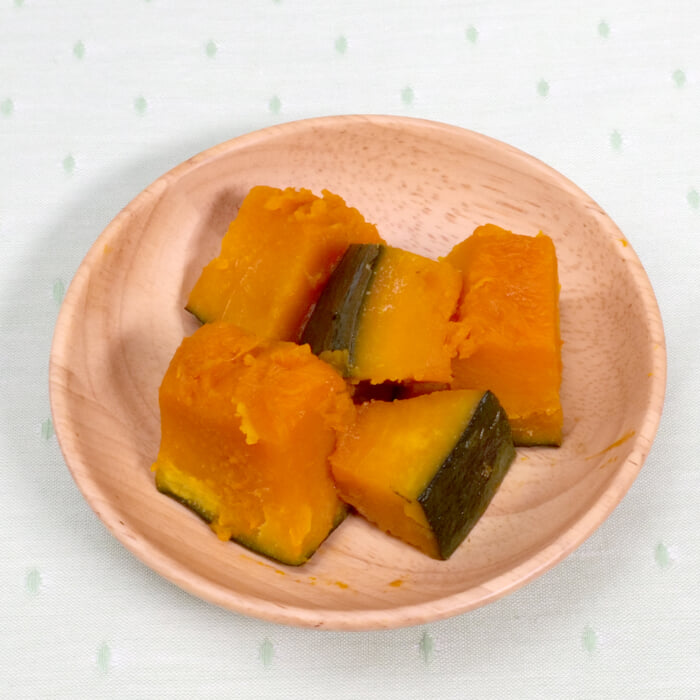
Simmered Kabocha Squash (Kabocha no Fukumeni)
かぼちゃの含め煮 · Kabocha no Fukumeni
 By Aoi, licensed nutritionist · From a Japanese preschool lunch menu
Kabocha no fukumeni is a classic Japanese home-style side dish: chunks of kabocha squash simmered slowly in dashi so they soak up a gentle, lightly sweet-savory broth. Kabocha is naturally sweet and turns wonderfully soft and fluffy when cooked, which is why even small children take to it so readily. We leave the skin on, trimming only the blemished spots, so the pieces hold their shape in the pot and keep their color. It goes well alongside rice and a simple grilled fish or miso soup.
Wheat-free, but uses soy sauce (made with wheat). Japanese school-lunch allergy menus usually allow it, so check with your doctor. How to read the labels
Added. Open the recipe helper (bottom right) → ☰ Menu → 🛒 Shopping list to see the ingredients for your family size.
Printing uses the number of adults and children set under Ingredients, so set those first.
Ingredients
Amounts for 1 child (1 serving). An adult counts as 2 servings.
One serving here is 1.5× the portion served to a child in a Japanese preschool, sized for Western appetites. An adult counts as two servings. Tap an ingredient to check it off.
Ingredients
- 90 gkabocha squashSweet, dense Japanese pumpkin with dark green skin and orange flesh. Substitute: Butternut squash or another sweet winter squash.
Seasonings
- 90 gdashi stockJapanese soup stock, usually made from kombu (dried kelp) and/or bonito flakes; the base of most Japanese soups and simmered dishes. Substitute: Instant dashi granules dissolved in water, or a mild unsalted chicken or vegetable stock.
- 2.3 gsugar
- 1.2 gsoy sauce
- 0 gsalt
About the Japanese ingredients in this recipe
- kabocha squash (かぼちゃ)
- Sweet, dense Japanese pumpkin with dark green skin and orange flesh. Substitute: Butternut squash or another sweet winter squash.
- dashi stock (だし汁)
- Japanese soup stock, usually made from kombu (dried kelp) and/or bonito flakes; the base of most Japanese soups and simmered dishes. Substitute: Instant dashi granules dissolved in water, or a mild unsalted chicken or vegetable stock.
Directions
- 1
Peel away only the blemished or damaged spots on the kabocha skin, then cut the squash, skin on, into 2 to 3 cm chunks.
- 2
Put the kabocha, dashi stock and sugar in a pot, cover with a drop lid (otoshibuta, or a sheet of parchment paper cut to fit) and simmer until soft.
- 3
Partway through, add the soy sauce and salt and continue to simmer.
Nutrition
| Per | 1 serving | 1 adult serving | Your total |
|---|---|---|---|
| Energy | 82.5 kcal | 165 kcal | 82.5 kcal |
| Protein | 2.1 g | 4.2 g | 2.1 g |
| Fat | 0.3 g | 0.6 g | 0.3 g |
| Carbohydrates | 21.3 g | 42.6 g | 21.3 g |
| Fiber | 3.2 g | 6.3 g | 3.2 g |
| Salt equivalent | 0.3 g | 0.6 g | 0.3 g |
| Calcium | 22.5 mg | 45 mg | 22.5 mg |
| Iron | 0.3 mg | 0.6 mg | 0.3 mg |
| Potassium | 448.5 mg | 897 mg | 448.5 mg |
| Energy | Protein | Fat | Carbs | Fiber | Salt equiv. | Calcium | Iron | Potassium | |
|---|---|---|---|---|---|---|---|---|---|
| 1 serving | 82.5 kcal | 2.1 g | 0.3 g | 21.3 g | 3.2 g | 0.3 g | 22.5 mg | 0.3 mg | 448.5 mg |
| 1 adult serving | 165 kcal | 4.2 g | 0.6 g | 42.6 g | 6.3 g | 0.6 g | 45 mg | 0.6 mg | 897 mg |
Values are per serving (1.5× the Japanese preschool portion); an adult serving is double. They were calculated by a licensed Japanese nutritionist using the Standard Tables of Food Composition in Japan. "Salt equivalent" is sodium × 2.54, the standard Japanese measure. Allergen flags cover egg, milk and wheat only and come from the nutritionist's records. Soy sauce and miso are made with wheat but are usually allowed on Japanese wheat-free school menus, so check with your doctor.
Ingredients in this recipe
You might also like
All recipes →
Chikuzenni (Simmered Chicken and Root Vegetables)
Simmered Daikon and Potatoes (Nimono)
Simmered Vegetables with Potato
Simmered Vegetables (Yasai no Nimono)
Stir-Fried Kohaku Namasu (Daikon and Carrot)