Simmered Vegetables (Yasai no Nimono)
野菜の煮物 · Yasai no Nimono
 By Aoi, licensed nutritionist · From a Japanese preschool lunch menu
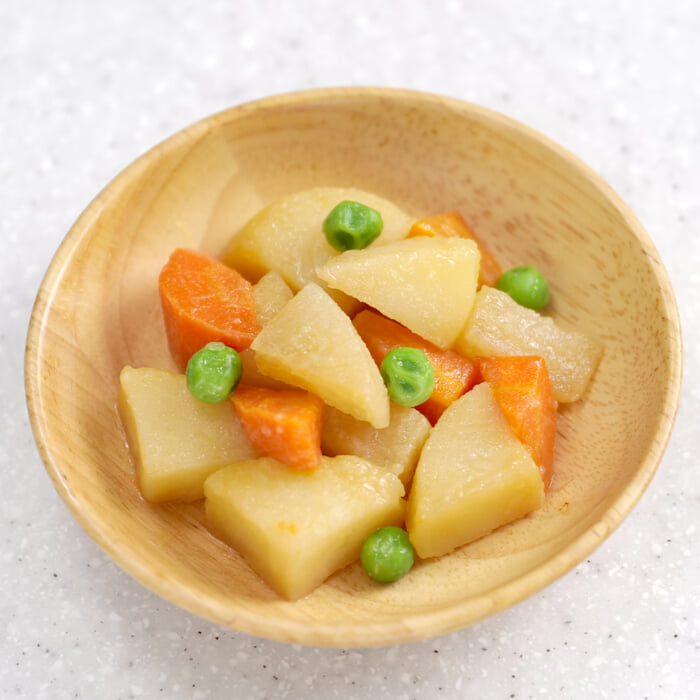
Nimono are Japanese simmered dishes, and this everyday version pairs carrot, daikon and taro (satoimo) with a handful of green peas in a mild, slightly sweet dashi broth. Everything is cooked until fork-tender and cut into chunky pieces that are easy for small hands and spoons, so even children who are wary of vegetables tend to take to it. The taro turns silky and a little creamy as it simmers, soaking up the dashi, and the peas go in right at the end so they keep their bright color. It is a quiet, comforting side that sits happily next to rice and a bowl of miso soup.
Wheat-free, but uses soy sauce (made with wheat). Japanese school-lunch allergy menus usually allow it, so check with your doctor. How to read the labels
Added. Open the recipe helper (bottom right) → ☰ Menu → 🛒 Shopping list to see the ingredients for your family size.
Printing uses the number of adults and children set under Ingredients, so set those first.
Ingredients
Amounts for 1 child (1 serving). An adult counts as 2 servings.
One serving here is 1.5× the portion served to a child in a Japanese preschool, sized for Western appetites. An adult counts as two servings. Tap an ingredient to check it off.
Ingredients
- 16.5 gcarrot
- 11.3 gdaikon radish
- 33 gtaro (satoimo)Small Japanese taro root with a slightly sticky, tender texture when cooked. Substitute: Small taro from an Asian grocer, or waxy potatoes.
- 3.3 gfrozen green peas
Seasonings
- 1.5 gvegetable oil
- 49.5 gdashi stockJapanese soup stock, usually made from kombu (dried kelp) and/or bonito flakes; the base of most Japanese soups and simmered dishes. Substitute: Instant dashi granules dissolved in water, or a mild unsalted chicken or vegetable stock.
- 1.2 gsugar
- 1.5 gsoy sauce
- 0.2 gsalt
About the Japanese ingredients in this recipe
- taro (satoimo) (さといも)
- Small Japanese taro root with a slightly sticky, tender texture when cooked. Substitute: Small taro from an Asian grocer, or waxy potatoes.
- dashi stock (だし汁)
- Japanese soup stock, usually made from kombu (dried kelp) and/or bonito flakes; the base of most Japanese soups and simmered dishes. Substitute: Instant dashi granules dissolved in water, or a mild unsalted chicken or vegetable stock.
Directions
- 1
Cut the carrot into rangiri (rolling, irregular chunks) and the daikon into thick quarter-rounds. Cut the taro into thick quarter-rounds as well, then boil it for about 1 minute from the point the water comes to a boil to remove the sliminess.
- 2
Heat the oil in a pot, add the carrot and daikon, and stir-fry. Add the taro and stir-fry briefly.
- 3
Add the dashi stock and sugar, cover with a drop lid (otoshibuta) and simmer until the vegetables are tender. Once tender, add the soy sauce and salt, cover with the drop lid again and continue simmering.
- 4
To finish, add the green peas and simmer briefly.
Nutrition
| Per | 1 serving | 1 adult serving | Your total |
|---|---|---|---|
| Energy | 49.5 kcal | 99 kcal | 49.5 kcal |
| Protein | 1 g | 2.1 g | 1 g |
| Fat | 1.5 g | 3 g | 1.5 g |
| Carbohydrates | 8.4 g | 16.8 g | 8.4 g |
| Fiber | 1.7 g | 3.3 g | 1.7 g |
| Salt equivalent | 0.3 g | 0.6 g | 0.3 g |
| Calcium | 13.5 mg | 27 mg | 13.5 mg |
| Iron | 0.2 mg | 0.3 mg | 0.2 mg |
| Potassium | 331.5 mg | 663 mg | 331.5 mg |
| Energy | Protein | Fat | Carbs | Fiber | Salt equiv. | Calcium | Iron | Potassium | |
|---|---|---|---|---|---|---|---|---|---|
| 1 serving | 49.5 kcal | 1 g | 1.5 g | 8.4 g | 1.7 g | 0.3 g | 13.5 mg | 0.2 mg | 331.5 mg |
| 1 adult serving | 99 kcal | 2.1 g | 3 g | 16.8 g | 3.3 g | 0.6 g | 27 mg | 0.3 mg | 663 mg |
Values are per serving (1.5× the Japanese preschool portion); an adult serving is double. They were calculated by a licensed Japanese nutritionist using the Standard Tables of Food Composition in Japan. "Salt equivalent" is sodium × 2.54, the standard Japanese measure. Allergen flags cover egg, milk and wheat only and come from the nutritionist's records. Soy sauce and miso are made with wheat but are usually allowed on Japanese wheat-free school menus, so check with your doctor.
Ingredients in this recipe
You might also like
All recipes →
Simmered Vegetables with Potato
Chikuzenni (Simmered Chicken and Root Vegetables)
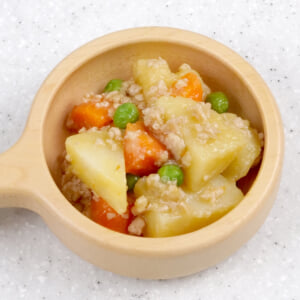
Jagaimo no Soboro-ni (Potatoes Simmered with Ground Chicken)
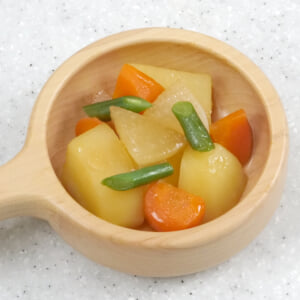
Simmered Daikon and Potatoes (Nimono)
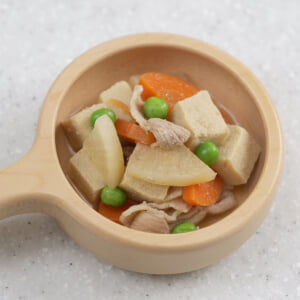
Simmered Koya-dofu and Vegetables