Satsumaimo no Amani (Sweet Simmered Sweet Potato)
さつまいもの甘煮 · Satsumaimo no Amani
 By Aoi, licensed nutritionist · From a Japanese preschool lunch menu
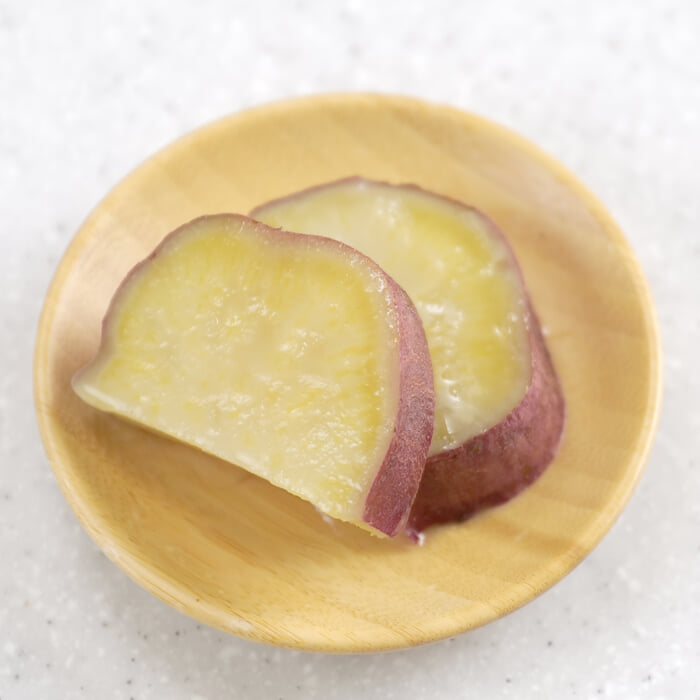
Satsumaimo no amani is one of the simplest Japanese side dishes there is: chunks of sweet potato, skin and all, simmered slowly in water with just a little sugar and salt until they are soft and glossy. The gentle sweetness comes mostly from the potato itself, which is exactly why children love it - it eats almost like a treat but sits happily next to rice and fish on a lunch tray. Sweet potatoes are an autumn favorite in Japan, and many preschools even take the children out to dig them up, so this dish always feels like a taste of the season.
Added. Open the recipe helper (bottom right) → ☰ Menu → 🛒 Shopping list to see the ingredients for your family size.
Printing uses the number of adults and children set under Ingredients, so set those first.
Ingredients
Amounts for 1 child (1 serving). An adult counts as 2 servings.
One serving here is 1.5× the portion served to a child in a Japanese preschool, sized for Western appetites. An adult counts as two servings. Tap an ingredient to check it off.
Ingredients
- 54 gJapanese sweet potato (satsumaimo)A purple-skinned, pale-yellow-fleshed sweet potato that is sweeter, drier, and fluffier than orange varieties. Substitute: Any sweet potato.
Seasonings
- 24 gwater
- 1.7 gsugar
- 0 gsalt
About the Japanese ingredients in this recipe
- Japanese sweet potato (satsumaimo) (さつまいも)
- A purple-skinned, pale-yellow-fleshed sweet potato that is sweeter, drier, and fluffier than orange varieties. Substitute: Any sweet potato.
Directions
- 1
Leave the skin on the sweet potato and cut it into thick half-moons or quarter-rounds about 1.5 cm wide. Soak the pieces in water for 5 minutes.
- 2
Put the water and seasonings in a pot and heat until dissolved, then add the sweet potato from step 1. Cover with a drop lid (otoshibuta) and simmer over low heat for 5 minutes.
- 3
Turn the pieces over, cover again with the drop lid and simmer over low heat for another 5 minutes. (As the liquid reduces it burns easily, so adjust the heat within the low range as needed.)
- 4
Turn off the heat and let the sweet potato cool in the pot so it soaks up the flavor.
Simmering the sweet potato with its skin on over low heat keeps the pieces from falling apart. Soak the cut pieces in water for at least 5 minutes to draw out the bitterness - this helps the seasoning soak into the sweet potato and keeps the cooking liquid from turning cloudy.
Nutrition
| Per | 1 serving | 1 adult serving | Your total |
|---|---|---|---|
| Energy | 75 kcal | 150 kcal | 75 kcal |
| Protein | 0.5 g | 0.9 g | 0.5 g |
| Fat | 0.3 g | 0.6 g | 0.3 g |
| Carbohydrates | 19.5 g | 39 g | 19.5 g |
| Fiber | 1.5 g | 3 g | 1.5 g |
| Salt equivalent | 0 g | 0 g | 0 g |
| Calcium | 21 mg | 42 mg | 21 mg |
| Iron | 0.3 mg | 0.6 mg | 0.3 mg |
| Potassium | 205.5 mg | 411 mg | 205.5 mg |
| Energy | Protein | Fat | Carbs | Fiber | Salt equiv. | Calcium | Iron | Potassium | |
|---|---|---|---|---|---|---|---|---|---|
| 1 serving | 75 kcal | 0.5 g | 0.3 g | 19.5 g | 1.5 g | 0 g | 21 mg | 0.3 mg | 205.5 mg |
| 1 adult serving | 150 kcal | 0.9 g | 0.6 g | 39 g | 3 g | 0 g | 42 mg | 0.6 mg | 411 mg |
Values are per serving (1.5× the Japanese preschool portion); an adult serving is double. They were calculated by a licensed Japanese nutritionist using the Standard Tables of Food Composition in Japan. "Salt equivalent" is sodium × 2.54, the standard Japanese measure. Allergen flags cover egg, milk and wheat only and come from the nutritionist's records. Soy sauce and miso are made with wheat but are usually allowed on Japanese wheat-free school menus, so check with your doctor.