Pumpkin Soup
パンプキンスープ
 By Aoi, licensed nutritionist · From a Japanese preschool lunch menu
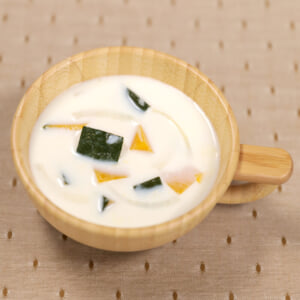
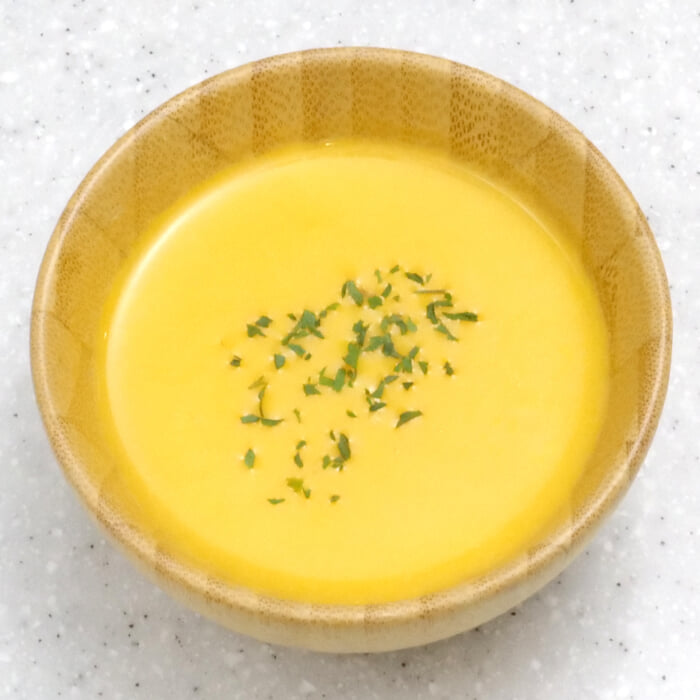
This creamy pumpkin soup is made with kabocha, the dense, naturally sweet Japanese squash, simmered with carrot and onion until soft, then blended smooth and finished with milk. The natural sweetness of the vegetables means it needs very little seasoning, which is exactly why it goes down so well with young children. Sweating the onion and carrot slowly in butter first draws out their sweetness and gives the soup a rounder flavor, and blending everything smooth makes it easy for even the littlest eaters to enjoy.
Added. Open the recipe helper (bottom right) → ☰ Menu → 🛒 Shopping list to see the ingredients for your family size.
Printing uses the number of adults and children set under Ingredients, so set those first.
Ingredients
Amounts for 1 child (1 serving). An adult counts as 2 servings.
One serving here is 1.5× the portion served to a child in a Japanese preschool, sized for Western appetites. An adult counts as two servings. Tap an ingredient to check it off.
Ingredients
- 52.5 gkabocha squashSweet, dense Japanese pumpkin with dark green skin and orange flesh. Substitute: Butternut squash or another sweet winter squash.
- 30 gonion
- 16.5 gcarrot
- 63 gwater
- 63 gmilk
Seasonings
- 3 gsalted butter
- 0.6 gconsommé bouillon (granules or cube)Japanese-style Western soup stock powder or cubes, similar to chicken or vegetable bouillon. Substitute: Chicken or vegetable bouillon granules or a bouillon cube.
- 0.2 gsalt
- to tastepepper
About the Japanese ingredients in this recipe
- kabocha squash (かぼちゃ)
- Sweet, dense Japanese pumpkin with dark green skin and orange flesh. Substitute: Butternut squash or another sweet winter squash.
- consommé bouillon (granules or cube) (コンソメ)
- Japanese-style Western soup stock powder or cubes, similar to chicken or vegetable bouillon. Substitute: Chicken or vegetable bouillon granules or a bouillon cube.
Directions
Video is in Japanese and may show a different version of this dish (other ingredients or steps). Follow the ingredients and steps on this page, especially when cooking for allergies.
- 1
Peel the kabocha and cut it into bite-size pieces about 3 to 4 cm wide. Cut the carrot into 2 cm quarter-rounds and thinly slice the onion.
- 2
Melt the butter in a pot, add the carrot and onion, and cook over low heat for 5 minutes until softened, adding a small splash of water from time to time.
- 3
Add the kabocha and stir briefly to coat it in the butter.
- 4
Add the water and consommé bouillon. Once it comes to a boil, reduce the heat to low, cover, and simmer for about 15 minutes.
- 5
When the carrot is soft enough for a fork to slide in easily, turn off the heat and blend with an immersion blender until smooth.
- 6
Add the milk, season with salt and pepper, and warm through over low heat (take care not to let it boil).
This soup freezes well. Transfer it to a zip-top bag or a lidded container and it will keep in the freezer for about 2 weeks.
Nutrition
| Per | 1 serving | 1 adult serving | Your total |
|---|---|---|---|
| Energy | 118.5 kcal | 237 kcal | 118.5 kcal |
| Protein | 3.6 g | 7.2 g | 3.6 g |
| Fat | 4.9 g | 9.9 g | 4.9 g |
| Carbohydrates | 18.3 g | 36.6 g | 18.3 g |
| Fiber | 2.7 g | 5.4 g | 2.7 g |
| Salt equivalent | 0.5 g | 0.9 g | 0.5 g |
| Calcium | 90 mg | 180 mg | 90 mg |
| Iron | 0.3 mg | 0.6 mg | 0.3 mg |
| Potassium | 418.5 mg | 837 mg | 418.5 mg |
| Energy | Protein | Fat | Carbs | Fiber | Salt equiv. | Calcium | Iron | Potassium | |
|---|---|---|---|---|---|---|---|---|---|
| 1 serving | 118.5 kcal | 3.6 g | 4.9 g | 18.3 g | 2.7 g | 0.5 g | 90 mg | 0.3 mg | 418.5 mg |
| 1 adult serving | 237 kcal | 7.2 g | 9.9 g | 36.6 g | 5.4 g | 0.9 g | 180 mg | 0.6 mg | 837 mg |
Values are per serving (1.5× the Japanese preschool portion); an adult serving is double. They were calculated by a licensed Japanese nutritionist using the Standard Tables of Food Composition in Japan. "Salt equivalent" is sodium × 2.54, the standard Japanese measure. Allergen flags cover egg, milk and wheat only and come from the nutritionist's records. Soy sauce and miso are made with wheat but are usually allowed on Japanese wheat-free school menus, so check with your doctor.
Cooking for bigger kids? See the elementary-school portion of this recipe.