Potato-Crusted Baked Chicken
鶏肉のポテト焼き · Toriniku no Poteto Yaki
 By Aoi, licensed nutritionist · From a Japanese preschool lunch menu
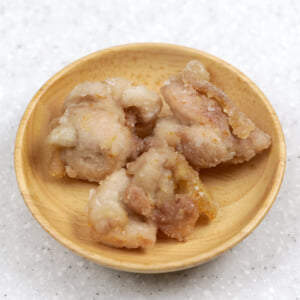
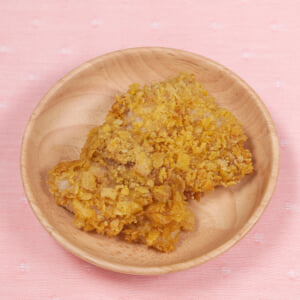
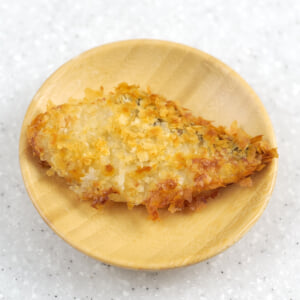
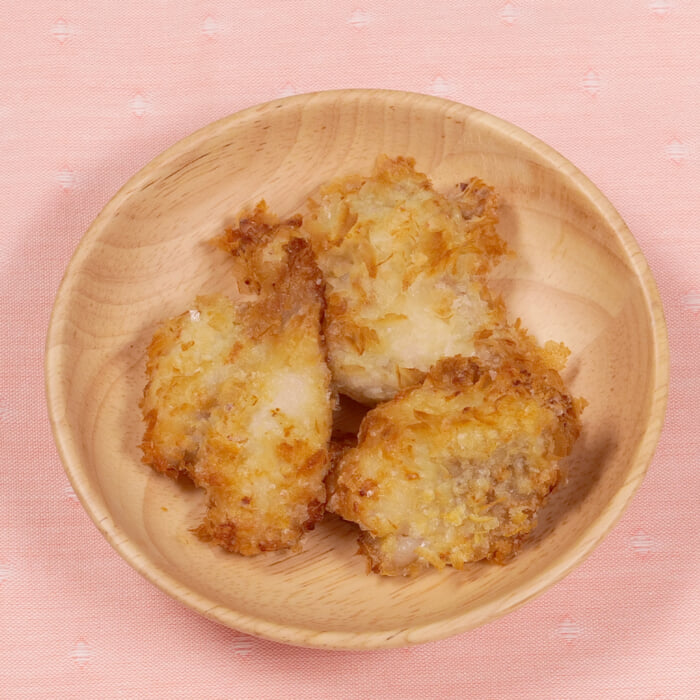
This is one of those preschool-kitchen tricks that looks far fancier than it is: bite-size pieces of chicken thigh are tossed in a little mayonnaise, pressed into instant mashed potato flakes, and baked. The potato flakes turn golden and crisp in the oven while the chicken underneath stays juicy, so you get a crunchy, nugget-like texture without any deep-frying. The seasoning is just salt and pepper, and the mayonnaise does double duty as both glue for the coating and a source of richness. Kids love picking these up and crunching into them, and they are a nice change from a breadcrumb coating.
Added. Open the recipe helper (bottom right) → ☰ Menu → 🛒 Shopping list to see the ingredients for your family size.
Printing uses the number of adults and children set under Ingredients, so set those first.
Ingredients
Amounts for 1 child (1 serving). An adult counts as 2 servings.
One serving here is 1.5× the portion served to a child in a Japanese preschool, sized for Western appetites. An adult counts as two servings. Tap an ingredient to check it off.
Ingredients
- 75 gchicken thigh
- 6.8 ginstant mashed potato flakes
Seasonings
- 0.2 gsalt
- to tastepepper
- 9.8 gmayonnaise
Directions
- 1
Cut the chicken into pieces of about 20 g each, then rub in the salt and pepper to season.
- 2
Coat the chicken in the mayonnaise, then press each piece into the mashed potato flakes one at a time so the flakes stick.
- 3
Arrange on a baking sheet and bake in a toaster oven (or an oven preheated to 180°C / 350°F) for about 30 minutes. The surface browns easily, so keep an eye on it and cover with aluminum foil as needed.
Potato flakes burn easily, so bake at a moderate temperature for a longer time. That way the outside comes out crisp while the inside stays soft and fluffy.
Nutrition
| Per | 1 serving | 1 adult serving | Your total |
|---|---|---|---|
| Energy | 231 kcal | 462 kcal | 231 kcal |
| Protein | 13.1 g | 26.1 g | 13.1 g |
| Fat | 18 g | 36 g | 18 g |
| Carbohydrates | 5.9 g | 11.7 g | 5.9 g |
| Fiber | 0.5 g | 0.9 g | 0.5 g |
| Salt equivalent | 0.5 g | 0.9 g | 0.5 g |
| Calcium | 7.5 mg | 15 mg | 7.5 mg |
| Iron | 0.6 mg | 1.2 mg | 0.6 mg |
| Potassium | 300 mg | 600 mg | 300 mg |
| Energy | Protein | Fat | Carbs | Fiber | Salt equiv. | Calcium | Iron | Potassium | |
|---|---|---|---|---|---|---|---|---|---|
| 1 serving | 231 kcal | 13.1 g | 18 g | 5.9 g | 0.5 g | 0.5 g | 7.5 mg | 0.6 mg | 300 mg |
| 1 adult serving | 462 kcal | 26.1 g | 36 g | 11.7 g | 0.9 g | 0.9 g | 15 mg | 1.2 mg | 600 mg |
Values are per serving (1.5× the Japanese preschool portion); an adult serving is double. They were calculated by a licensed Japanese nutritionist using the Standard Tables of Food Composition in Japan. "Salt equivalent" is sodium × 2.54, the standard Japanese measure. Allergen flags cover egg, milk and wheat only and come from the nutritionist's records. Soy sauce and miso are made with wheat but are usually allowed on Japanese wheat-free school menus, so check with your doctor.