Miso Soup with Kiriboshi Daikon and Komatsuna
みそ汁(切干大根・小松菜) · Kiriboshi Daikon to Komatsuna no Misoshiru
 By Aoi, licensed nutritionist · From a Japanese preschool lunch menu
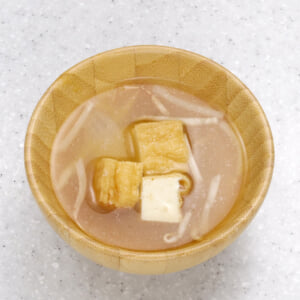
This is one of the everyday miso soups we serve in the preschool kitchen: kiriboshi daikon (sun-dried shredded daikon) simmered in bonito and kombu dashi with bean sprouts and tender komatsuna greens. Kiriboshi daikon is a pantry staple in Japan, and drying concentrates its natural sweetness, so the soup tastes mildly sweet even with a light hand on the miso. Everything is cut short so it fits easily on a small spoon, and the greens are added at the last moment to keep their color and soft texture.
Added. Open the recipe helper (bottom right) → ☰ Menu → 🛒 Shopping list to see the ingredients for your family size.
Printing uses the number of adults and children set under Ingredients, so set those first.
Ingredients
Amounts for 1 child (1 serving). An adult counts as 2 servings.
One serving here is 1.5× the portion served to a child in a Japanese preschool, sized for Western appetites. An adult counts as two servings. Tap an ingredient to check it off.
Ingredients
- 4.5 gkiriboshi daikon (dried shredded daikon)Sun-dried strips of daikon radish that are soaked before cooking and have a sweet, chewy bite. Substitute: No close substitute - look for it at a Japanese grocery, or use fresh daikon or carrot cut into thin strips for a milder result.
- 18 gkomatsunaA mild Japanese leafy green (Japanese mustard spinach) with tender stems. Substitute: Spinach or bok choy.
- 22.5 gbean sprouts
Seasonings
- 180 gbonito and kombu dashiJapanese soup stock made from dried bonito flakes and kombu kelp, the everyday base for soups and simmered dishes. Substitute: Instant dashi granules dissolved in water, or a light vegetable or chicken stock.
- 7.2 glight rice misoA pale, salty rice miso, the standard everyday miso in Japan. Substitute: Any light, white, or awase (blended) miso.
About the Japanese ingredients in this recipe
- kiriboshi daikon (dried shredded daikon) (切り干しだいこん)
- Sun-dried strips of daikon radish that are soaked before cooking and have a sweet, chewy bite. Substitute: No close substitute - look for it at a Japanese grocery, or use fresh daikon or carrot cut into thin strips for a milder result.
- komatsuna (こまつな)
- A mild Japanese leafy green (Japanese mustard spinach) with tender stems. Substitute: Spinach or bok choy.
- bonito and kombu dashi (かつお・昆布だし汁)
- Japanese soup stock made from dried bonito flakes and kombu kelp, the everyday base for soups and simmered dishes. Substitute: Instant dashi granules dissolved in water, or a light vegetable or chicken stock.
- light rice miso (米みそ(淡色辛みそ))
- A pale, salty rice miso, the standard everyday miso in Japan. Substitute: Any light, white, or awase (blended) miso.
Directions
- 1
Soak the kiriboshi daikon in water to rehydrate it, then cut it into 2 to 3 cm lengths. Cut the bean sprouts into 2 cm lengths.
- 2
Cut the komatsuna into 2 to 3 cm lengths and boil it; set aside.
- 3
Bring the dashi to a boil in a pot, add the daikon and bean sprouts from step 1, and simmer.
- 4
Once the vegetables are tender, dissolve the miso into the soup, then add the komatsuna from step 2 just before serving.
Nutrition
| Per | 1 serving | 1 adult serving | Your total |
|---|---|---|---|
| Energy | 34.5 kcal | 69 kcal | 34.5 kcal |
| Protein | 2.7 g | 5.4 g | 2.7 g |
| Fat | 0.6 g | 1.2 g | 0.6 g |
| Carbohydrates | 5.4 g | 10.8 g | 5.4 g |
| Salt equivalent | 1.2 g | 2.4 g | 1.2 g |
| Calcium | 69 mg | 138 mg | 69 mg |
| Iron | 1 mg | 2.1 mg | 1 mg |
| Energy | Protein | Fat | Carbs | Salt equiv. | Calcium | Iron | |
|---|---|---|---|---|---|---|---|
| 1 serving | 34.5 kcal | 2.7 g | 0.6 g | 5.4 g | 1.2 g | 69 mg | 1 mg |
| 1 adult serving | 69 kcal | 5.4 g | 1.2 g | 10.8 g | 2.4 g | 138 mg | 2.1 mg |
Values are per serving (1.5× the Japanese preschool portion); an adult serving is double. They were calculated by a licensed Japanese nutritionist using the Standard Tables of Food Composition in Japan. "Salt equivalent" is sodium × 2.54, the standard Japanese measure. Allergen flags cover egg, milk and wheat only and come from the nutritionist's records. Soy sauce and miso are made with wheat but are usually allowed on Japanese wheat-free school menus, so check with your doctor.