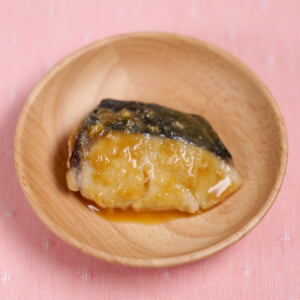
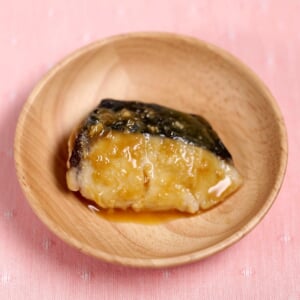
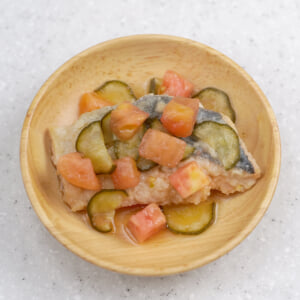
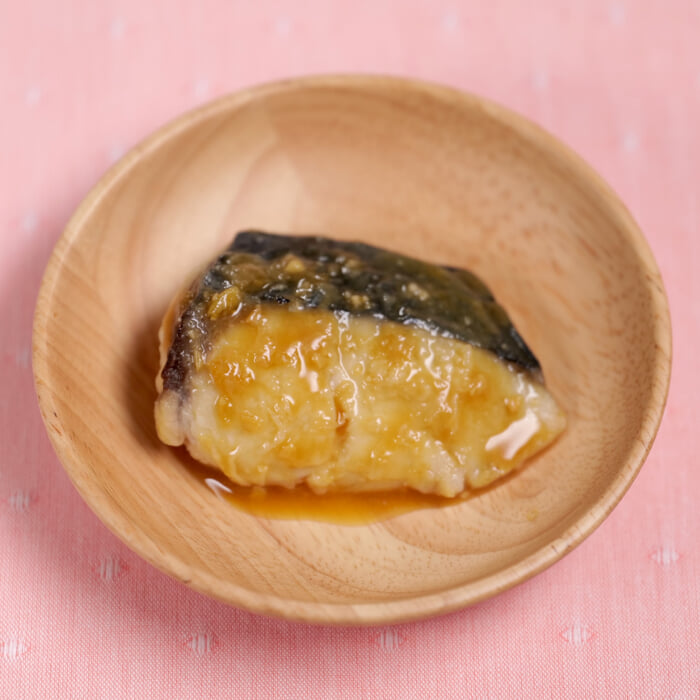
Microwave Miso-Simmered Spanish Mackerel
さわらの味噌煮【レンジ】 · Sawara no Misoni
 By Aoi, licensed nutritionist · From a Japanese preschool lunch menu
Misoni is classic Japanese home cooking: fish gently simmered in a sweet, savory miso sauce until the flavor soaks right in. Here it is made with sawara, Japanese Spanish mackerel, a mild, tender white-fleshed fish whose name is written with the character for "spring" because that is when it is at its best in western Japan. The miso and a touch of ginger soften any fishiness, so even children who are wary of fish tend to take to it. Best of all, the whole dish comes together in a toaster oven and a microwave, with no pan to watch.
Added. Open the recipe helper (bottom right) → ☰ Menu → 🛒 Shopping list to see the ingredients for your family size.
Printing uses the number of adults and children set under Ingredients, so set those first.
Ingredients
Amounts for 1 child (1 serving). An adult counts as 2 servings.
One serving here is 1.5× the portion served to a child in a Japanese preschool, sized for Western appetites. An adult counts as two servings. Tap an ingredient to check it off.
Ingredients
- 60 gSpanish mackerel (sawara)A mild, soft-fleshed fish popular in Japan, sold as fillets. Substitute: Any mild white fish fillet such as cod or halibut.
- 3.8 gflour
Seasonings
- 27 gbonito and kombu dashiJapanese soup stock made from dried bonito flakes and kombu kelp, the everyday base for soups and simmered dishes. Substitute: Instant dashi granules dissolved in water, or a light vegetable or chicken stock.
- 2.1 glight rice misoA pale, salty rice miso, the standard everyday miso in Japan. Substitute: Any light, white, or awase (blended) miso.
- 1.4 gsugar
- 1.4 gsakeSake (Japanese rice wine) is used in small amounts to soften the smell of fish and meat and add depth. Japanese "cooking sake" often contains added salt. Some alcohol can remain after short cooking. If you prefer no alcohol for children, use the substitute. Substitute: The same amount of water (the taste will be a little simpler), or dry white wine.
- 0.5 gginger paste (tube)Grated ginger sold ready to use in a squeeze tube, a staple in Japanese kitchens. Japanese school lunch kitchens grate fresh ginger for its aroma, but for cooking at home Aoi says the tube works just fine. Tube pastes often contain added salt, oil and other ingredients, so check the label. Substitute: Use freshly grated ginger in the same amount. 1 teaspoon of paste is about 5 g.
- 0.8 gsoy sauce
About the Japanese ingredients in this recipe
- Spanish mackerel (sawara) (さわら)
- A mild, soft-fleshed fish popular in Japan, sold as fillets. Substitute: Any mild white fish fillet such as cod or halibut.
- bonito and kombu dashi (かつお・昆布だし汁)
- Japanese soup stock made from dried bonito flakes and kombu kelp, the everyday base for soups and simmered dishes. Substitute: Instant dashi granules dissolved in water, or a light vegetable or chicken stock.
- light rice miso (米みそ(淡色辛みそ))
- A pale, salty rice miso, the standard everyday miso in Japan. Substitute: Any light, white, or awase (blended) miso.
- sake (酒)
- Sake (Japanese rice wine) is used in small amounts to soften the smell of fish and meat and add depth. Japanese "cooking sake" often contains added salt. Some alcohol can remain after short cooking. If you prefer no alcohol for children, use the substitute. Substitute: The same amount of water (the taste will be a little simpler), or dry white wine.
- ginger paste (tube) (しょうが,おろしチューブ)
- Grated ginger sold ready to use in a squeeze tube, a staple in Japanese kitchens. Japanese school lunch kitchens grate fresh ginger for its aroma, but for cooking at home Aoi says the tube works just fine. Tube pastes often contain added salt, oil and other ingredients, so check the label. Substitute: Use freshly grated ginger in the same amount. 1 teaspoon of paste is about 5 g.
Directions
- 1
If any liquid has seeped out of the fish, pat it dry. Dust the fish with flour and bake in a toaster oven for about 10 minutes (or in an oven preheated to 200°C (400°F) for about 10 minutes).
- 2
Pierce the fish in 2 or 3 places with a fork (to keep it from bursting). In a small microwave-safe dish (one that holds the fish snugly with no gaps lets the sauce soak all the way through), combine the dashi, miso, sugar, sake, ginger paste and soy sauce, then lay the fish in the sauce. Cover with plastic wrap and microwave at 1200W for about 2 minutes 30 seconds (5 minutes at 600W).
- 3
Spoon the sauce over the fish, cover again with plastic wrap and let it cool until just warm.
Nutrition
| Per | 1 serving | 1 adult serving | Your total |
|---|---|---|---|
| Energy | 120 kcal | 240 kcal | 120 kcal |
| Protein | 12.8 g | 25.5 g | 12.8 g |
| Fat | 6 g | 12 g | 6 g |
| Carbohydrates | 4.2 g | 8.4 g | 4.2 g |
| Salt equivalent | 0.6 g | 1.2 g | 0.6 g |
| Calcium | 12 mg | 24 mg | 12 mg |
| Iron | 0.6 mg | 1.2 mg | 0.6 mg |
| Energy | Protein | Fat | Carbs | Salt equiv. | Calcium | Iron | |
|---|---|---|---|---|---|---|---|
| 1 serving | 120 kcal | 12.8 g | 6 g | 4.2 g | 0.6 g | 12 mg | 0.6 mg |
| 1 adult serving | 240 kcal | 25.5 g | 12 g | 8.4 g | 1.2 g | 24 mg | 1.2 mg |
Values are per serving (1.5× the Japanese preschool portion); an adult serving is double. They were calculated by a licensed Japanese nutritionist using the Standard Tables of Food Composition in Japan. "Salt equivalent" is sodium × 2.54, the standard Japanese measure. Allergen flags cover egg, milk and wheat only and come from the nutritionist's records. Soy sauce and miso are made with wheat but are usually allowed on Japanese wheat-free school menus, so check with your doctor.