Komatsuna Nibitashi (Simmered Greens in Dashi)
小松菜の煮びたし · Komatsuna no Nibitashi
 By Aoi, licensed nutritionist · From a Japanese preschool lunch menu
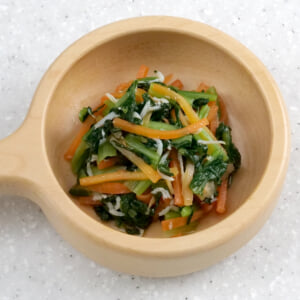
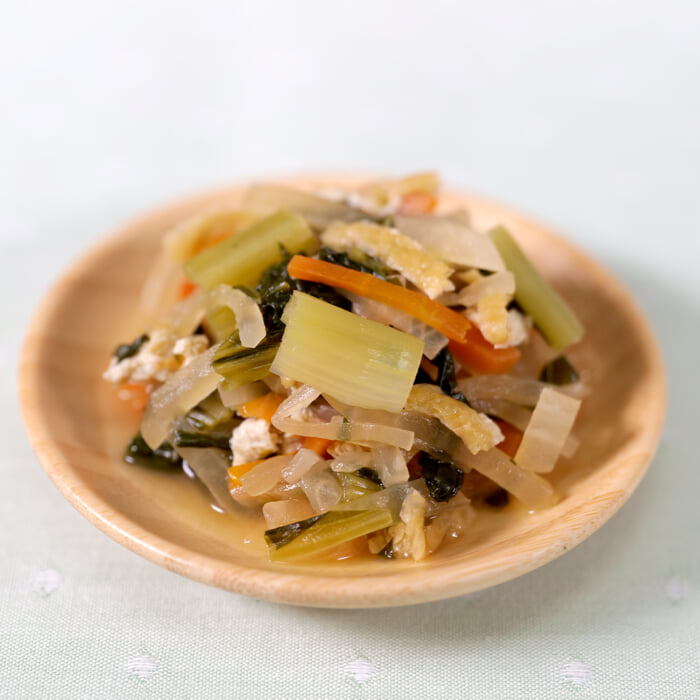
Nibitashi is a classic Japanese side dish in which leafy greens are briefly simmered in seasoned dashi so they soak up the broth. This preschool version pairs komatsuna (Japanese mustard spinach, a mild leafy green) with thin strips of daikon, carrot and aburaage, all cut small so they fit easily on a child's spoon. The gentle sweetness of the dashi and the soft texture make greens easy for even young children to enjoy, and cooking the broth down at the end keeps the flavor in the vegetables without leaving them watery.
Wheat-free, but uses soy sauce (made with wheat). Japanese school-lunch allergy menus usually allow it, so check with your doctor. How to read the labels
Added. Open the recipe helper (bottom right) → ☰ Menu → 🛒 Shopping list to see the ingredients for your family size.
Printing uses the number of adults and children set under Ingredients, so set those first.
Ingredients
Amounts for 1 child (1 serving). An adult counts as 2 servings.
One serving here is 1.5× the portion served to a child in a Japanese preschool, sized for Western appetites. An adult counts as two servings. Tap an ingredient to check it off.
Ingredients
- 37.5 gdaikon radish
- 6.8 gcarrot
- 15 gkomatsunaA mild Japanese leafy green (Japanese mustard spinach) with tender stems. Substitute: Spinach or bok choy.
- 3.8 gaburaage (fried tofu pouch)Thin slices of tofu deep-fried until puffy and golden, sold in packs in the refrigerated section of Japanese and Asian markets. Substitute: Firm tofu, thinly sliced and pan-fried until golden.
Seasonings
- 37.5 gdashi stockJapanese soup stock, usually made from kombu (dried kelp) and/or bonito flakes; the base of most Japanese soups and simmered dishes. Substitute: Instant dashi granules dissolved in water, or a mild unsalted chicken or vegetable stock.
- 1.1 gsugar
- 2.6 gsoy sauce
About the Japanese ingredients in this recipe
- komatsuna (こまつな)
- A mild Japanese leafy green (Japanese mustard spinach) with tender stems. Substitute: Spinach or bok choy.
- aburaage (fried tofu pouch) (油揚げ)
- Thin slices of tofu deep-fried until puffy and golden, sold in packs in the refrigerated section of Japanese and Asian markets. Substitute: Firm tofu, thinly sliced and pan-fried until golden.
- dashi stock (だし汁)
- Japanese soup stock, usually made from kombu (dried kelp) and/or bonito flakes; the base of most Japanese soups and simmered dishes. Substitute: Instant dashi granules dissolved in water, or a mild unsalted chicken or vegetable stock.
Directions
Video is in Japanese and may show a different version of this dish (other ingredients or steps). Follow the ingredients and steps on this page, especially when cooking for allergies.
- 1
Cut the daikon radish and carrot into short, thin strips.
- 2
Cut the komatsuna into 2 cm lengths. Pour boiling water over the aburaage to remove excess oil, then cut it into short, thin strips.
- 3
Put the dashi stock, sugar and the daikon and carrot from step 1 in a pot and bring to a boil. Once boiling, add the komatsuna and aburaage from step 2, cover with a drop lid (otoshibuta) and simmer until tender.
- 4
Add the soy sauce, remove the drop lid, and continue simmering to cook off most of the liquid.
Nutrition
| Per | 1 serving | 1 adult serving | Your total |
|---|---|---|---|
| Energy | 31.5 kcal | 63 kcal | 31.5 kcal |
| Protein | 1.7 g | 3.3 g | 1.7 g |
| Fat | 1.4 g | 2.7 g | 1.4 g |
| Carbohydrates | 3.8 g | 7.5 g | 3.8 g |
| Fiber | 1 g | 2.1 g | 1 g |
| Salt equivalent | 0.3 g | 0.6 g | 0.3 g |
| Calcium | 49.5 mg | 99 mg | 49.5 mg |
| Iron | 0.8 mg | 1.5 mg | 0.8 mg |
| Potassium | 220.5 mg | 441 mg | 220.5 mg |
| Energy | Protein | Fat | Carbs | Fiber | Salt equiv. | Calcium | Iron | Potassium | |
|---|---|---|---|---|---|---|---|---|---|
| 1 serving | 31.5 kcal | 1.7 g | 1.4 g | 3.8 g | 1 g | 0.3 g | 49.5 mg | 0.8 mg | 220.5 mg |
| 1 adult serving | 63 kcal | 3.3 g | 2.7 g | 7.5 g | 2.1 g | 0.6 g | 99 mg | 1.5 mg | 441 mg |
Values are per serving (1.5× the Japanese preschool portion); an adult serving is double. They were calculated by a licensed Japanese nutritionist using the Standard Tables of Food Composition in Japan. "Salt equivalent" is sodium × 2.54, the standard Japanese measure. Allergen flags cover egg, milk and wheat only and come from the nutritionist's records. Soy sauce and miso are made with wheat but are usually allowed on Japanese wheat-free school menus, so check with your doctor.