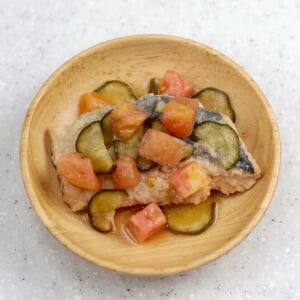
Horse Mackerel Nanbanzuke (Elementary School Portion)
【小学校】アジの南蛮漬け · Aji no Nanbanzuke
 By Aoi, licensed nutritionist · From a Japanese elementary school lunch menu
Nanbanzuke is a classic Japanese dish of fried fish steeped in a sweet vinegar sauce. The name comes from "nanban", the old Japanese word for the Portuguese and Spanish traders who arrived in the 16th century, and the dish is thought to be inspired by their escabeche. This school lunch version pairs crisp fried horse mackerel with a gentle, dashi-based sauce and fresh cucumber and tomato instead of the more usual onion and bell pepper, so it is cool and refreshing rather than sharp. The tangy-sweet sauce is a favorite with children, and it makes fish easy to eat even for kids who are not usually keen on it.
Added. Open the recipe helper (bottom right) → ☰ Menu → 🛒 Shopping list to see the ingredients for your family size.
Printing uses the number of adults and children set under Ingredients, so set those first.
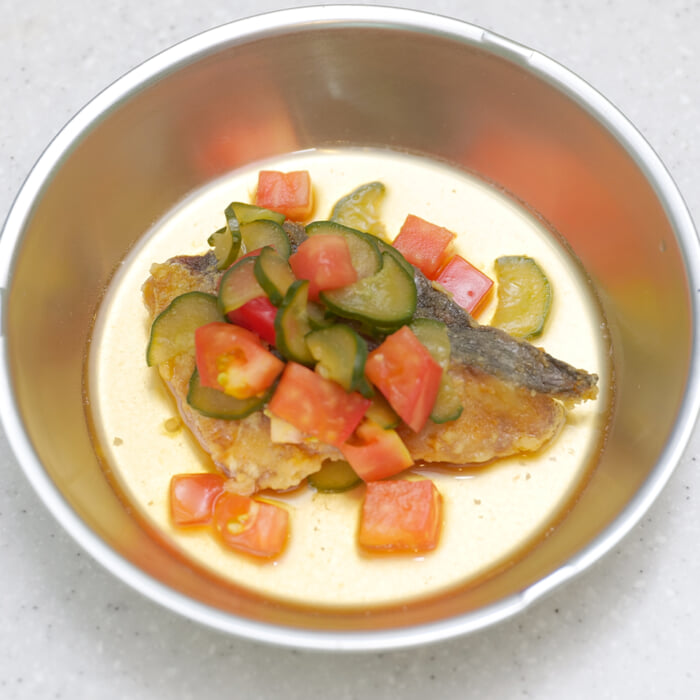
Ingredients
Amounts for 1 child (1 serving). An adult counts as 2 servings.
One serving here is 1.5× the portion served to a child in a Japanese elementary school, sized for Western appetites. An adult counts as two servings. Tap an ingredient to check it off.
Ingredients
- 67.2 gfrozen horse mackerel (aji)A small, mild oily fish very common in Japan, sold frozen as fillets or whole. Substitute: Sardines, mackerel or other small oily fish.
- 5.7 gflour
- 13.5 gcucumber
- 22.7 gtomato
Seasonings
- 1 gginger paste (tube)Grated ginger sold ready to use in a squeeze tube, a staple in Japanese kitchens. Japanese school lunch kitchens grate fresh ginger for its aroma, but for cooking at home Aoi says the tube works just fine. Tube pastes often contain added salt, oil and other ingredients, so check the label. Substitute: Use freshly grated ginger in the same amount. 1 teaspoon of paste is about 5 g.
- 6.8 gvegetable oil
- 2.6 gsugar
- 2.6 gsoy sauce
- 3.3 gvinegar
- 11.1 gdashi stockJapanese soup stock, usually made from kombu (dried kelp) and/or bonito flakes; the base of most Japanese soups and simmered dishes. Substitute: Instant dashi granules dissolved in water, or a mild unsalted chicken or vegetable stock.
About the Japanese ingredients in this recipe
- frozen horse mackerel (aji) (冷凍アジ)
- A small, mild oily fish very common in Japan, sold frozen as fillets or whole. Substitute: Sardines, mackerel or other small oily fish.
- ginger paste (tube) (しょうがチューブ)
- Grated ginger sold ready to use in a squeeze tube, a staple in Japanese kitchens. Japanese school lunch kitchens grate fresh ginger for its aroma, but for cooking at home Aoi says the tube works just fine. Tube pastes often contain added salt, oil and other ingredients, so check the label. Substitute: Use freshly grated ginger in the same amount. 1 teaspoon of paste is about 5 g.
- dashi stock (だし汁)
- Japanese soup stock, usually made from kombu (dried kelp) and/or bonito flakes; the base of most Japanese soups and simmered dishes. Substitute: Instant dashi granules dissolved in water, or a mild unsalted chicken or vegetable stock.
Directions
- 1
Put the horse mackerel, still frozen, in a shallow tray or bowl. Spread the ginger paste over both sides of the fish and let it soak in.
- 2
Coat both sides of the fish with flour. (Once the ginger paste is on, the fish will start to release moisture as time passes, so dust with flour just before frying. If liquid has come out, pat it off gently with paper towel before coating.)
- 3
Heat the oil to 160°C (320°F) and fry the fish for about 10 minutes. (Fry over low heat so the surface doesn't burn.)
- 4
Cut the cucumber into thin half-moons and put it in a microwave-safe bowl. Drizzle with 1 tbsp of water, cover with plastic wrap and microwave at 1200W for about 1 minute 30 seconds (3 minutes at 600W). Rinse under running water to cool, then squeeze out the excess water.
- 5
Dice the tomato. Combine the sugar, soy sauce, vinegar and dashi stock, and marinate the tomato and cucumber in the mixture.
- 6
Arrange the fish on plates and spoon the sweet vinegar sauce over the top. (You can also marinate the fish in the sauce if you prefer.)
Nutrition
| Per | 1 serving | 1 adult serving | Your total |
|---|---|---|---|
| Energy | 174 kcal | 348 kcal | 174 kcal |
| Protein | 14.3 g | 28.5 g | 14.3 g |
| Fat | 9.9 g | 19.8 g | 9.9 g |
| Carbohydrates | 7.8 g | 15.6 g | 7.8 g |
| Salt equivalent | 0.6 g | 1.2 g | 0.6 g |
| Calcium | 51 mg | 102 mg | 51 mg |
| Iron | 0.6 mg | 1.2 mg | 0.6 mg |
| Energy | Protein | Fat | Carbs | Salt equiv. | Calcium | Iron | |
|---|---|---|---|---|---|---|---|
| 1 serving | 174 kcal | 14.3 g | 9.9 g | 7.8 g | 0.6 g | 51 mg | 0.6 mg |
| 1 adult serving | 348 kcal | 28.5 g | 19.8 g | 15.6 g | 1.2 g | 102 mg | 1.2 mg |
Values are per serving (1.5× the Japanese elementary-school portion); an adult serving is double. They were calculated by a licensed Japanese nutritionist using the Standard Tables of Food Composition in Japan. "Salt equivalent" is sodium × 2.54, the standard Japanese measure. Allergen flags cover egg, milk and wheat only and come from the nutritionist's records. Soy sauce and miso are made with wheat but are usually allowed on Japanese wheat-free school menus, so check with your doctor.
This is the elementary-school portion of Aji Nanbanzuke (Fried Horse Mackerel in Sweet Vinegar Sauce) (larger quantities, same method).
Ingredients in this recipe
You might also like
All recipes →
Chicken Nanbanzuke (Chicken in Sweet Vinegar Sauce)
Salmon Nanbanzuke (Fried Salmon in Sweet Vinegar Sauce)
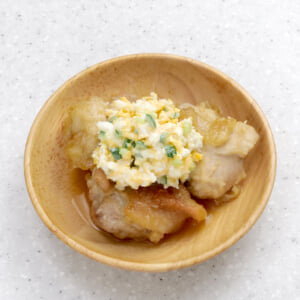
No-Fry Chicken Nanban
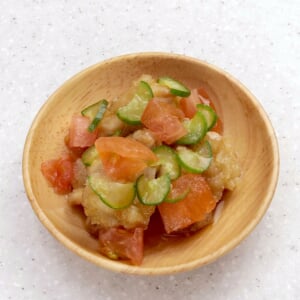
Chicken Nanbanzuke (Sweet-Vinegar Marinated Chicken)