Fruit Punch (Japanese Fruit Cocktail)
フルーツポンチ
 By Aoi, licensed nutritionist · From a Japanese preschool lunch menu
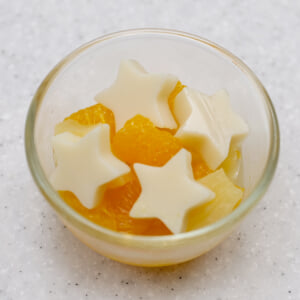
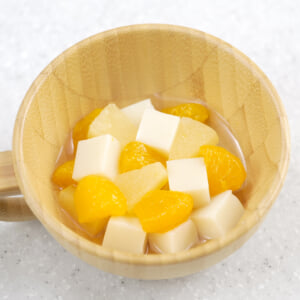
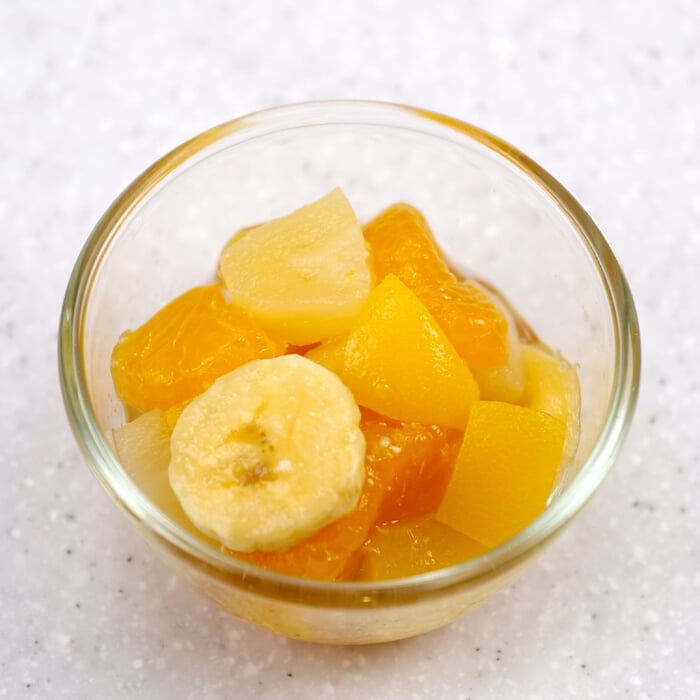
In Japan, "fruit punch" (furutsu ponchi) is not a drink but a chilled dessert of mixed fruit in a light syrup, and it is a much-loved treat on school and preschool lunch menus. This version keeps things simple with banana plus canned peaches, mandarin oranges and pineapple, all cut into pieces small enough for little hands and spoons. The syrup is made with just sugar and water, so the sweetness stays gentle and the fruit does the talking.
Added. Open the recipe helper (bottom right) → ☰ Menu → 🛒 Shopping list to see the ingredients for your family size.
Printing uses the number of adults and children set under Ingredients, so set those first.
Ingredients
Amounts for 1 child (1 serving). An adult counts as 2 servings.
One serving here is 1.5× the portion served to a child in a Japanese preschool, sized for Western appetites. An adult counts as two servings. Tap an ingredient to check it off.
Ingredients
- 30 gbanana
- 22.5 gcanned peaches
- 22.5 gcanned mandarin oranges
- 22.5 gcanned pineapple
Seasonings
- 15 gwater
- 1.2 gsugar
Directions
- 1
Put the sugar and water in a saucepan and bring to a boil over low heat. Let cool to make the syrup.
- 2
Slice the banana into rounds. Drain the canned peaches and pineapple and cut them into bite-size pieces. Drain the canned mandarin oranges.
- 3
Combine the syrup from step 1 with the fruit from step 2 and mix together.
If you are not mixing the banana in right after slicing it, keep the slices soaking in the syrup from the canned fruit to stop them from browning.
Nutrition
| Per | 1 serving | 1 adult serving | Your total |
|---|---|---|---|
| Energy | 81 kcal | 162 kcal | 81 kcal |
| Protein | 0.8 g | 1.5 g | 0.8 g |
| Fat | 0 g | 0 g | 0 g |
| Carbohydrates | 20.5 g | 41.1 g | 20.5 g |
| Fiber | 0.9 g | 1.8 g | 0.9 g |
| Salt equivalent | 0 g | 0 g | 0 g |
| Calcium | 4.5 mg | 9 mg | 4.5 mg |
| Iron | 0.3 mg | 0.6 mg | 0.3 mg |
| Potassium | 169.5 mg | 339 mg | 169.5 mg |
| Energy | Protein | Fat | Carbs | Fiber | Salt equiv. | Calcium | Iron | Potassium | |
|---|---|---|---|---|---|---|---|---|---|
| 1 serving | 81 kcal | 0.8 g | 0 g | 20.5 g | 0.9 g | 0 g | 4.5 mg | 0.3 mg | 169.5 mg |
| 1 adult serving | 162 kcal | 1.5 g | 0 g | 41.1 g | 1.8 g | 0 g | 9 mg | 0.6 mg | 339 mg |
Values are per serving (1.5× the Japanese preschool portion); an adult serving is double. They were calculated by a licensed Japanese nutritionist using the Standard Tables of Food Composition in Japan. "Salt equivalent" is sodium × 2.54, the standard Japanese measure. Allergen flags cover egg, milk and wheat only and come from the nutritionist's records. Soy sauce and miso are made with wheat but are usually allowed on Japanese wheat-free school menus, so check with your doctor.