Curry Potatoes
カレーポテト
 By Aoi, licensed nutritionist · From a Japanese preschool lunch menu
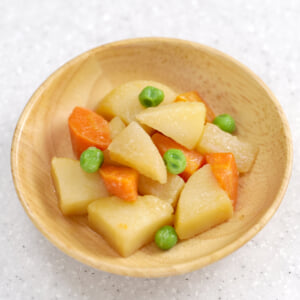
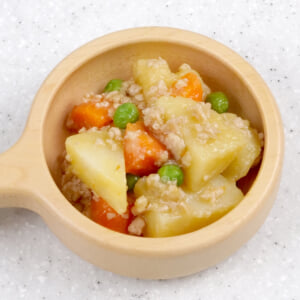
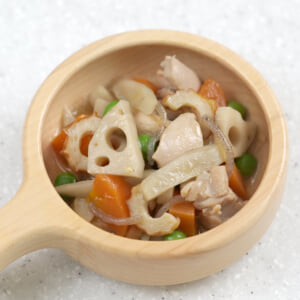
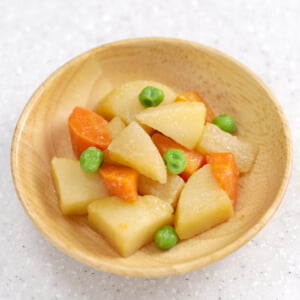
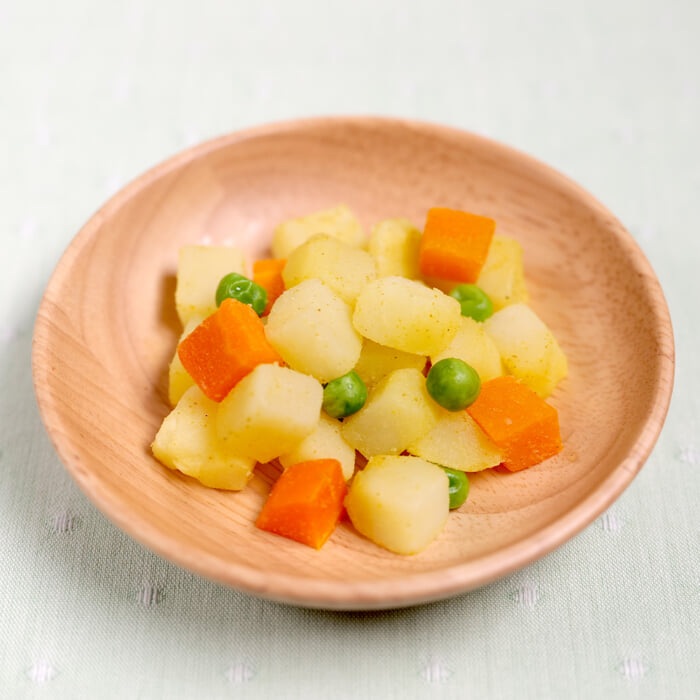
This simple side dish comes together in a single microwave-safe bowl: small cubes of potato and carrot, a handful of green peas, and just enough curry powder to give everything a gentle, savory warmth without any heat. Curry is a firm favorite with children in Japan, and that familiar aroma is often all it takes to get even reluctant vegetable eaters to clean their plates. Cutting the vegetables into small dice means they cook evenly in the microwave and are easy for little ones to scoop up with a spoon.
Added. Open the recipe helper (bottom right) → ☰ Menu → 🛒 Shopping list to see the ingredients for your family size.
Printing uses the number of adults and children set under Ingredients, so set those first.
Ingredients
Amounts for 1 child (1 serving). An adult counts as 2 servings.
One serving here is 1.5× the portion served to a child in a Japanese preschool, sized for Western appetites. An adult counts as two servings. Tap an ingredient to check it off.
Ingredients
- 67.5 gpotato
- 15 gcarrot
- 4.5 gfrozen green peas
Seasonings
- 1.5 gvegetable oil
- 0.1 gcurry powder
- 0.5 gsalt
Directions
Video is in Japanese and may show a different version of this dish (other ingredients or steps). Follow the ingredients and steps on this page, especially when cooking for allergies.
- 1
Cut the potatoes and carrots into 1 cm dice.
- 2
Put the diced vegetables from step 1 into a large microwave-safe bowl and add the frozen green peas. Add the oil, salt and curry powder and mix well.
- 3
Cover loosely with plastic wrap and microwave at 1200W for about 5 minutes.
- 4
Stir everything together so the curry powder does not clump, then let it cool slightly so the flavors can soak in.
Nutrition
| Per | 1 serving | 1 adult serving | Your total |
|---|---|---|---|
| Energy | 63 kcal | 126 kcal | 63 kcal |
| Protein | 1.7 g | 3.3 g | 1.7 g |
| Fat | 1.5 g | 3 g | 1.5 g |
| Carbohydrates | 13.8 g | 27.6 g | 13.8 g |
| Fiber | 6.9 g | 13.8 g | 6.9 g |
| Salt equivalent | 0.5 g | 0.9 g | 0.5 g |
| Calcium | 9 mg | 18 mg | 9 mg |
| Iron | 0.3 mg | 0.6 mg | 0.3 mg |
| Potassium | 334.5 mg | 669 mg | 334.5 mg |
| Energy | Protein | Fat | Carbs | Fiber | Salt equiv. | Calcium | Iron | Potassium | |
|---|---|---|---|---|---|---|---|---|---|
| 1 serving | 63 kcal | 1.7 g | 1.5 g | 13.8 g | 6.9 g | 0.5 g | 9 mg | 0.3 mg | 334.5 mg |
| 1 adult serving | 126 kcal | 3.3 g | 3 g | 27.6 g | 13.8 g | 0.9 g | 18 mg | 0.6 mg | 669 mg |
Values are per serving (1.5× the Japanese preschool portion); an adult serving is double. They were calculated by a licensed Japanese nutritionist using the Standard Tables of Food Composition in Japan. "Salt equivalent" is sodium × 2.54, the standard Japanese measure. Allergen flags cover egg, milk and wheat only and come from the nutritionist's records. Soy sauce and miso are made with wheat but are usually allowed on Japanese wheat-free school menus, so check with your doctor.