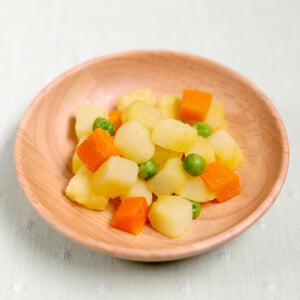
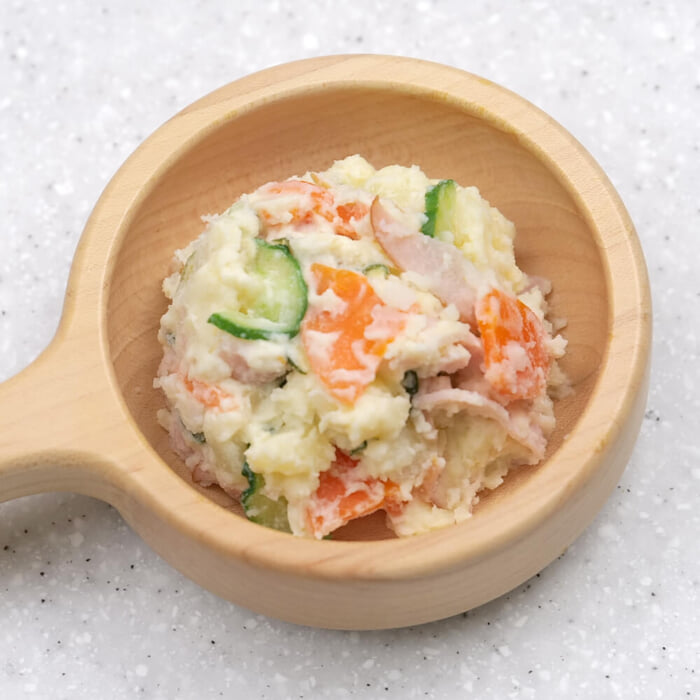
Potato Salad with Green Peas
ポテトサラダ(グリンピース)
 By Aoi, licensed nutritionist · From a Japanese preschool lunch menu
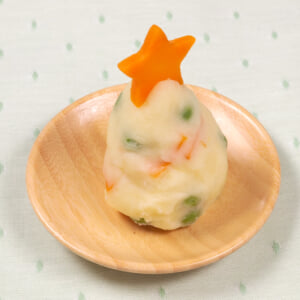
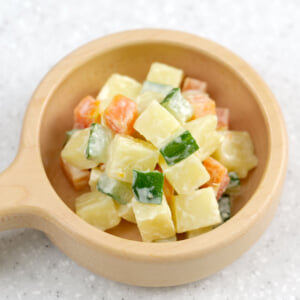
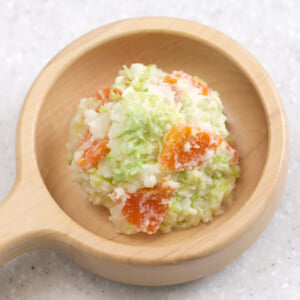
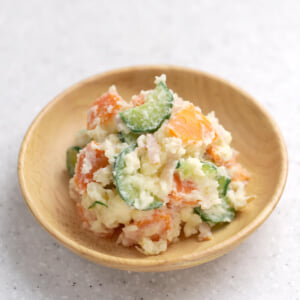
Potato salad is a fixture of Japanese school lunch menus, and this version keeps it simple with carrot and green peas for color. The potatoes are dried out in the pan and lightly crushed, which gives the salad that fluffy, comforting texture kids love, while a little vinegar mixed in while the potatoes are still warm means you need much less mayonnaise. Made with egg-free mayonnaise, it is also friendly to children with egg allergies.
Added. Open the recipe helper (bottom right) → ☰ Menu → 🛒 Shopping list to see the ingredients for your family size.
Printing uses the number of adults and children set under Ingredients, so set those first.
Ingredients
Amounts for 1 child (1 serving). An adult counts as 2 servings.
One serving here is 1.5× the portion served to a child in a Japanese preschool, sized for Western appetites. An adult counts as two servings. Tap an ingredient to check it off.
Ingredients
- 60 gpotato
- 13.5 gcarrot
- 7.5 gfrozen green peas
Seasonings
- 1.8 gvinegar
- 0.2 gsalt
- 9 gegg-free mayonnaise (Mayodore)A Japanese egg-free mayonnaise-style dressing. Substitute: Any egg-free or vegan mayonnaise.
- 0.2 gsalt
- to tastepepper
About the Japanese ingredients in this recipe
- egg-free mayonnaise (Mayodore) (マヨドレ)
- A Japanese egg-free mayonnaise-style dressing. Substitute: Any egg-free or vegan mayonnaise.
Directions
- 1
Cut the potatoes into quarter-rounds and boil until tender. Drain in a colander and return to the pot. Stir over the heat, crushing the potatoes slightly, until the excess moisture has cooked off. While still warm, mix in the vinegar and salt to season.
- 2
Cut the carrot into quarter-rounds and boil until tender. Briefly boil the green peas. Rinse both under running water to cool.
- 3
Squeeze the vegetables from step 2 well to remove excess water, then toss with the potatoes from step 1, the egg-free mayonnaise, salt, and pepper.
Stirring the potatoes over the heat to cook off the moisture gives the salad a fluffy, crumbly texture. Mixing in vinegar first means the salad tastes delicious even with less mayonnaise.
Nutrition
| Per | 1 serving | 1 adult serving | Your total |
|---|---|---|---|
| Energy | 96 kcal | 192 kcal | 96 kcal |
| Protein | 1.7 g | 3.3 g | 1.7 g |
| Fat | 5.3 g | 10.5 g | 5.3 g |
| Carbohydrates | 13.5 g | 27 g | 13.5 g |
| Fiber | 6.6 g | 13.2 g | 6.6 g |
| Salt equivalent | 0.6 g | 1.2 g | 0.6 g |
| Calcium | 9 mg | 18 mg | 9 mg |
| Iron | 0.5 mg | 0.9 mg | 0.5 mg |
| Potassium | 306 mg | 612 mg | 306 mg |
| Energy | Protein | Fat | Carbs | Fiber | Salt equiv. | Calcium | Iron | Potassium | |
|---|---|---|---|---|---|---|---|---|---|
| 1 serving | 96 kcal | 1.7 g | 5.3 g | 13.5 g | 6.6 g | 0.6 g | 9 mg | 0.5 mg | 306 mg |
| 1 adult serving | 192 kcal | 3.3 g | 10.5 g | 27 g | 13.2 g | 1.2 g | 18 mg | 0.9 mg | 612 mg |
Values are per serving (1.5× the Japanese preschool portion); an adult serving is double. They were calculated by a licensed Japanese nutritionist using the Standard Tables of Food Composition in Japan. "Salt equivalent" is sodium × 2.54, the standard Japanese measure. Allergen flags cover egg, milk and wheat only and come from the nutritionist's records. Soy sauce and miso are made with wheat but are usually allowed on Japanese wheat-free school menus, so check with your doctor.