Corn Mayo Toast
コーンマヨトースト
 By Aoi, licensed nutritionist · From a Japanese preschool lunch menu
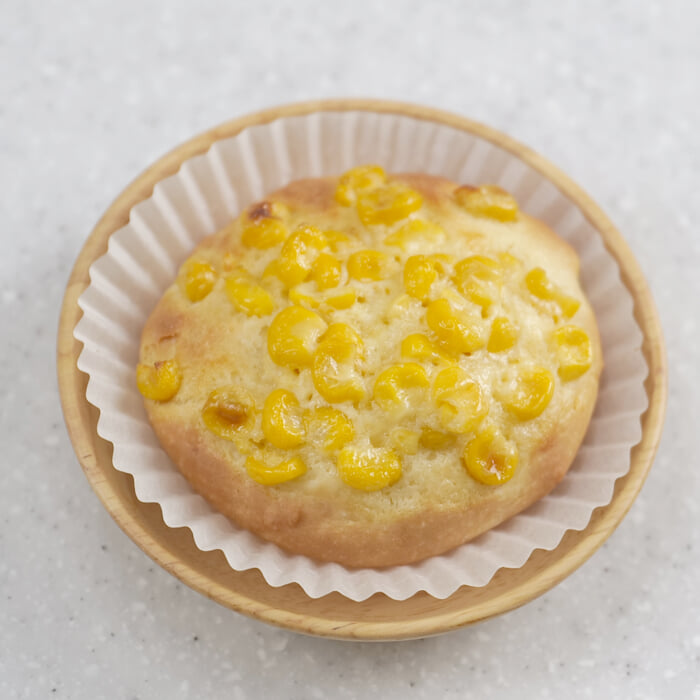
Corn and mayonnaise on soft bread is a combination found in bakeries all over Japan, and children love it: the corn is sweet, the topping is creamy, and the edges turn lightly golden in the oven. In this preschool version, plain yogurt lightens the mayonnaise, and an egg-free mayonnaise-style dressing like Mayodore is used. Finely minced onion, boiled first so it is soft and mild, adds a little savory depth without any sharpness.
Added. Open the recipe helper (bottom right) → ☰ Menu → 🛒 Shopping list to see the ingredients for your family size.
Printing uses the number of adults and children set under Ingredients, so set those first.
Ingredients
Amounts for 1 child (1 serving). An adult counts as 2 servings.
One serving here is 1.5× the portion served to a child in a Japanese preschool, sized for Western appetites. An adult counts as two servings. Tap an ingredient to check it off.
Ingredients
- 45 gwhite sandwich bread
- 10.5 gonion
- 18 gwhole kernel corn (canned or frozen)
Seasonings
- 6.8 gegg-free mayonnaise (Mayodore)A Japanese egg-free mayonnaise-style dressing. Substitute: Any egg-free or vegan mayonnaise.
- 2.3 gplain yogurt
About the Japanese ingredients in this recipe
- egg-free mayonnaise (Mayodore) (マヨドレ)
- A Japanese egg-free mayonnaise-style dressing. Substitute: Any egg-free or vegan mayonnaise.
Directions
- 1
Finely mince the onion and boil it. Cool it under running water, then squeeze it firmly to drain off as much water as possible.
- 2
Mix the drained onion with the corn, mayonnaise (egg-free Mayodore), and yogurt.
- 3
Spread the mixture on the bread and arrange the slices on a baking sheet. Bake in an oven preheated to 200°C (400°F) for about 7 minutes, then cut into pieces.
If the onion is not drained well, it releases water as the toast bakes and the topping turns soggy, so squeeze it firmly to remove as much moisture as you can.
Nutrition
| Per | 1 serving | 1 adult serving | Your total |
|---|---|---|---|
| Energy | 166.5 kcal | 333 kcal | 166.5 kcal |
| Protein | 4.8 g | 9.6 g | 4.8 g |
| Fat | 5.9 g | 11.7 g | 5.9 g |
| Carbohydrates | 25.5 g | 51 g | 25.5 g |
| Fiber | 2.7 g | 5.4 g | 2.7 g |
| Salt equivalent | 0.9 g | 1.8 g | 0.9 g |
| Calcium | 15 mg | 30 mg | 15 mg |
| Iron | 0.3 mg | 0.6 mg | 0.3 mg |
| Potassium | 85.5 mg | 171 mg | 85.5 mg |
| Energy | Protein | Fat | Carbs | Fiber | Salt equiv. | Calcium | Iron | Potassium | |
|---|---|---|---|---|---|---|---|---|---|
| 1 serving | 166.5 kcal | 4.8 g | 5.9 g | 25.5 g | 2.7 g | 0.9 g | 15 mg | 0.3 mg | 85.5 mg |
| 1 adult serving | 333 kcal | 9.6 g | 11.7 g | 51 g | 5.4 g | 1.8 g | 30 mg | 0.6 mg | 171 mg |
Values are per serving (1.5× the Japanese preschool portion); an adult serving is double. They were calculated by a licensed Japanese nutritionist using the Standard Tables of Food Composition in Japan. "Salt equivalent" is sodium × 2.54, the standard Japanese measure. Allergen flags cover egg, milk and wheat only and come from the nutritionist's records. Soy sauce and miso are made with wheat but are usually allowed on Japanese wheat-free school menus, so check with your doctor.