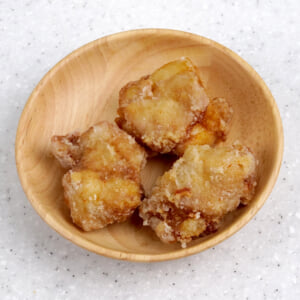
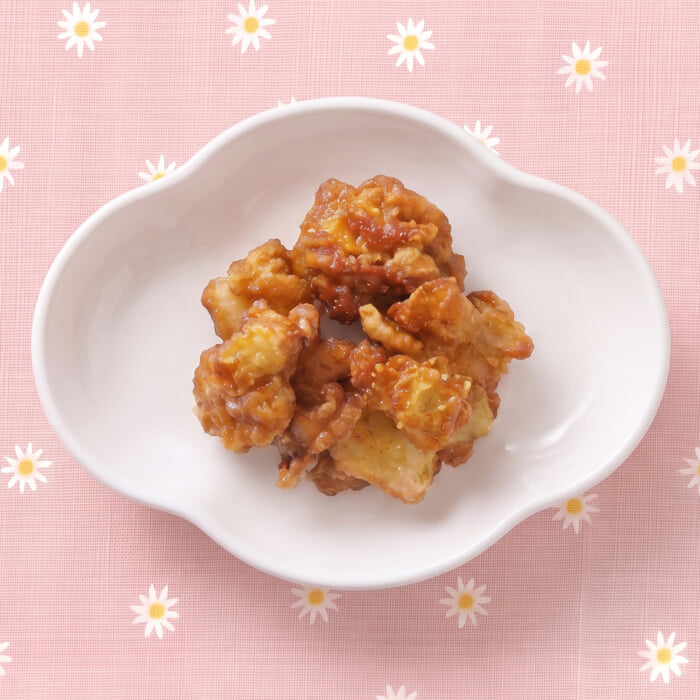
Chicken Karaage (Japanese Fried Chicken)
鶏の唐揚げ · Tori no Karaage
 By Aoi, licensed nutritionist · From a Japanese preschool lunch menu
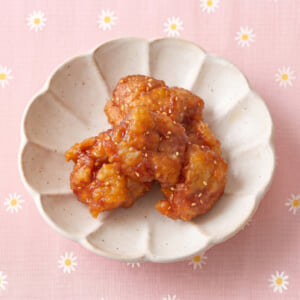
Karaage is Japan's everyday fried chicken: bite-size pieces of chicken thigh marinated, dusted in potato starch and deep-fried until the outside crackles and the inside stays juicy. It is a fixture of bento boxes and school lunch menus alike, and in the preschool kitchen it is one of the dishes that empties plates fastest. This version keeps the marinade to just two things, soy sauce and ginger, so the flavor is gentle enough for little ones while the ginger aroma and the savory soy soak right into the meat. The potato starch coating, rather than flour, is what gives karaage its light, crisp shell.
Toddlers to adults. Portion out the children's share before the final seasoning, then season the rest for adults.
Wheat-free, but uses soy sauce (made with wheat). Japanese school-lunch allergy menus usually allow it, so check with your doctor. How to read the labels
Added. Open the recipe helper (bottom right) → ☰ Menu → 🛒 Shopping list to see the ingredients for your family size.
Printing uses the number of adults and children set under Ingredients, so set those first.
Ingredients
Amounts for 1 child (1 serving). An adult counts as 2 servings.
One serving here is 1.5× the portion served to a child in a Japanese preschool, sized for Western appetites. An adult counts as two servings. Tap an ingredient to check it off.
- 75 gchicken thigh
- 3.6 gsoy sauce
- 0.8 gginger paste (tube)Grated ginger sold ready to use in a squeeze tube, a staple in Japanese kitchens. Japanese school lunch kitchens grate fresh ginger for its aroma, but for cooking at home Aoi says the tube works just fine. Tube pastes often contain added salt, oil and other ingredients, so check the label. Substitute: Use freshly grated ginger in the same amount. 1 teaspoon of paste is about 5 g.
- 8.4 gpotato starch (katakuriko)Japanese potato starch used for thickening sauces and coating fried foods. Substitute: Cornstarch: start with the same amount and add a little more if it is still thin. It thickens a little less than potato starch and needs a couple of minutes at a gentle bubble to reach full thickness.
- to tasteoil for deep-frying
About the Japanese ingredients in this recipe
- ginger paste (tube) (しょうがチューブ)
- Grated ginger sold ready to use in a squeeze tube, a staple in Japanese kitchens. Japanese school lunch kitchens grate fresh ginger for its aroma, but for cooking at home Aoi says the tube works just fine. Tube pastes often contain added salt, oil and other ingredients, so check the label. Substitute: Use freshly grated ginger in the same amount. 1 teaspoon of paste is about 5 g.
- potato starch (katakuriko) (かたくり粉)
- Japanese potato starch used for thickening sauces and coating fried foods. Substitute: Cornstarch: start with the same amount and add a little more if it is still thin. It thickens a little less than potato starch and needs a couple of minutes at a gentle bubble to reach full thickness. Read the guide: Katakuriko (Japanese Potato Starch) and What to Use Instead → Guide: japanese-school-lunch.com/articles/katakuriko-potato-starch/
Directions
Video is in Japanese — the steps below are synced to it, so tap ▶ on a step to jump to that moment.
- 1
Cut the chicken into bite-size pieces.
- 2
Put the chicken in a bowl, add the soy sauce and ginger paste, and rub them into the meat. Press plastic wrap directly onto the surface and marinate for at least 15 minutes. If you are also making a toddler version, marinate that portion separately in about 70% of the combined seasoning amount and fry the two batches separately.
- 3
Coat the chicken in potato starch and pat off any excess. For a neater finish, spread the skin out and shape each piece before coating them in potato starch one at a time.
- 4
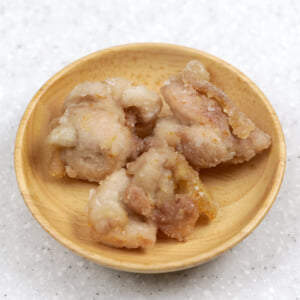
Fry in oil heated to 170°C (340°F) for about 4 minutes, turning the pieces over after 2 minutes. Finish by turning the heat up to high and frying for about 1 minute more. Watch out for spattering oil.
Turning the heat up to high at the very end is what gives the chicken a crisp, dry finish. The seasoning is as simple as it gets, just soy sauce and ginger, but the aroma of the ginger and the savory depth of the soy sauce soak right into the chicken. To freeze, pack the karaage into freezer bags in single-meal portions and eat it within about 2 weeks. Reheating it in a toaster oven crisps it up again nicely.
Nutrition
| Per | 1 serving | 1 adult serving | Your total |
|---|---|---|---|
| Energy | 253.5 kcal | 507 kcal | 253.5 kcal |
| Protein | 12.8 g | 25.5 g | 12.8 g |
| Fat | 19.7 g | 39.3 g | 19.7 g |
| Carbohydrates | 7.2 g | 14.4 g | 7.2 g |
| Fiber | 0 g | 0 g | 0 g |
| Salt equivalent | 0.6 g | 1.2 g | 0.6 g |
| Calcium | 7.5 mg | 15 mg | 7.5 mg |
| Iron | 0.5 mg | 0.9 mg | 0.5 mg |
| Potassium | 235.5 mg | 471 mg | 235.5 mg |
| Phosphorus | 136.5 mg | 273 mg | 136.5 mg |
| Energy | Protein | Fat | Carbs | Fiber | Salt equiv. | Calcium | Iron | Potassium | Phosphorus | |
|---|---|---|---|---|---|---|---|---|---|---|
| 1 serving | 253.5 kcal | 12.8 g | 19.7 g | 7.2 g | 0 g | 0.6 g | 7.5 mg | 0.5 mg | 235.5 mg | 136.5 mg |
| 1 adult serving | 507 kcal | 25.5 g | 39.3 g | 14.4 g | 0 g | 1.2 g | 15 mg | 0.9 mg | 471 mg | 273 mg |
Values are per serving (1.5× the Japanese preschool portion); an adult serving is double. They were calculated by a licensed Japanese nutritionist using the Standard Tables of Food Composition in Japan. "Salt equivalent" is sodium × 2.54, the standard Japanese measure. Allergen flags cover egg, milk and wheat only and come from the nutritionist's records. Soy sauce and miso are made with wheat but are usually allowed on Japanese wheat-free school menus, so check with your doctor.