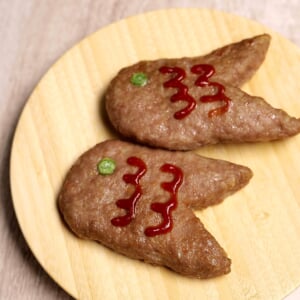
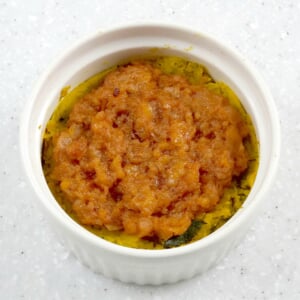
Baked Cod with Aurora Sauce
たらのオーロラソース焼き · Tara no Orora Sosu Yaki
 By Aoi, licensed nutritionist · From a Japanese preschool lunch menu
In Japan, "aurora sauce" means a simple, pale-pink blend of ketchup and mayonnaise, and it is one of the surest ways to get children to eat fish. Here mild, flaky cod is tossed in the sauce and baked in the oven, so the fish stays moist and the topping turns lightly golden with no frying and no fuss. We make it with egg-free mayonnaise (Mayodore), but regular mayonnaise works just as well at home.
Added. Open the recipe helper (bottom right) → ☰ Menu → 🛒 Shopping list to see the ingredients for your family size.
Printing uses the number of adults and children set under Ingredients, so set those first.
Ingredients
Amounts for 1 child (1 serving). An adult counts as 2 servings.
One serving here is 1.5× the portion served to a child in a Japanese preschool, sized for Western appetites. An adult counts as two servings. Tap an ingredient to check it off.
Ingredients
- 67.5 gcod fillet (skinless, boneless)
Seasonings
- 0.1 gsalt
- to tastepepper
- 3 gketchup
- 3 gegg-free mayonnaise (Mayodore)A Japanese egg-free mayonnaise-style dressing. Substitute: Any egg-free or vegan mayonnaise.
- 1.5 gvegetable oil
About the Japanese ingredients in this recipe
- egg-free mayonnaise (Mayodore) (マヨドレ)
- A Japanese egg-free mayonnaise-style dressing. Substitute: Any egg-free or vegan mayonnaise.
Directions
- 1
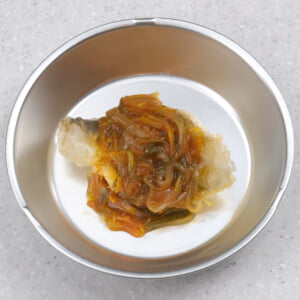
Combine the salt, pepper, ketchup, and egg-free mayonnaise to make the aurora sauce.
- 2
Toss the cod in the sauce from step 1 until evenly coated.
- 3
Line a baking sheet with parchment paper and brush it with vegetable oil. Arrange the fish from step 2 on the sheet and bake in a 200°C (400°F) oven for about 15 minutes.
Nutrition
| Per | 1 serving | 1 adult serving | Your total |
|---|---|---|---|
| Energy | 81 kcal | 162 kcal | 81 kcal |
| Protein | 11.9 g | 23.7 g | 11.9 g |
| Fat | 3.5 g | 6.9 g | 3.5 g |
| Carbohydrates | 1 g | 2.1 g | 1 g |
| Fiber | 0 g | 0 g | 0 g |
| Salt equivalent | 0.5 g | 0.9 g | 0.5 g |
| Calcium | 21 mg | 42 mg | 21 mg |
| Iron | 0.2 mg | 0.3 mg | 0.2 mg |
| Potassium | 249 mg | 498 mg | 249 mg |
| Energy | Protein | Fat | Carbs | Fiber | Salt equiv. | Calcium | Iron | Potassium | |
|---|---|---|---|---|---|---|---|---|---|
| 1 serving | 81 kcal | 11.9 g | 3.5 g | 1 g | 0 g | 0.5 g | 21 mg | 0.2 mg | 249 mg |
| 1 adult serving | 162 kcal | 23.7 g | 6.9 g | 2.1 g | 0 g | 0.9 g | 42 mg | 0.3 mg | 498 mg |
Values are per serving (1.5× the Japanese preschool portion); an adult serving is double. They were calculated by a licensed Japanese nutritionist using the Standard Tables of Food Composition in Japan. "Salt equivalent" is sodium × 2.54, the standard Japanese measure. Allergen flags cover egg, milk and wheat only and come from the nutritionist's records. Soy sauce and miso are made with wheat but are usually allowed on Japanese wheat-free school menus, so check with your doctor.