Japanese 100-Yen Shop Onigiri Mold: How to Use It
100円ショップのおにぎり型
By the Aoi's Japanese School Lunch team · October 26, 2026 · 3 min read
What Japan's 100-yen shops are, how the triangle onigiri mold in Aoi's video works, and how to shape rice balls if you can't find one.
In the short video "Keep Your Onigiri Crispy," Aoi shapes rice balls (onigiri) with a mold from a Japanese 100-yen shop, then packs the nori separately so it stays crisp until lunchtime. Here is what a 100-yen shop is, how the mold works, and what to use if you can't find one.
What is a 100-yen shop?
A 100-yen shop is Japan's version of a dollar store, selling kitchen tools, lunch-box goods, stationery and everyday household items. The best-known chains include Daiso, Seria and Can Do.
- The price. "100 yen" is the price before tax. With Japan's consumption tax, you pay 110 yen at the register. Seria, for example, lists its goods at 110 yen and its food at 108 yen (food is taxed at a lower rate).
- Not everything is 100 yen. Some chains, Daiso among them, also sell larger items at higher prices. The price is on the tag.
- Outside Japan. Daiso says it had about 1,107 stores in 25 countries and regions outside Japan at the end of February 2026, including the U.S., Brazil, the Philippines and Thailand. Prices there are set locally, and the items differ from store to store.
The video doesn't name the shop or the maker, and many brands sell similar molds.
How the mold works in the video
- 0:02 The mold comes from a Japanese 100-yen shop. It is a triangle mold that shapes two rice balls at once.
- 0:07 A filling of your choice goes between two layers of rice.
- 0:09 With the rice in the mold, the lid is pressed down. Then the mold is flipped over and the rice balls are pushed out (to 0:16).
- 0:16 Aluminum foil and masking tape keep the nori apart from the rice in the lunch box. The nori goes on just before eating, so it stays crisp (to 0:50).
Watch the video for the folding steps.
Tips
- Hands off the rice. Japan's Ministry of Agriculture, Forestry and Fisheries notes that using plastic wrap when you shape onigiri keeps germs from your hands off the rice. A mold does the same job.
- Keep the nori separate. Nori softens once it touches moist rice. In Japan, many store-bought onigiri come in a wrapper that keeps the nori apart until you open it. The foil trick in the video is a homemade version.
- Read the mold's instructions. Some molds say to rinse them with water first so the rice comes out cleanly.
Can't find one?
- Look for "onigiri mold" or "rice ball mold" online, at Daiso stores outside Japan, or at Asian grocery stores.
- Use plastic wrap. Put a scoop of warm rice on a sheet of plastic wrap, gather up the corners, and press it into a triangle or ball with your hands. You can unwrap it to add nori, or keep it wrapped for lunch.
Related recipes
These mixed-rice onigiri come from Japanese school-lunch menus. Shape them with a mold or plastic wrap, and add nori if you like.
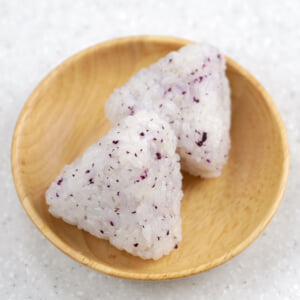
- Yukari Onigiri (just rice and red shiso seasoning)
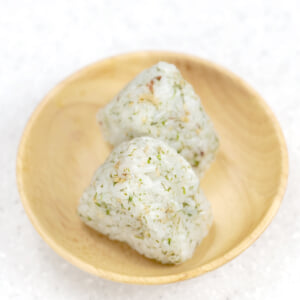
- Furikake Onigiri
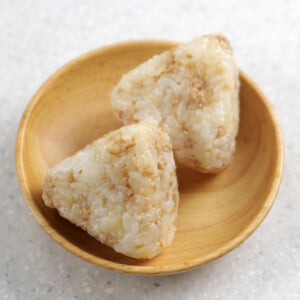
- Soboro Onigiri (with seasoned ground chicken)
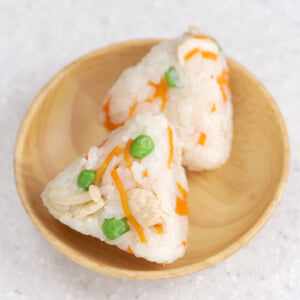
- Mazegohan Onigiri (mixed rice with chicken and vegetables)