Yogurt
ヨーグルト
 By Aoi, licensed nutritionist · From a Japanese preschool lunch menu
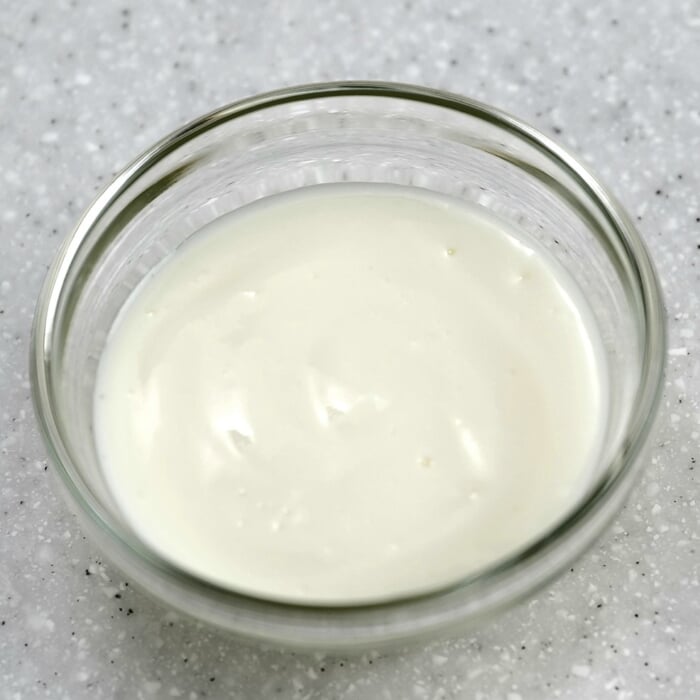
This is about as simple as a preschool snack gets: plain yogurt sweetened lightly with sugar and stirred with a spoonful of skim milk powder. The milk powder is there for extra calcium, but it also rounds off the tartness of the yogurt, so even children who find plain yogurt too sour tend to finish the bowl. It comes together in a minute with no cooking at all.
Added. Open the recipe helper (bottom right) → ☰ Menu → 🛒 Shopping list to see the ingredients for your family size.
Printing uses the number of adults and children set under Ingredients, so set those first.
Ingredients
Amounts for 1 child (1 serving). An adult counts as 2 servings.
One serving here is 1.5× the portion served to a child in a Japanese preschool, sized for Western appetites. An adult counts as two servings. Tap an ingredient to check it off.
Ingredients
- 105 gplain yogurt
Seasonings
- 4.5 gskim milk powderMilk with the fat and water removed. Substitute: No skim milk powder? Leave it out and use milk in place of the water it is dissolved in, in the same amount (for example, 30 g skim milk powder + 130 g water becomes 130 g milk). Milk still contains milk, so this swap is not for a milk allergy.
- 5.3 gsugar
About the Japanese ingredients in this recipe
- skim milk powder (スキムミルク)
- Milk with the fat and water removed. Substitute: No skim milk powder? Leave it out and use milk in place of the water it is dissolved in, in the same amount (for example, 30 g skim milk powder + 130 g water becomes 130 g milk). Milk still contains milk, so this swap is not for a milk allergy.
Directions
- 1
Add the skim milk powder and sugar to the yogurt and mix well until smooth.
We stir in skim milk powder to boost the calcium. It also gives the yogurt a milder, mellower flavor.
Nutrition
| Per | 1 serving | 1 adult serving | Your total |
|---|---|---|---|
| Energy | 96 kcal | 192 kcal | 96 kcal |
| Protein | 5.3 g | 10.5 g | 5.3 g |
| Fat | 3.2 g | 6.3 g | 3.2 g |
| Carbohydrates | 12.8 g | 25.5 g | 12.8 g |
| Fiber | 0 g | 0 g | 0 g |
| Salt equivalent | 0.2 g | 0.3 g | 0.2 g |
| Calcium | 175.5 mg | 351 mg | 175.5 mg |
| Iron | 0 mg | 0 mg | 0 mg |
| Potassium | 259.5 mg | 519 mg | 259.5 mg |
| Energy | Protein | Fat | Carbs | Fiber | Salt equiv. | Calcium | Iron | Potassium | |
|---|---|---|---|---|---|---|---|---|---|
| 1 serving | 96 kcal | 5.3 g | 3.2 g | 12.8 g | 0 g | 0.2 g | 175.5 mg | 0 mg | 259.5 mg |
| 1 adult serving | 192 kcal | 10.5 g | 6.3 g | 25.5 g | 0 g | 0.3 g | 351 mg | 0 mg | 519 mg |
Values are per serving (1.5× the Japanese preschool portion); an adult serving is double. They were calculated by a licensed Japanese nutritionist using the Standard Tables of Food Composition in Japan. "Salt equivalent" is sodium × 2.54, the standard Japanese measure. Allergen flags cover egg, milk and wheat only and come from the nutritionist's records. Soy sauce and miso are made with wheat but are usually allowed on Japanese wheat-free school menus, so check with your doctor.