Wonton Soup with Chicken and Cabbage
わんたんスープ(鶏肉・キャベツ)
 By Aoi, licensed nutritionist · From a Japanese preschool lunch menu
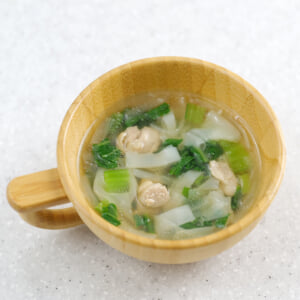
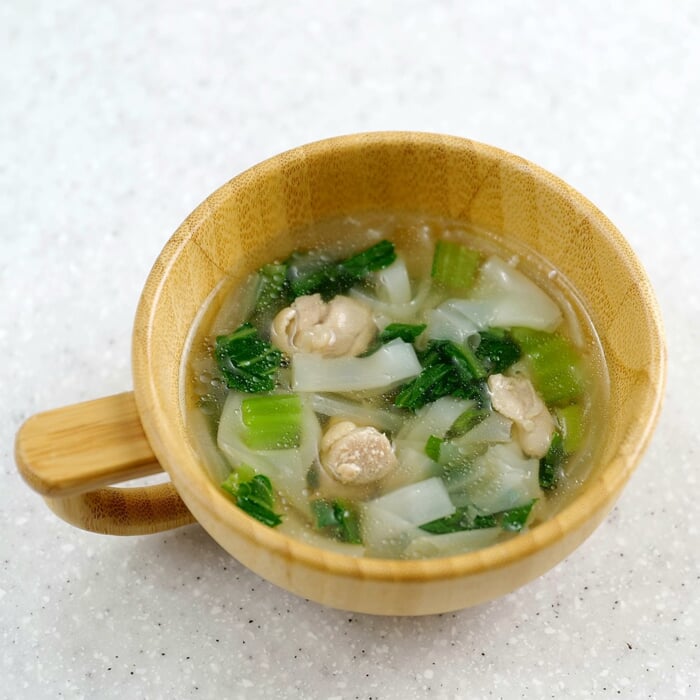
This is the school-lunch way of making wonton soup: instead of folding and filling each wonton, the wrappers are cut into short strips and dropped straight into the broth at the end, where they turn soft and slippery. The chicken, cabbage and onion simmer in a gentle chicken-stock base seasoned with just a little salt and soy sauce, so it is mild enough for even the youngest eaters. Children love fishing out the silky wrapper ribbons with their spoons, and the whole pot comes together in a single pan. It is made without egg or milk.
Added. Open the recipe helper (bottom right) → ☰ Menu → 🛒 Shopping list to see the ingredients for your family size.
Printing uses the number of adults and children set under Ingredients, so set those first.
Ingredients
Amounts for 1 child (1 serving). An adult counts as 2 servings.
One serving here is 1.5× the portion served to a child in a Japanese preschool, sized for Western appetites. An adult counts as two servings. Tap an ingredient to check it off.
Ingredients
- 19.5 gcabbage
- 7.5 gonion
- 6 gwonton wrappers
- 16.5 gchicken thigh
Seasonings
- 150 mlwater
- 0.5 gchicken stock powder (milk-free)A Japanese granulated chicken soup base used for Chinese-style soups and stir-fries; this version is made without milk ingredients. Substitute: Milk-free chicken bouillon powder or a crumbled bouillon cube; check the label.
- 0.2 gsalt
- 0.9 gsoy sauce
About the Japanese ingredients in this recipe
- chicken stock powder (milk-free) (鶏ガラスープの素(乳不使用))
- A Japanese granulated chicken soup base used for Chinese-style soups and stir-fries; this version is made without milk ingredients. Substitute: Milk-free chicken bouillon powder or a crumbled bouillon cube; check the label.
Directions
- 1
Cut the cabbage into 2 cm squares. Thinly slice the onion, cutting the slices in half so they are half the length.
- 2
Cut the wonton wrappers in half, then cut them into 1 cm wide strips. Cut the chicken into 1 cm pieces.
- 3
Put the water, chicken stock powder and onion in a pot and bring to a boil, then add the cabbage and chicken and simmer.
- 4
Just before serving, add the wonton wrapper strips, separating them as you drop them in, then add the salt and soy sauce and simmer briefly.
If you add the wonton wrapper strips all at once they stick together in a clump, so always separate them as you drop them in. The wrappers soak up the broth as they sit, so it is best to add them just before serving.
Nutrition
| Per | 1 serving | 1 adult serving | Your total |
|---|---|---|---|
| Energy | 57 kcal | 114 kcal | 57 kcal |
| Protein | 3.8 g | 7.5 g | 3.8 g |
| Fat | 2.6 g | 5.1 g | 2.6 g |
| Carbohydrates | 5.1 g | 10.2 g | 5.1 g |
| Fiber | 0.6 g | 1.2 g | 0.6 g |
| Salt equivalent | 0.5 g | 0.9 g | 0.5 g |
| Calcium | 10.5 mg | 21 mg | 10.5 mg |
| Iron | 0.2 mg | 0.3 mg | 0.2 mg |
| Potassium | 105 mg | 210 mg | 105 mg |
| Energy | Protein | Fat | Carbs | Fiber | Salt equiv. | Calcium | Iron | Potassium | |
|---|---|---|---|---|---|---|---|---|---|
| 1 serving | 57 kcal | 3.8 g | 2.6 g | 5.1 g | 0.6 g | 0.5 g | 10.5 mg | 0.2 mg | 105 mg |
| 1 adult serving | 114 kcal | 7.5 g | 5.1 g | 10.2 g | 1.2 g | 0.9 g | 21 mg | 0.3 mg | 210 mg |
Values are per serving (1.5× the Japanese preschool portion); an adult serving is double. They were calculated by a licensed Japanese nutritionist using the Standard Tables of Food Composition in Japan. "Salt equivalent" is sodium × 2.54, the standard Japanese measure. Allergen flags cover egg, milk and wheat only and come from the nutritionist's records. Soy sauce and miso are made with wheat but are usually allowed on Japanese wheat-free school menus, so check with your doctor.