Harusame Soup (Glass Noodle Soup)
春雨スープ · Harusame Soup
 By Aoi, licensed nutritionist · From a Japanese preschool lunch menu
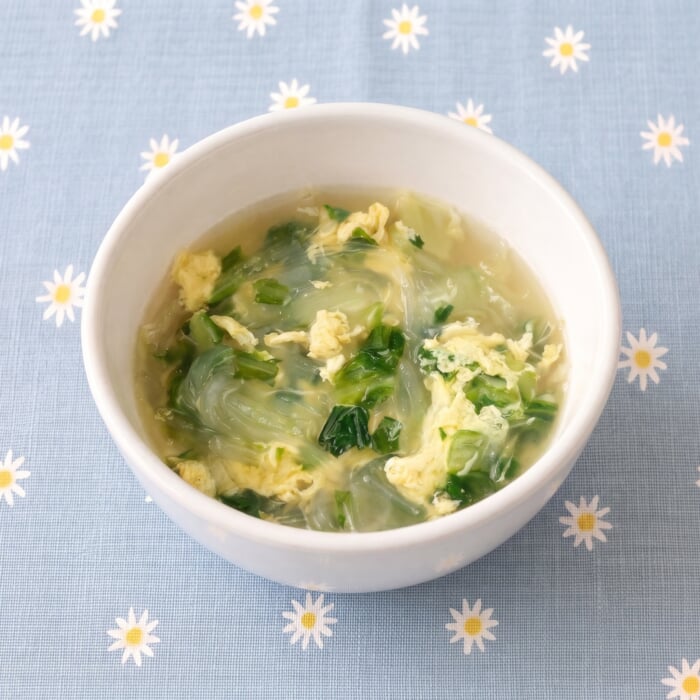
Harusame means "spring rain" in Japanese, a lovely name for the thin, translucent glass noodles that drift through this soup. Here they simmer with chicken thigh, onion, carrot and bok choy in a lightly seasoned chicken broth, the kind of soup that shows up often on Japanese preschool lunch menus. Children love the slippery, easy-to-swallow noodles, and the soft vegetables and mild seasoning make it an easy win even with picky eaters. It is made without egg or dairy, and it freezes well too, so it is handy to have on hand for busy days.
Toddlers to adults. The whole family can eat this exactly as written.
Wheat-free, but uses soy sauce (made with wheat). Japanese school-lunch allergy menus usually allow it, so check with your doctor. How to read the labels
Added. Open the recipe helper (bottom right) → ☰ Menu → 🛒 Shopping list to see the ingredients for your family size.
Printing uses the number of adults and children set under Ingredients, so set those first.
Ingredients
Amounts for 1 child (1 serving). An adult counts as 2 servings.
One serving here is 1.5× the portion served to a child in a Japanese preschool, sized for Western appetites. An adult counts as two servings. Tap an ingredient to check it off.
- 30 gchicken thigh
- 15 gonion
- 15 gcarrot
- 18 gbok choy
- 9 gmung bean glass noodlesThin, translucent dried noodles made from mung bean starch, also sold as bean thread, cellophane or glass noodles. Substitute: Any glass noodles or thin rice vermicelli work.
- 1.5 gsesame oil
- 225 mlwater
- 2.3 gchicken stock powder (Chinese-style)Japanese granulated chicken bone soup base used for Chinese-style soups and stir-fries. Substitute: Chicken bouillon granules or powder.
- 1.5 gsoy sauce
- 0.2 gsalt
- to tastepepper
About the Japanese ingredients in this recipe
- mung bean glass noodles (緑豆春雨)
- Thin, translucent dried noodles made from mung bean starch, also sold as bean thread, cellophane or glass noodles. Substitute: Any glass noodles or thin rice vermicelli work.
- chicken stock powder (Chinese-style) (鶏ガラスープの素)
- Japanese granulated chicken bone soup base used for Chinese-style soups and stir-fries. Substitute: Chicken bouillon granules or powder.
Directions
Video is in Japanese — the steps below are synced to it, so tap ▶ on a step to jump to that moment.
- 1
Thinly slice the onion, cut the carrot into thin matchsticks, cut the bok choy into 2 cm pieces, and cut the chicken into 1 cm pieces. (Soil tends to collect at the base of bok choy, so wash it well before cutting.)
- 2
Heat the sesame oil in a pot, add the onion, carrot and chicken, and stir-fry over medium heat for about 2 to 3 minutes.
- 3
Add the water and chicken stock powder and bring to a boil. Once boiling, add the glass noodles and bok choy and simmer over low heat for about 10 minutes. (For children of elementary-school age and younger, simmer for about 15 minutes so everything is nice and soft. Loosen the glass noodles as you add them so they don't clump together.)
- 4
Season to taste with the soy sauce, salt and pepper.
Tips for Best Results
- For the noodles, I recommend mung bean glass noodles, which hold their shape even when simmered for a long time. Their slippery, smooth texture makes them a hit with kids.
- You can swap the chicken for pork, ground meat or tofu, and the vegetables for bean sprouts, komatsuna, cabbage, shiitake and so on - it is delicious any way you make it.
How to Freeze
Let the soup cool, then divide it into single portions in freezer bags and freeze. To eat, reheat in the microwave.
Keeps for about 2 weeks (but enjoy it as soon as you can).
Nutrition
| Per | 1 serving | 1 adult serving | Your total |
|---|---|---|---|
| Energy | 114 kcal | 228 kcal | 114 kcal |
| Protein | 5.6 g | 11.1 g | 5.6 g |
| Fat | 5.9 g | 11.7 g | 5.9 g |
| Carbohydrates | 11.1 g | 22.2 g | 11.1 g |
| Fiber | 1.2 g | 2.4 g | 1.2 g |
| Salt equivalent | 0.5 g | 0.9 g | 0.5 g |
| Calcium | 30 mg | 60 mg | 30 mg |
| Iron | 0.6 mg | 1.2 mg | 0.6 mg |
| Potassium | 213 mg | 426 mg | 213 mg |
| Phosphorus | 69 mg | 138 mg | 69 mg |
| Energy | Protein | Fat | Carbs | Fiber | Salt equiv. | Calcium | Iron | Potassium | Phosphorus | |
|---|---|---|---|---|---|---|---|---|---|---|
| 1 serving | 114 kcal | 5.6 g | 5.9 g | 11.1 g | 1.2 g | 0.5 g | 30 mg | 0.6 mg | 213 mg | 69 mg |
| 1 adult serving | 228 kcal | 11.1 g | 11.7 g | 22.2 g | 2.4 g | 0.9 g | 60 mg | 1.2 mg | 426 mg | 138 mg |
Values are per serving (1.5× the Japanese preschool portion); an adult serving is double. They were calculated by a licensed Japanese nutritionist using the Standard Tables of Food Composition in Japan. "Salt equivalent" is sodium × 2.54, the standard Japanese measure. Allergen flags cover egg, milk and wheat only and come from the nutritionist's records. Soy sauce and miso are made with wheat but are usually allowed on Japanese wheat-free school menus, so check with your doctor.
Cooking for bigger kids? See the elementary-school portion of this recipe.