Tsukimi Dango-Style Sweet Potato Bites
お月見団子風スイートポテト(乳なし) · Otsukimi Dango-fu Sweet Potato
 By Aoi, licensed nutritionist · From a Japanese preschool lunch menu
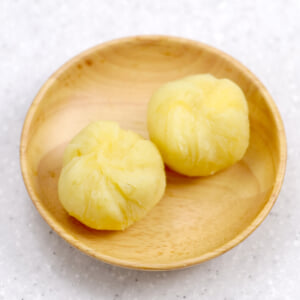
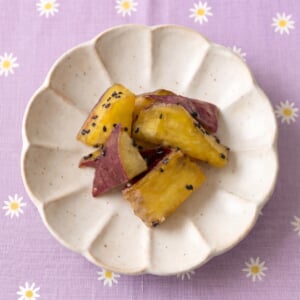
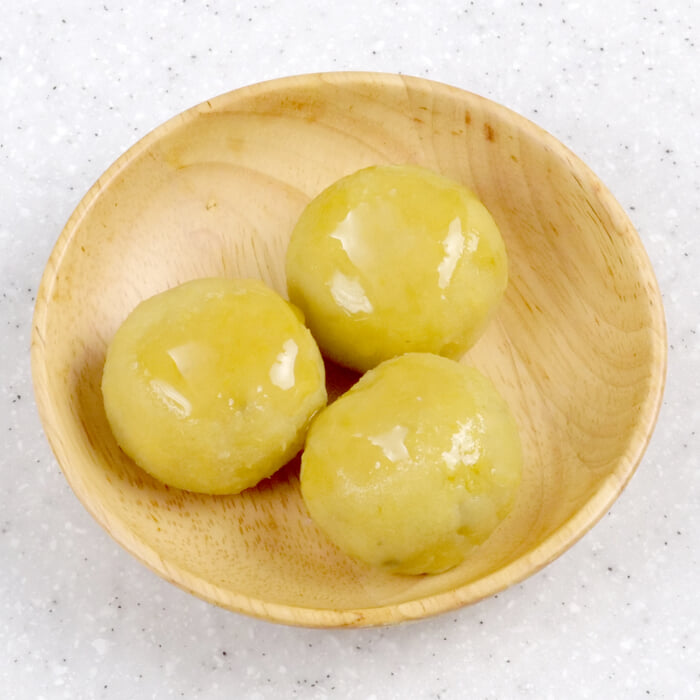
In Japan, 'sweet potato' (suito poteto) is the name of a baked confection made from mashed sweet potato, and it is one of the most loved autumn snacks in preschool kitchens. For Otsukimi, the mid-autumn moon-viewing festival when round white dango are offered to the harvest moon, we shape the mixture into little dango-style balls instead of the usual ovals. This version uses sweetened soy milk in place of butter and milk, and a thin brush of honey after baking gives each ball a glossy, moon-like shine.
Contains honey, which should not be given to babies under 1 year old.
Added. Open the recipe helper (bottom right) → ☰ Menu → 🛒 Shopping list to see the ingredients for your family size.
Printing uses the number of adults and children set under Ingredients, so set those first.
Ingredients
Amounts for 1 child (1 serving). An adult counts as 2 servings.
One serving here is 1.5× the portion served to a child in a Japanese preschool, sized for Western appetites. An adult counts as two servings. Tap an ingredient to check it off.
Ingredients
- 75 gJapanese sweet potato (satsumaimo)A purple-skinned, pale-yellow-fleshed sweet potato that is sweeter, drier, and fluffier than orange varieties. Substitute: Any sweet potato.
Seasonings
- 3.6 gsugar
- 12 gsweetened soy milk (Japanese chosei tonyu)Japanese 'prepared' soy milk that is lightly sweetened and flavored to taste milder than plain soy milk. Substitute: Regular (original, lightly sweetened) soy milk from the supermarket.
- 2.3 ghoney
About the Japanese ingredients in this recipe
- Japanese sweet potato (satsumaimo) (さつまいも)
- A purple-skinned, pale-yellow-fleshed sweet potato that is sweeter, drier, and fluffier than orange varieties. Substitute: Any sweet potato.
- sweetened soy milk (Japanese chosei tonyu) (調製豆乳)
- Japanese 'prepared' soy milk that is lightly sweetened and flavored to taste milder than plain soy milk. Substitute: Regular (original, lightly sweetened) soy milk from the supermarket.
Directions
- 1
Peel the sweet potato, cut it into thick half-moons, and boil until soft.
- 2
Mash the sweet potato while it is still hot, then add the sugar and soy milk and knead until smooth.
- 3
Shape the mixture into round dango-style balls and arrange them on a baking sheet lined with parchment paper.
- 4
Bake in an oven preheated to 190°C (375°F) for about 20 minutes. Once the balls have cooled, brush a thin layer of honey over them for shine.
For children in the final weaning stage (kanryo-ki, around 12 to 18 months), leave out the honey.
Nutrition
| Per | 1 serving | 1 adult serving | Your total |
|---|---|---|---|
| Energy | 124.5 kcal | 249 kcal | 124.5 kcal |
| Protein | 1.2 g | 2.4 g | 1.2 g |
| Fat | 0.9 g | 1.8 g | 0.9 g |
| Carbohydrates | 30.9 g | 61.8 g | 30.9 g |
| Fiber | 2.3 g | 4.5 g | 2.3 g |
| Salt equivalent | 0.2 g | 0.3 g | 0.2 g |
| Calcium | 33 mg | 66 mg | 33 mg |
| Iron | 0.6 mg | 1.2 mg | 0.6 mg |
| Potassium | 307.5 mg | 615 mg | 307.5 mg |
| Energy | Protein | Fat | Carbs | Fiber | Salt equiv. | Calcium | Iron | Potassium | |
|---|---|---|---|---|---|---|---|---|---|
| 1 serving | 124.5 kcal | 1.2 g | 0.9 g | 30.9 g | 2.3 g | 0.2 g | 33 mg | 0.6 mg | 307.5 mg |
| 1 adult serving | 249 kcal | 2.4 g | 1.8 g | 61.8 g | 4.5 g | 0.3 g | 66 mg | 1.2 mg | 615 mg |
Values are per serving (1.5× the Japanese preschool portion); an adult serving is double. They were calculated by a licensed Japanese nutritionist using the Standard Tables of Food Composition in Japan. "Salt equivalent" is sodium × 2.54, the standard Japanese measure. Allergen flags cover egg, milk and wheat only and come from the nutritionist's records. Soy sauce and miso are made with wheat but are usually allowed on Japanese wheat-free school menus, so check with your doctor.