Tandoori-Style Baked Salmon
鮭のタンドリー焼き · Sake no Tandoori Yaki
 By Aoi, licensed nutritionist · From a Japanese preschool lunch menu
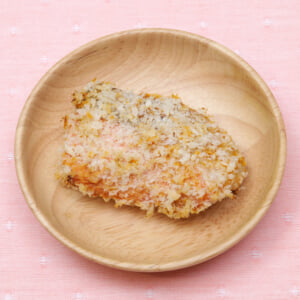
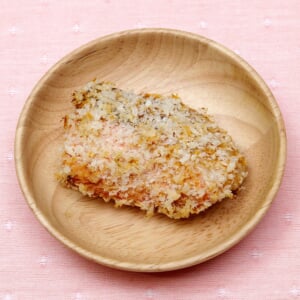
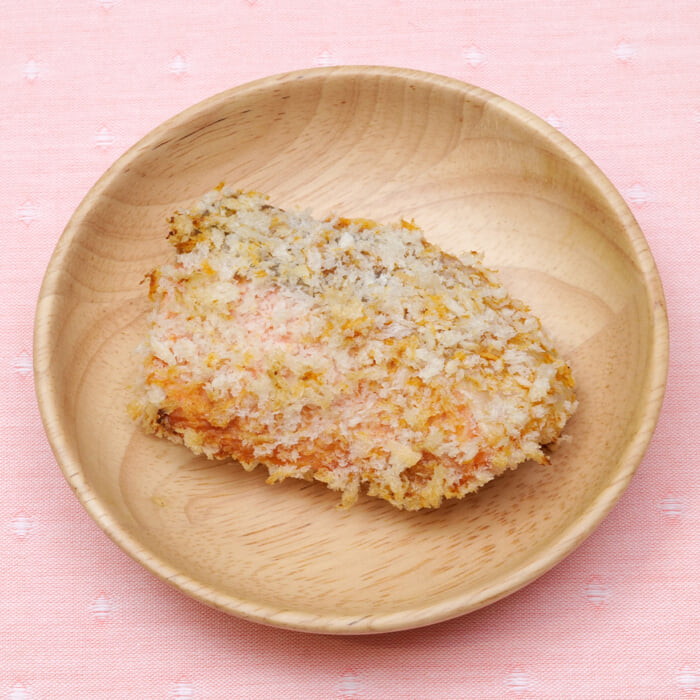
This is our preschool take on tandoori: salmon fillets soak in a marinade of plain yogurt, curry powder, ketchup, garlic and ginger, then get a light coat of panko and go into the oven. The yogurt keeps the fish tender and softens the spices, and the touch of ketchup adds a hint of sweetness that children find easy to love. Curry powder is one of the most popular flavors in Japanese school lunches, so even kids who are wary of fish tend to clean their plates when it shows up like this.
Added. Open the recipe helper (bottom right) → ☰ Menu → 🛒 Shopping list to see the ingredients for your family size.
Printing uses the number of adults and children set under Ingredients, so set those first.
Ingredients
Amounts for 1 child (1 serving). An adult counts as 2 servings.
One serving here is 1.5× the portion served to a child in a Japanese preschool, sized for Western appetites. An adult counts as two servings. Tap an ingredient to check it off.
Ingredients
- 67.5 gsalmon
- 0.2 gpaprika
- 10.2 gplain unsweetened yogurt
Seasonings
- 0.3 ggarlic paste (tube)Grated garlic sold ready to use in a squeeze tube, a staple in Japanese kitchens. Japanese school lunch kitchens grate fresh garlic for its aroma, but for cooking at home Aoi says the tube works just fine. Tube pastes often contain added salt, oil and other ingredients, so check the label. Substitute: Use freshly grated garlic in the same amount. 1 teaspoon of paste is about 5 g.
- 0.3 gginger paste (tube)Grated ginger sold ready to use in a squeeze tube, a staple in Japanese kitchens. Japanese school lunch kitchens grate fresh ginger for its aroma, but for cooking at home Aoi says the tube works just fine. Tube pastes often contain added salt, oil and other ingredients, so check the label. Substitute: Use freshly grated ginger in the same amount. 1 teaspoon of paste is about 5 g.
- 0.2 gcurry powder
- 0.3 gsalt
- 4.5 gketchup
- 8.3 gpanko
- 1.5 gvegetable oil
About the Japanese ingredients in this recipe
- garlic paste (tube) (おろしにんにく,チューブ)
- Grated garlic sold ready to use in a squeeze tube, a staple in Japanese kitchens. Japanese school lunch kitchens grate fresh garlic for its aroma, but for cooking at home Aoi says the tube works just fine. Tube pastes often contain added salt, oil and other ingredients, so check the label. Substitute: Use freshly grated garlic in the same amount. 1 teaspoon of paste is about 5 g.
- ginger paste (tube) (しょうが,おろしチューブ)
- Grated ginger sold ready to use in a squeeze tube, a staple in Japanese kitchens. Japanese school lunch kitchens grate fresh ginger for its aroma, but for cooking at home Aoi says the tube works just fine. Tube pastes often contain added salt, oil and other ingredients, so check the label. Substitute: Use freshly grated ginger in the same amount. 1 teaspoon of paste is about 5 g.
Directions
Video is in Japanese and may show a different version of this dish (other ingredients or steps). Follow the ingredients and steps on this page, especially when cooking for allergies.
- 1
Combine the garlic, ginger, curry powder, paprika, salt, yogurt and ketchup, then add the salmon and let it marinate.
- 2
Coat the salmon with panko.
- 3
Line a baking sheet with parchment paper brushed with oil, arrange the salmon on it, and bake in an oven preheated to 180°C (350°F) for about 20 minutes.
The paprika is only there for color, so it's fine to leave it out!
Nutrition
| Per | 1 serving | 1 adult serving | Your total |
|---|---|---|---|
| Energy | 145.5 kcal | 291 kcal | 145.5 kcal |
| Protein | 16.8 g | 33.6 g | 16.8 g |
| Fat | 5.4 g | 10.8 g | 5.4 g |
| Carbohydrates | 8.1 g | 16.2 g | 8.1 g |
| Salt equivalent | 0.6 g | 1.2 g | 0.6 g |
| Calcium | 24 mg | 48 mg | 24 mg |
| Iron | 0.6 mg | 1.2 mg | 0.6 mg |
| Energy | Protein | Fat | Carbs | Salt equiv. | Calcium | Iron | |
|---|---|---|---|---|---|---|---|
| 1 serving | 145.5 kcal | 16.8 g | 5.4 g | 8.1 g | 0.6 g | 24 mg | 0.6 mg |
| 1 adult serving | 291 kcal | 33.6 g | 10.8 g | 16.2 g | 1.2 g | 48 mg | 1.2 mg |
Values are per serving (1.5× the Japanese preschool portion); an adult serving is double. They were calculated by a licensed Japanese nutritionist using the Standard Tables of Food Composition in Japan. "Salt equivalent" is sodium × 2.54, the standard Japanese measure. Allergen flags cover egg, milk and wheat only and come from the nutritionist's records. Soy sauce and miso are made with wheat but are usually allowed on Japanese wheat-free school menus, so check with your doctor.