Taco Rice
タコライス · Tako Raisu
 By Aoi, licensed nutritionist · From a Japanese preschool lunch menu
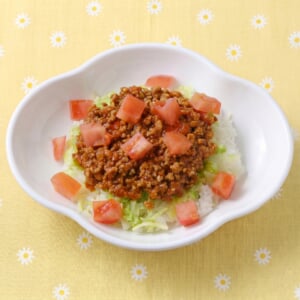
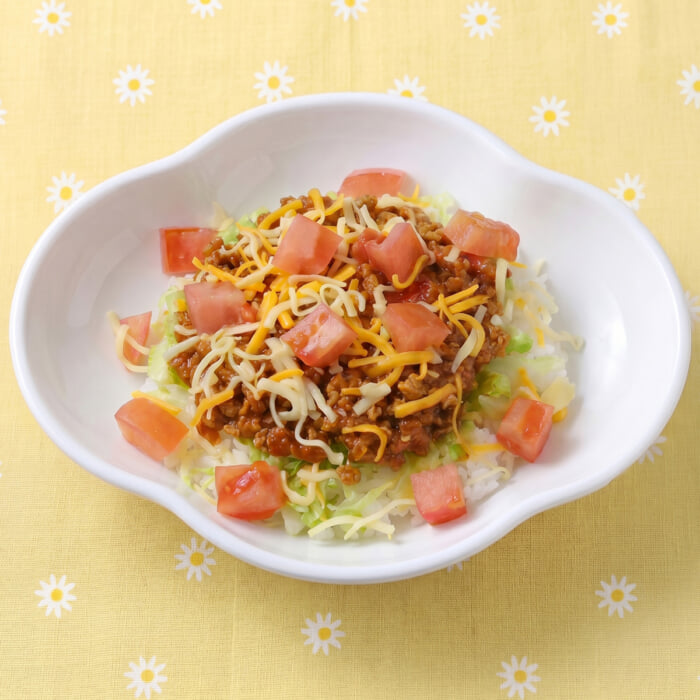
Taco rice is a dish that was born in Okinawa, where taco-style seasoned meat is served over a bowl of rice instead of in a tortilla. It has become a beloved favorite in school lunches across Japan. This preschool version keeps the meat sauce mild - tomato, ketchup and a touch of curry powder give it plenty of flavor without any heat - and gets its softness from boiled shredded cabbage, so even little ones can manage it easily. Older children can sprinkle on chili powder at the table for a bit of kick.
Toddlers to adults. Portion out the children's share before the final seasoning, then season the rest for adults.
Added. Open the recipe helper (bottom right) → ☰ Menu → 🛒 Shopping list to see the ingredients for your family size.
Printing uses the number of adults and children set under Ingredients, so set those first.
Ingredients
Amounts for 1 child (1 serving). An adult counts as 2 servings.
One serving here is 1.5× the portion served to a child in a Japanese preschool, sized for Western appetites. An adult counts as two servings. Tap an ingredient to check it off.
Ingredients
- 30 gonion
- 12 gcarrot
- 1.2 gvegetable oil
- 36 gground pork
- 0.6 ggarlic paste (tube)Grated garlic sold ready to use in a squeeze tube, a staple in Japanese kitchens. Japanese school lunch kitchens grate fresh garlic for its aroma, but for cooking at home Aoi says the tube works just fine. Tube pastes often contain added salt, oil and other ingredients, so check the label. Substitute: Use freshly grated garlic in the same amount. 1 teaspoon of paste is about 5 g.
Seasonings (A)
- 30 gcanned diced tomatoes
- 5.4 gketchup
- 3.6 gWorcestershire sauce
- 0.4 gcurry powder
- 0.4 gsugar
- 0.6 gsalt
- a pinchpepper
Toppings
- 36 gcabbage
- 24 gtomato
- 24 gshredded pizza cheese
- to taste (optional)chili powder
To Finish
- 0.9 platewarm cooked rice
About the Japanese ingredients in this recipe
- garlic paste (tube) (にんにくチューブ)
- Grated garlic sold ready to use in a squeeze tube, a staple in Japanese kitchens. Japanese school lunch kitchens grate fresh garlic for its aroma, but for cooking at home Aoi says the tube works just fine. Tube pastes often contain added salt, oil and other ingredients, so check the label. Substitute: Use freshly grated garlic in the same amount. 1 teaspoon of paste is about 5 g.
- Worcestershire sauce (ウスターソース)
- Read the guide: Bull-Dog Worcestershire Sauce: Japan's Everyday Brown Sauce → Guide: japanese-school-lunch.com/articles/bull-dog-worcestershire-sauce/
Directions
Video is in Japanese — the steps below are synced to it, so tap ▶ on a step to jump to that moment.
- 1
Finely chop the onion and carrot. Heat the oil in a frying pan and sauté them over medium heat for about 5 minutes. If they look like they might burn, add a splash of water (not included in the ingredient amounts) as you cook.
- 2
Add the ground pork and garlic paste and cook, stirring, until the meat is cooked through.
- 3
Add the Seasonings (A) and simmer over low heat for about 7 minutes, stirring occasionally. Note: If you are also making a toddler version, cook the meat with about 70% of the combined Seasonings (A) and set aside the toddlers' portion. For elementary-school age and up, add the remaining seasonings to taste and cook for another 2 to 3 minutes.
- 4
Finely shred the cabbage and boil it in hot water for about 2 to 3 minutes (4 minutes for the toddler version). Cool under running water, then squeeze out the excess moisture.
- 5
Serve in layers, in this order: rice, the boiled cabbage, the meat sauce, cheese, and finally the tomato cut into small cubes.
- 6
For elementary-school age and up, sprinkle with chili powder if desired.
Tips for Best Results
- When simmering the meat sauce, let it reduce well so the sharpness of the tomatoes cooks off - this brings out the sweetness and makes it much tastier.
- At school lunch we top it with boiled cabbage, but at home fresh lettuce works just fine too.
Freezing Instructions
Layer the rice, meat sauce and cheese in a heatproof container in that order, cover with a lid, and freeze. To eat, reheat in the microwave right in the container, then top with the cabbage (or fresh lettuce) and tomato.
Keeps for about 2 weeks (best eaten as soon as possible).
Nutrition
| Per | 1 serving | 1 adult serving | Your total |
|---|---|---|---|
| Energy | 226.5 kcal | 453 kcal | 226.5 kcal |
| Protein | 13.8 g | 27.6 g | 13.8 g |
| Fat | 15.5 g | 30.9 g | 15.5 g |
| Carbohydrates | 11.4 g | 22.8 g | 11.4 g |
| Fiber | 2.6 g | 5.1 g | 2.6 g |
| Salt equivalent | 1.5 g | 3 g | 1.5 g |
| Calcium | 210 mg | 420 mg | 210 mg |
| Iron | 0.8 mg | 1.5 mg | 0.8 mg |
| Potassium | 400.5 mg | 801 mg | 400.5 mg |
| Phosphorus | 199.5 mg | 399 mg | 199.5 mg |
| Energy | Protein | Fat | Carbs | Fiber | Salt equiv. | Calcium | Iron | Potassium | Phosphorus | |
|---|---|---|---|---|---|---|---|---|---|---|
| 1 serving | 226.5 kcal | 13.8 g | 15.5 g | 11.4 g | 2.6 g | 1.5 g | 210 mg | 0.8 mg | 400.5 mg | 199.5 mg |
| 1 adult serving | 453 kcal | 27.6 g | 30.9 g | 22.8 g | 5.1 g | 3 g | 420 mg | 1.5 mg | 801 mg | 399 mg |
Values are per serving (1.5× the Japanese preschool portion); an adult serving is double. They were calculated by a licensed Japanese nutritionist using the Standard Tables of Food Composition in Japan. "Salt equivalent" is sodium × 2.54, the standard Japanese measure. Allergen flags cover egg, milk and wheat only and come from the nutritionist's records. Soy sauce and miso are made with wheat but are usually allowed on Japanese wheat-free school menus, so check with your doctor.